Peter Bradshaw's Oscars 2026 Diary: A Night of Glamour and Tension
The 2026 Oscars ceremony unfolded under the shadow of international conflict, with President Trump's unexplained attack on Iran casting a pall over the glittering event. Warnings of a potential retaliatory drone attack from Tehran targeted downtown Los Angeles, placing the Dolby Theatre in the crosshairs. Although the attack never materialised, the atmosphere was thick with political unease, reflecting a nation grappling with the simultaneous realities of war and peace.
A Transformed Hollywood Landscape
Returning to Los Angeles for the first time since 2017, I was struck by the city's evolution. Gone were the chatty cab drivers of yesteryear, replaced by driverless Waymo vehicles—a fitting metaphor for the seismic shifts in both life and art. Conversations with actors, producers, and directors revealed an industry dominated by twin crises: the rise of AI and the omnipresence of streaming platforms. These topics, the Tweedledum and Tweedledee of Hollywood concerns, loomed large even as the Oscars themselves prepared to transition to an online streamer, YouTube.
The evening's controversy centred on Timothée Chalamet's ill-advised comments about ballet and opera, which many interpreted as a critique of cinema's potential decline from a global pastime to a niche interest. While his remarks soured the pro-Chalamet mood, they echoed sentiments voiced by a distinguished French director, highlighting Hollywood's cautious public discourse during awards season.

Heightened Security and Surreal Encounters
Despite the absence of a drone attack, security measures reached unprecedented levels. LAPD officers and military personnel swarmed the limo lines, while a sniffer dog made an unannounced leap into the back of my cab. After presenting my passport, I gained access to the red carpet, only to be ushered to the wrong floor by jittery attendants. A stressed security operative eventually escorted me outside, past unglamorous bins and kitchen staff, for a Groundhog-Day-style re-entry attempt.
My digital ticket's beep triggered a crisis, leading to an interview in a special "security suite" where I pleaded my case. Mollified by my mention of a recent interview with Academy CEO Bill Kramer, security consultants allowed me back—but in their confusion, I was accidentally admitted to the nominees' area.
Celebrity Frenzy and Ceremony Highlights
The bleachers erupted in constant delirium, with onlookers screaming at the mere rumour of a celebrity. A particularly intense bout of screaming was incited by comedian Ken Jeong, a genius mischief-maker from the animated hit KPop Demon Hunters, who shamelessly wound up the already hysterical crowd.
Inside the vast and glittering Dolby Theatre, host Conan O'Brien kicked off the night with a spirited impersonation of nominee Amy Madigan, though some viewers felt he was "tanking very hard." The ceremony had its odd moments: Sean Penn no-showed to collect his award, prompting presenter Kieran Culkin to shrug and exit stage left. Adrien Brody grossed out the audience by pretending to throw gum into the crowd, only to swallow it with a theatrical flourish.
Memorial Tributes and Post-Ceremony Revelry
The In Memoriam montage took a poignant turn with a tribute to Rob Reiner and his wife, Michele Singer Reiner, who were murdered—a stark contrast to the natural passings of other Hollywood titans like Diane Keaton and Robert Redford. Billy Crystal delivered a dignified and heartfelt speech, surrounded by cast members from Reiner's iconic films, acknowledging the unresolved pain of their loss.
After the ceremony, the Governors Ball buzzed with a weird high-school-bop energy. I chatted with Chase Infiniti and Renate Reinsve, whose gown was the night's most gorgeous, while Kieran Culkin corrected my selfie technique. Jafar Panahi tolerated the surreal circus with geniality, and Alana Haim remained impeccably cool. Kleber Mendonça Filho was philosophical about his loss, and Paul Thomas Anderson exuded gracious calm.

A Superstitious Finale
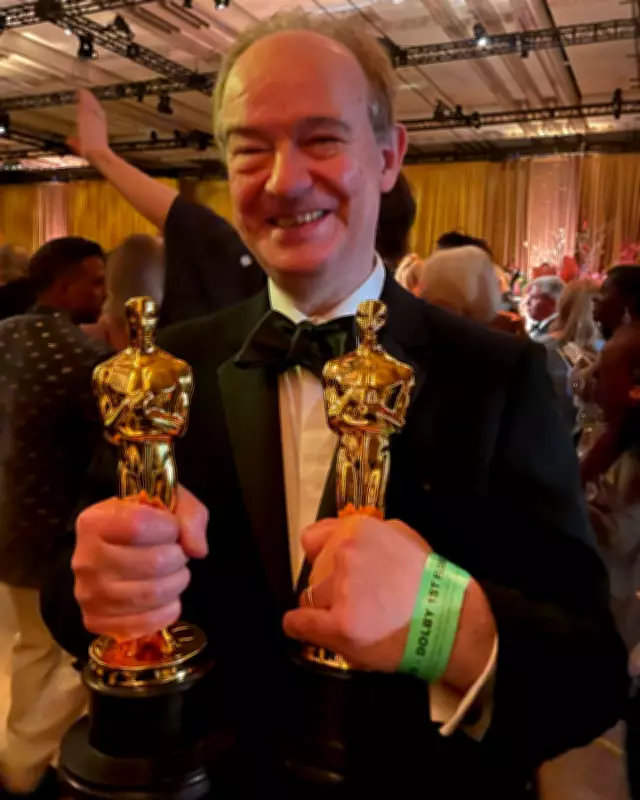
At the statuette engraving "bar," I experienced a historic moment when the writer-directors of the Oscar-winning live-action short Two People Exchanging Saliva, Alexandre Singh and Natalie Musteata, let me hold their Oscars. As I clutched the heavy statuettes, other guests eyed me warily—touching another's Oscar is considered bad luck, supposedly dooming one to never win. If the Academy ever introduces a best review category, I'm undoubtedly stuffed.
This Oscars ceremony felt distinctly different. While Hollywood liberals are often mocked for frolicking in make-believe, the 2026 event showcased a quiet dignity amidst global turmoil. With Trump's cavalier approach to conflict, it seemed Hollywood housed the real grown-ups—a sentiment that lent the night an unexpected gravitas.