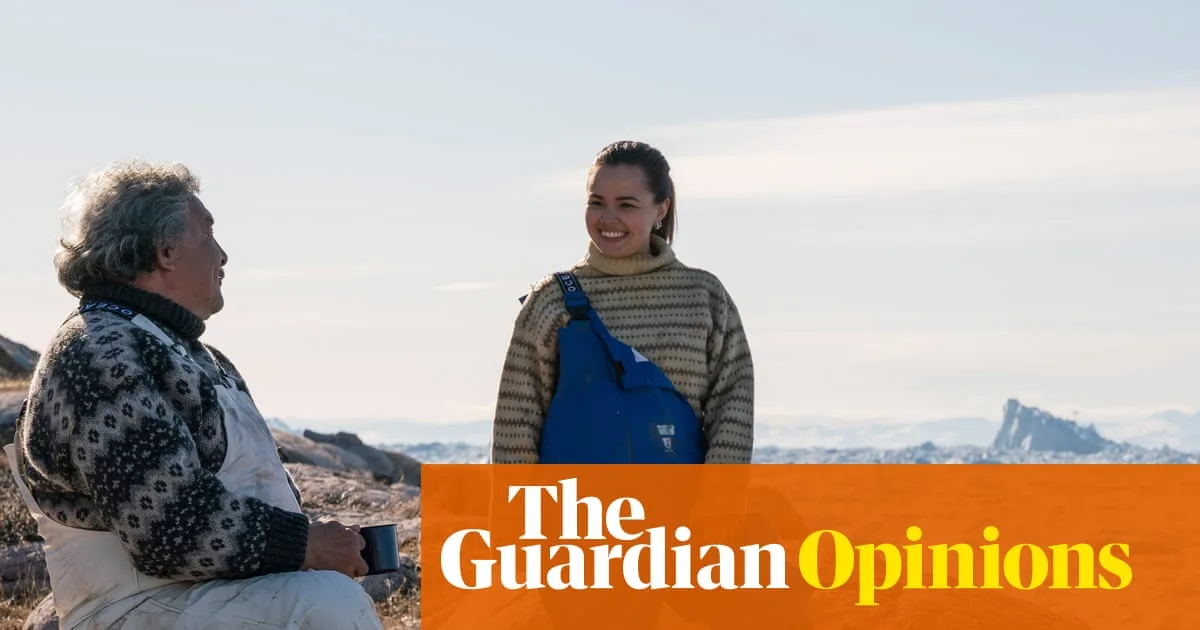
As a writer of political fiction for many years, including four seasons of the acclaimed TV series Borgen, I find myself navigating the strangest of landscapes. Watching Donald Trump desperately covet Greenland, like a spoilt child who has never heard the word "no," feels like a surreal twist in a narrative I once crafted. In Borgen, we dedicated an episode to Greenland in the first season back in 2010, and it became the central setting for the fourth season in 2022. Our focus on this former colony of Denmark, and its remarkable Indigenous people, was driven by one compelling factor: for political drama, I always seek stories brimming with emotion, and the old colonial tale of Denmark and Greenland is overflowing with it.
The Historical Backdrop of Colonial Tensions
The modern history of this complex relationship traces back to 1721, when the priest Hans Egede, with permission from Danish King Frederik IV, established a mission and trading station in southern Greenland. The indigenous Inuit people were brought into the realm of Christ, sometimes voluntarily, often by force. Egede remains a controversial figure in Greenland to this day, and for good reason. In 2020, a large statue of him on a hill outside Nuuk, the capital, was vandalised with the slogan "Decolonize," highlighting ongoing tensions.
Greenland was formally integrated as an equal part of the Kingdom of Denmark in the 1953 constitution. However, its strategic importance had already been recognised during the Second World War. With Denmark occupied by Nazi Germany, the daring Danish ambassador to the US, Henrik Kauffmann, acting independently, signed an agreement granting the Americans military access to Greenland. This need for bases intensified during the Cold War, leading to a 1951 treaty that still allows the US to build as many bases in Greenland as it desires.
Geopolitical Struggles and Nuclear Scandal
In 1953, the US constructed its largest base yet, Thule airbase, later renamed Pituffik space base, in a harsh northern area of Greenland. This displaced the old Inuit settlement of Uummannaq, with residents given an ultimatum to move immediately or face forced relocation. During the 1950s and 60s, Thule airbase housed over 10,000 personnel, with B-52 bombers constantly landing and taking off. This posed a delicate challenge for the American-Danish-Greenlandic relationship, as Denmark prohibited nuclear weapons on its soil but adopted a policy of wilful ignorance regarding the bombers' payloads.
This fragile arrangement shattered in 1968 when a B-52 crashed near Thule airbase, releasing four nuclear bombs onto the ice. The incident became another scandal in the fraught dynamic between the US superpower, its loyal ally Denmark, and Greenland, the world's largest island with a population of just around 57,000 people.
Self-Government and Borgen's Inspiration
Greenland achieved home rule in 1979, and in 2009, the Act on Greenland Self-Government was passed by the Danish parliament. This legislation acknowledged that Greenland ultimately belongs to the Greenlandic people, granting them autonomy to decide their own fate within the kingdom. This law served as the primary inspiration for Power & Glory, the final season of Borgen, which explores the division of income from Greenland's natural resources between Danish and Greenlandic peoples.
In the series, a massive oil discovery near the pristine ice-fjord of Ilulissat triggers a geopolitical nightmare for Birgitte Nyborg, Denmark's fictional foreign minister. The oil company, initially thought to be Canadian, is revealed as Russian and later Chinese, drawing critical attention from the US. This scenario forces Denmark into the role of a "little brother" following orders, reopening old colonial wounds and highlighting the ongoing tensions in the Arctic region.
Trump's Absurd Theatre and NATO Tensions
We aimed to create a dramatic plot that felt credible yet pushed Arctic tensions further than before. However, we have been completely overtaken by the theatre of the absurd played out by the Trump administration. Had I ever pitched a storyline where an American president becomes obsessed with owning Greenland, willing to sacrifice NATO and use mob-like tactics to bully allies, I would have been laughed out of any meeting.
Now, we are living this nightmare. Trump's rant in Davos did little to reassure anyone, as he openly lies, distorts facts, and displays ignorance of history, even confusing Iceland with Greenland. His claims that Europeans alone benefit from NATO, and doubts about allies aiding the US, are particularly insulting. After 9/11, the US invoked NATO's Article 5, and Europe responded immediately. Denmark, alongside the UK and other allies, sent troops to Afghanistan, suffering significant losses per capita.
Unity Amidst Fear and Uncertainty
In Greenland, people are genuinely afraid of the madness emanating from the White House, and Danes share this concern. Yet, if any positive has emerged from this situation, it is that Danish and Greenlandic people stand more united than ever. Danes fully support Greenlanders' right to their land and self-determination.
In Davos, Trump ruled out military action in Greenland and called off tariff threats as part of a vague "deal" with NATO Secretary General Mark Rutte, reportedly involving a renegotiation of the 1951 treaty. This raises troubling questions: how can such negotiations occur without the participation of Greenland and Denmark? It echoes Trump meeting Putin to discuss Ukraine without inviting Zelenskyy, underscoring a disregard for sovereign voices.
Perhaps these theatrics are part of a new Trumpian "art of the deal," where a more sinister scheme is at play. Could Europe's defence of Ukraine become a hostage in a mad power game, with NATO unity at stake and ownership of Greenland as the ultimate prize? I certainly hope not, but this dystopian pitch reflects the nightmarish reality we face. Let me be laughed out of the pitching session one more time, if it means avoiding such a future.






