Bilderberg's Secret Summit: Global Elites Gather Amid NATO Tensions
World leaders, billionaires, and military officials gathered in Washington this weekend for the notoriously secretive annual Bilderberg meeting. With no minutes recorded, press reports published, or media interviews granted, the infamous conference remains shrouded in mystery, fueling countless conspiracy theories over the decades.
A Legacy of Secrecy and Speculation
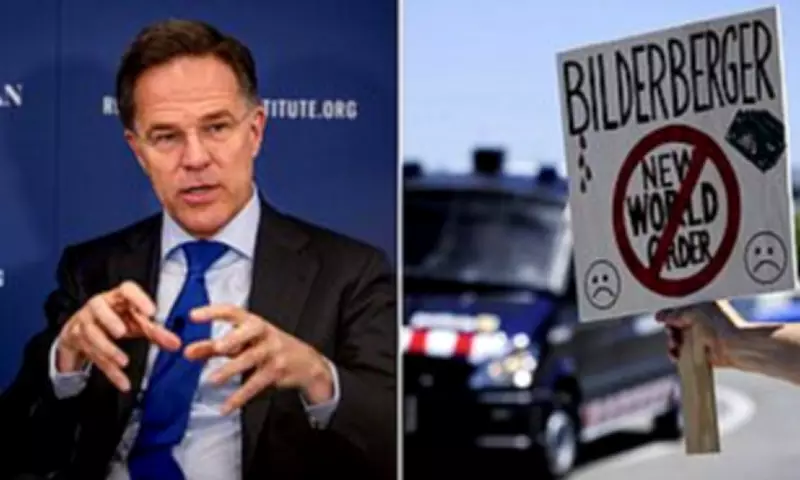
Critics have long accused the Bilderberg meeting of serving as a foundation for a secret government or a mysterious new world order. Established in 1954 to foster dialogue between the United States and Europe to prevent another war, the high-level networking event now purportedly aims to allow Western leaders to share innovative ideas. Now in its 72nd year, the global elite congregated from April 9 to 12 to discuss a range of critical topics, from the future of artificial intelligence and modern warfare to cryptocurrency.
Ahead of this year's gathering, a security cordon was erected around the luxury Salamander hotel as 128 military leaders, tech moguls, and politicians prepared for days of covert talks. The conference strictly operates under the Chatham House Rule, meaning participants may use information received but cannot reveal the identity or affiliation of speakers or attendees.

Notable Attendees and High-Stakes Discussions
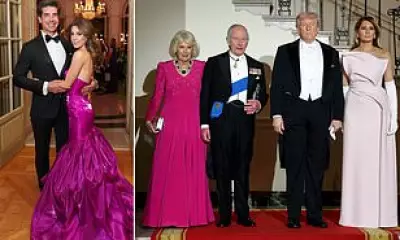
Attendees included prominent billionaires such as Palantir’s CEO Alex Karp, who is collaborating on Donald Trump's $185 billion 'Golden Dome' project, Spotify founder Daniel Ek, and former Google CEO Eric Schmidt. Historical participants have included King Charles III, David Cameron, Barack Obama, Bill Clinton, and Peter Mandelson.
From the defense sector, four-star admiral Samuel Paparo, the 27th commander of the US Indo-Pacific Command, and Brian Schimpf, co-founder and CEO of defense technology company Anduril Industries, were present. Notably, venture capitalist Peter Thiel, co-founder of PayPal and a steering committee member since 2008, was absent despite his role in partly funding the extravagant Washington-based meetings.
UK representation included Justice Secretary David Lammy, alongside intelligence figures such as Blaise Metreweli, the first female chief of MI6, former MI6 head John Sawers, and former UK National Security Adviser Mark Sedwill.
NATO Tensions and Global Security Agendas
The meeting occurred amid significant crisis and uncertainty for the trans-Atlantic alliance. NATO Secretary General Mark Rutte arrived following a 'very frank' conversation at the White House, as Trump has recently attacked NATO as a 'paper tiger' and threatened to abandon the 32-country organization over perceived lack of support.
One agenda item, 'Trans-Atlantic Defence-Industrial Relationship', highlighted the shaky future of NATO as an urgent concern for Western leaders. Discussions also covered the West, China, the US, Ukraine, Russia, the Middle East, global trade, Europe, energy diversification, and Arctic security.
In a notable first, this year's Bilderberg included a Greenlander—Vivian Motzfeldt, former foreign minister and ex-speaker of the Inatsisartut. Her presence signaled to Trump that Greenland has allies within the West, despite his disparaging remarks and eagerness to seize the territory.
Corporate Influence and Technological Warfare
The conference brought together Wall Street giants, including CEOs from KKR and Lazard, alongside corporate chiefs from companies like Pfizer. Business titans had opportunities to exchange notes with members of Trump's inner circle, including Secretary of the Interior Doug Burgum, former trade policy architect Robert Lighthizer, and Secretary of the Army Daniel Driscoll, often called the President's 'drone guy' for his focus on emerging battlefield technologies.
Earlier this year, Eric Schmidt told the Financial Times that 'future wars are going to be defined by unmanned weapons', with 'swarms of drones operated remotely and increasingly automated with AI targeting'. At Bilderberg, he could discuss this vision with military and defense experts.

Media Infiltration and Academic Perspectives
The Daily Mail infiltrated the 2018 meeting in Turin, Italy—the first time an undercover journalist succeeded—observing military police, sniffer dogs, and the event's inner workings. According to Christina Garsten, a professor at the Swedish Collegium for Advanced Study who studies transnational think tanks, groups like Bilderberg aim to shape broad political and corporate agendas.
However, she noted that if perceived as too influential, they risk accusations of being anti-democratic. 'It's there that conspiracy theories can flower,' she said, dismissing beliefs in a shadowy world government as 'very much exaggerated'. The true impact of such gatherings remains difficult to judge, but their clandestine nature continues to spark intrigue and speculation worldwide.