The world of journalism mourns the loss of a true titan as Sir Mark Tully, the BBC's revered 'Voice of India', has passed away at the age of 90. The veteran broadcaster died in a Delhi hospital on Sunday following a short illness, leaving behind an unparalleled legacy of reporting that shaped global understanding of the South Asian region for decades.
A Life Dedicated to South Asian Storytelling
Born in Kolkata in 1935, Tully began his illustrious career with the BBC in 1965. His deep connection with the subcontinent became official in 1971 when he was appointed as the broadcaster's Delhi correspondent, a role that evolved into a more than twenty-year tenure as South Asia bureau chief. During these decades, Tully became far more than a foreign correspondent – he transformed into a familiar and trusted presence within India's public consciousness, serving as a steady interpreter of the nation's complexities to international audiences.
Chronicling History's Defining Moments
Tully's reporting career spanned some of the most significant events in modern South Asian history. His journalistic record includes coverage of the 1971 India-Pakistan war that led to Bangladesh's independence, the 1984 siege of Amritsar's Golden Temple, the 1991 assassination of Prime Minister Rajiv Gandhi, and the 1992 demolition of the Babri Masjid that triggered nationwide sectarian violence. His work extended beyond India's borders, with extensive reporting from Pakistan, Bangladesh, and Sri Lanka that provided nuanced insights into the region's intricate political and social landscapes.

What distinguished Tully from many of his contemporaries was his patient, grounded approach to journalism. As senior journalist AJ Philip noted in tribute, Tully wrote not primarily for English audiences but for Indians and those in the West with genuine interest in India. His deep appreciation for rural and small-town India, coupled with suspicion of urban sophisticates, kept his reporting honest and authentic. This independence of thought helped him avoid what many described as the 'honeyed traps' that ensnare journalists covering India today.
Beyond Breaking News: A Literary Legacy
Tully's engagement with India extended far beyond daily reporting. He captured his experiences in several influential books, including Amritsar: Mrs Gandhi's Last Battle, co-authored with journalist Satish Jacob in 1985, which explored the events surrounding the Golden Temple siege. In works like India in Slow Motion and No Full Stops in India, he turned his attention to the rhythms of everyday life, offering readers thoughtful examinations of villages, towns, and the complexities of Indian society.
His exceptional journalism earned him recognition both nationally and internationally, culminating in a knighthood in 2002. More importantly, as several commentators noted, his reporting shaped how the world perceived India and even how many Indians understood themselves.
A Bridge Between Cultures
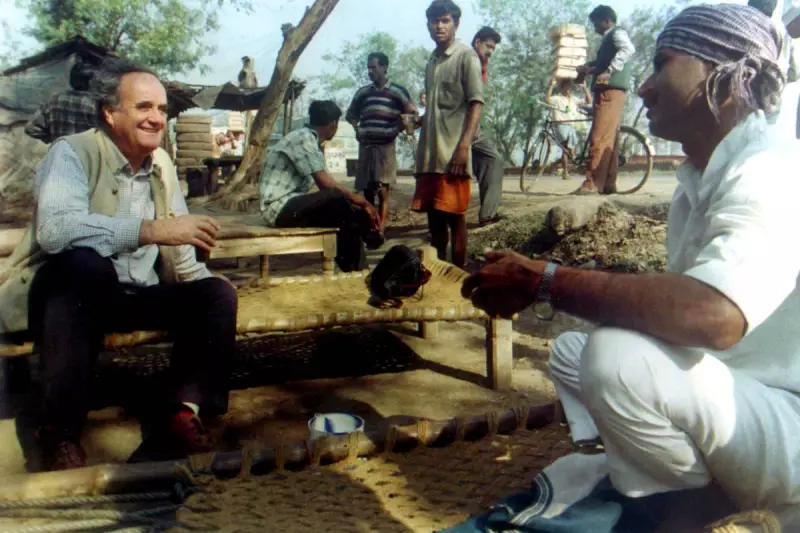
Mark Tully was unusual among foreign journalists in his profound engagement with Indian society. He lived in the country for decades, spoke Hindi fluently, and developed relationships across political, religious, and social divides. Journalist John Elliott noted that Tully's passion for India exceeded even his passion for journalism, and that perhaps no one in living memory has spanned British and Indian cultures as sensitively and closely as Sir Mark Tully.
This cultural bridging extended to his critical perspective on development. While not advocating continued poverty, Tully refused to accept that Western-style consumerism represented the only path to progress. He was also known as a vocal critic of the current Indian government's Hindu nationalist policies.
Personal Tributes and Memories
Following news of his passing, tributes poured in from across the journalistic and political spectrum. Indian Prime Minister Narendra Modi described him as "a towering voice of journalism" whose connection with India and its people was reflected in his works. Friends and admirers gathered on Monday to pay their last respects at his cremation in Delhi, where Christian priests offered prayers before the rites were performed.

Satish Jacob, Tully's co-author and friend of 48 years, shared poignant memories of their partnership. He recalled their shared love for India, Irish whiskey, Old Delhi food, and cigars, describing Tully privately as a boisterous personality with great humour. One particularly vivid memory was from June 1983 when India won the Cricket World Cup. Jacob remembered hearing Tully's distinctive voice shouting "We won!" in Hindi before finding him outside with a bottle of their favourite whiskey, dancing in the street to celebrate India's victory.
A Courageous Voice Against Power
Political scientist Pratap Bhanu Mehta noted that Tully had the distinction of being targeted by every political dispensation – expelled from India during the Emergency, chased by a mob shouting 'Death to Mark Tully' during the Ayodhya violence, and consistently willing to ask difficult questions. Mehta called him the "only voice of Indian history as it happened."
Historian William Dalrymple described Tully as "a giant among journalists and the greatest Indophile of his generation," praising his warmth, generosity, and willingness to stand up to power. The Press Club of India expressed profound sadness at losing a member passionate about ground-reporting, noting that Tully was one of the few journalists present in Ayodhya on December 6, 1992, where he broke the news of the mosque's demolition to the world.
In a telling reflection of his identity, The Times recalled that when once described as an expatriate, Tully bristled: "Please don't call me that. I look upon myself as an Indian." Yet his British connections remained – after trips to London, he would admit, half amused and half unapologetic, that his luggage inevitably contained Marmite, bacon, cheese, and a bottle of Irish whiskey.
Mark Tully's passing marks the end of an era in international journalism. His distinctive voice, commitment to nuance, and deep love for India created a body of work that will continue to inform and inspire future generations of reporters and readers alike. As John Elliott poignantly observed, both privately and professionally, he will be much, much missed.