The BBC has publicly backed the "collective decision" to allow Israel to compete in the 2026 Eurovision Song Contest, a move that has prompted several European nations to withdraw from the competition in protest.
Nations Withdraw in Protest Over Gaza Conflict
This affirmation of support follows a European Broadcasting Union (EBU) general assembly in Geneva, where the future of the contest was discussed. Ireland, the Netherlands, Spain, and Slovenia have all confirmed they will not participate in the 2026 event.
Reports from the assembly indicate that a majority of EBU members voted against even holding a vote on a proposal to ban Israel. A BBC spokesperson stated the corporation's position clearly: "We support the collective decision made by members of the EBU. This is about enforcing the rules of the EBU and being inclusive."
Broadcasters Cite Humanitarian Crisis and Press Freedom
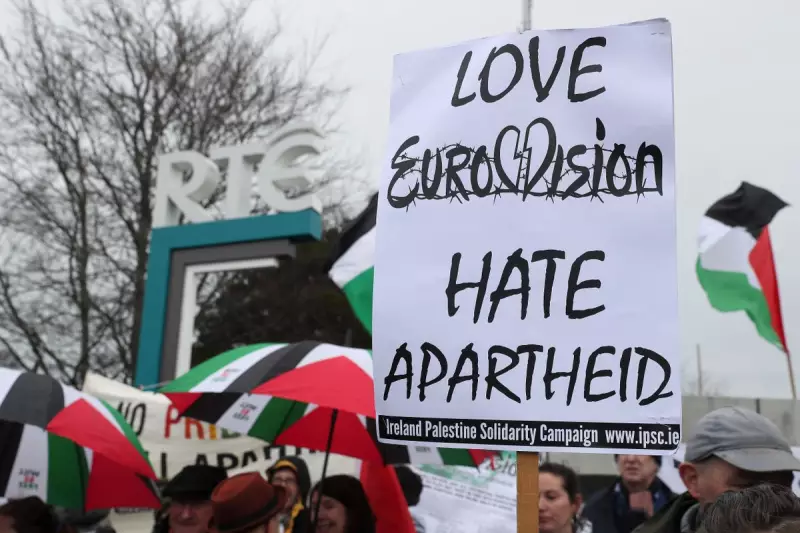
The boycotting nations have pointed to the ongoing conflict in Gaza as the central reason for their withdrawal. Ireland's national broadcaster, RTE, called its participation "unconscionable given the appalling loss of lives in Gaza and the humanitarian crisis there which continues to put the lives of so many civilians at risk."
RTE also highlighted its "deep concern" over the killing of journalists in Gaza and the denial of access to international reporters. Dutch broadcaster Avrotros echoed these sentiments, stating participation would conflict with essential public values. Its chief executive, Taco Zimmerman, said: "Universal values like humanity and a free press have been seriously violated and are non-negotiable for us."
Slovenia's RTV was explicit, saying its pull-out was "on behalf of the 20,000 children who died in Gaza." Board chairwoman Natalija Gorsck criticised a perceived double standard, referencing Russia's ban from the contest in 2022.
UK Political Reaction and Voting System Scrutiny
In the UK, the Conservative Party has voiced strong opposition to the boycotts. Shadow culture secretary Nigel Huddleston commented: "It is deeply concerning to see so many countries choosing to boycott the event because of Israel’s inclusion. Music should be a uniting force, not a tool to be weaponised for political ends."
The controversy follows scrutiny of the voting system after last year's competition, where Israeli singer Yuval Raphael received the highest public vote and finished as runner-up. This led Irish and Spanish broadcasters to call for a "complete review" to prevent "external interference." New rules were later agreed to deter campaigns for specific acts, which reportedly prevented a vote on Israel's exclusion this time.
Israeli President Isaac Herzog responded to the decision on social media platform X, stating: "Israel deserves to be represented on every stage around the world, a cause to which I am fully and actively committed." Meanwhile, Iceland's broadcaster RUV is set to discuss its own participation next Wednesday, having previously considered a motion to recommend Israel's expulsion.
The 2026 Eurovision Song Contest is scheduled to be held in Vienna in May, following Austria's victory in the previous year's competition.