Bad Bunny's Super Bowl Halftime Show: A Resonant Cultural Statement
When Bad Bunny uttered "God bless America" during his Super Bowl halftime performance, it was more than a simple phrase; it was a profound linguistic and cultural declaration. In Spanish, "América" often refers to the entire hemisphere, not just the United States, a nuance that resonated powerfully with millions of viewers across Latin America. This moment of wordplay transformed into a statement of inclusion, highlighting the diverse identities within the Americas.
A Moment of Pride in Mexico City
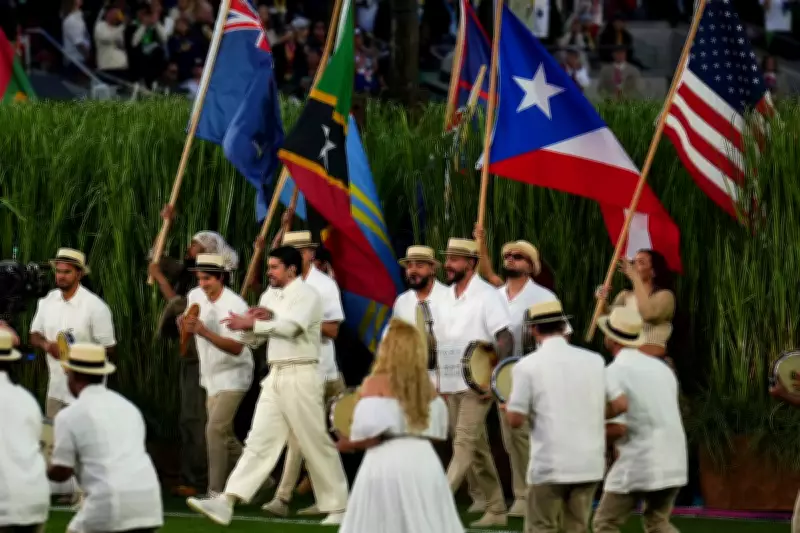
In a bustling bar in Mexico City, the atmosphere was electric as fans gathered to watch the Super Bowl. Plates of brisket, pulled pork, and mac and cheese circulated among tables, while beers flowed freely. NFL jerseys dotted the crowd, and giant foam fingers waved enthusiastically. When halftime arrived, attention shifted entirely to Bad Bunny's stage. As he took the spotlight, phones were raised, and people danced between tables. The cheers crescendoed when he listed countries across the Americas, with an eruption of joy at the mention of "Mexico."
Laura Gilda Mejía, a 51-year-old schoolteacher and longtime NFL fan, watched with her children. She expressed deep emotion, stating, "With everything that's going on politically in the United States, and all the hostility toward Latinos ... seeing a Latino come out and sing in Spanish at the biggest show in the world was incredible." For many in Mexico, where the NFL has a massive following, the performance felt particularly significant, blending entertainment with a sense of cultural recognition.

Cultural Shifts and Historical Perspectives
Across Latin America, Bad Bunny's act was seen as a milestone in challenging long-standing cultural hierarchies. María Fernanda Simón, a 35-year-old psychologist, noted the shift from Anglo-centric trends to celebrating Latino identity. "For a long time... everything Anglo, everything 'gringo,' everything light-skinned, English — that was what was 'in,' what was 'fashionable' — and now seeing it flipped makes me feel excited, like being Latino is 'cool.'"
However, not all perspectives are uniformly celebratory. José Manuel Valenzuela, a cultural studies researcher, cautions that this moment, while real, does not erase deeper historical inequalities shaped by colonization and media power. He emphasizes that the novelty of such a reversal highlights ongoing structural challenges, reminding us that cultural visibility alone does not equate to systemic change.
Puerto Rico's Spotlight and Global Impact
In Puerto Rico, watch parties treated the Super Bowl as a prelude to Bad Bunny's performance. In San Juan and surrounding areas, neighborhoods buzzed with anticipation, focusing entirely on his 13-minute set. Alexandra Núñez, a resident of Caguas, wore traditional attire in Puerto Rican flag colors, calling the show "an achievement." She highlighted that "music has no borders. Language has no borders... You don't have to speak our language to enjoy our culture. This is global."
Núñez drew a distinction between Bad Bunny and earlier Latin pop stars like Ricky Martin, who adapted their sound for crossover success. "Bad Bunny didn't have to cross over... He took what already existed and brought it there. He didn't have to change anything." This underscores a broader shift in mainstream culture, where Spanish-language art can thrive without translation, challenging assumptions about audience demographics.
Celebration Amidst Political Tensions
In the United States, the celebration unfolded against a backdrop of heightened immigration enforcement and political rhetoric. Carlos Benítez, a 29-year-old risk analyst born in Colombia and raised in Miami, described the performance as both a milestone and a reminder of its limits. "For me, it's an achievement," he said, noting that artists once felt pressure to sing in English. "Bad Bunny is saying, 'I'm going to do my music in Spanish, and whoever understands it, understands it.'"

Yet, Benítez acknowledged that cultural visibility does not automatically translate into immediate social change. "This isn't going to be direct," he explained. "It's not like an ICE agent watching the Super Bowl suddenly changes their views." This tension between celebration and vulnerability was echoed by Vanessa Díaz, an associate professor, who noted that Bad Bunny's success reflects a redefined mainstream, no longer centered solely on English-language music or white audiences.
Enduring Impact and Lingering Excitement
As the game resumed in the Mexico City bar, the excitement from Bad Bunny's performance lingered. For Laura Gilda Mejía, the night did not resolve the contradictions between cultural celebration and ongoing discrimination, but it mattered that the moment happened in Spanish. Mexico President Claudia Sheinbaum highlighted a phrase from the show — "the only thing more powerful than hate is love" — as emblematic of the unity message.
Bad Bunny's Super Bowl halftime show was more than entertainment; it was a cultural event that resonated across borders, affirming Latino pride and challenging linguistic norms. While it sparked celebration, it also prompted reflection on the complexities of identity and inclusion in a divided world.