
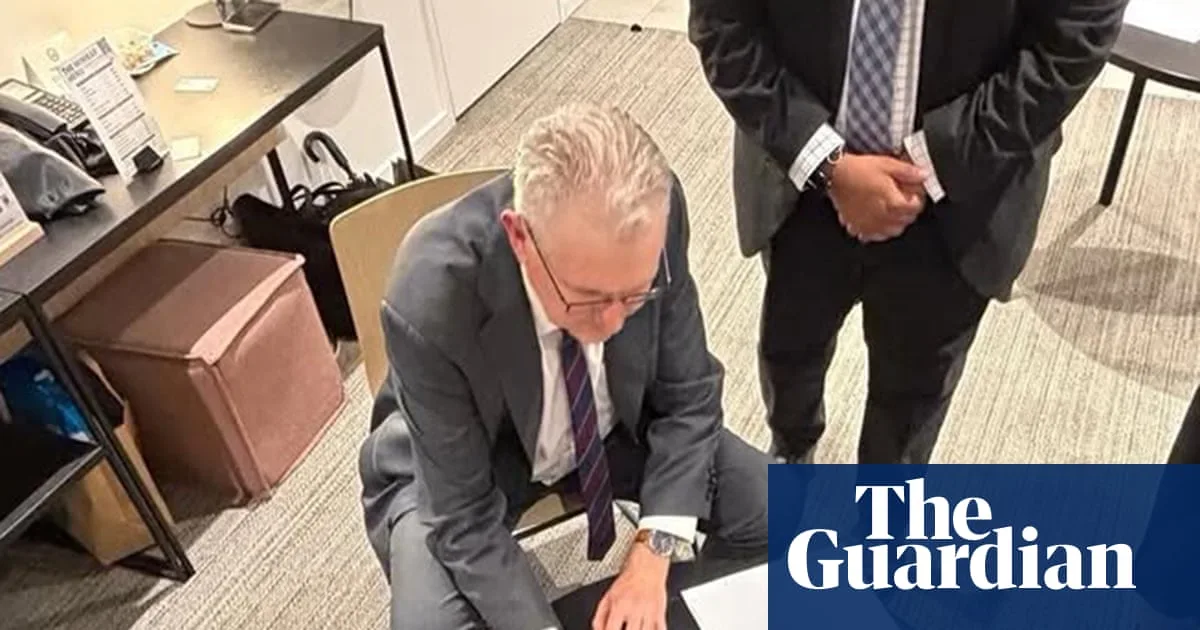
Five members of the Iranian women's football team have been granted humanitarian visas in Australia, the home affairs minister, Tony Burke, has confirmed. The visas, which provide a pathway to permanent residency, were issued at about 1.30am on Tuesday, shortly after US President Donald Trump had posted on social media about the players' situation.
The players were in Australia for the Women's Asian Cup tournament. They had faced criticism in Iran for not singing the national anthem before a match last week, raising fears they could be punished if they returned home. Burke said the players had opened discussions with Australian officials and had been moved to a secure location by the Australian Federal Police, with the security agency Asio clearing them.
Speaking at a press conference in Brisbane, Burke said: "They are welcome to stay in Australia. They are safe here, and they should feel at home here." He added that the same opportunity was available to other members of the team, saying: "These women are tremendously popular in Australia, but we realise they are in a terribly difficult situation."
Prime Minister Anthony Albanese said Australians had been "moved by the plight of these brave women" and confirmed that assistance would be provided to others who sought it. "We say to them, if you want our help, help is here," he said. Albanese also confirmed he had a "fairly lengthy" conversation with President Trump, who had earlier urged Australia to offer asylum and later praised its efforts, writing on social media that "God bless Australia".
Reza Pahlavi, the exiled son of the last shah of Iran, identified the five players as Fatemeh Pasandideh, Zahra Ghanbari, Zahra Sarbali, Atefeh Ramazanzadeh and Mona Hamoudi. His office said they were in a safe location and had declared they had joined Iran's national Lion and Sun Revolution.




