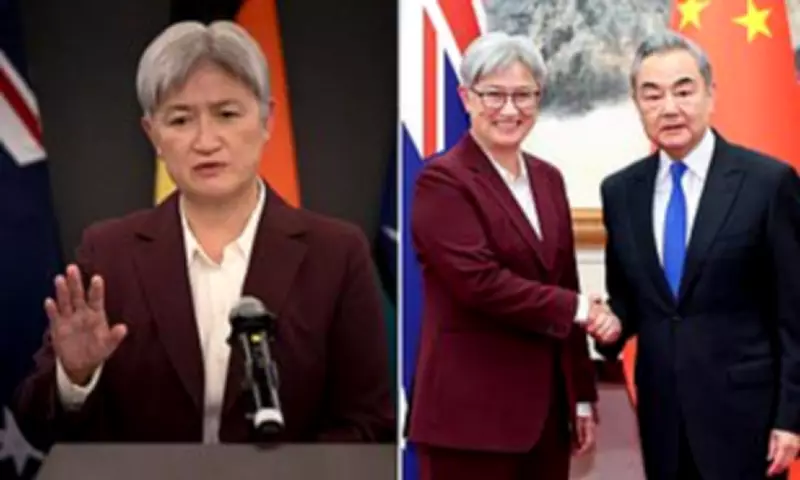
Australian businesses are in talks with Chinese state-owned oil companies over jet fuel sales, marking a diplomatic breakthrough for the Albanese government. Foreign Minister Penny Wong confirmed the development in Beijing on Wednesday night after meeting her Chinese counterpart Wang Yi, describing it as an early but significant result of sustained high-level engagement between the two governments.
Background of the Engagement
Following a phone call earlier this month between Prime Minister Anthony Albanese and Chinese Premier Li Qiang, the Chinese government is facilitating engagement with Australian businesses on jet fuel. This comes amid mounting alarm in Canberra over dwindling jet fuel and diesel supplies, with airlines warning that existing fuel assurances may run out by the end of May as export bans and restrictions ripple across global markets.
China's Role as Key Supplier
China is Australia's largest supplier of jet fuel, making up about 30 per cent of the country's supply. In March, China ordered refineries to halt oil exports, exacerbating supply concerns. The situation worsened due to the Middle East conflict, which led to the closure of the Strait of Hormuz—through which around 20 per cent of global oil flows, including about 80 per cent of oil destined for Australia and the broader region.

Foreign Minister Wong described this as an unprecedented shock to global energy markets, emphasizing the need for regional cooperation to keep fuel and goods flowing. While Wong declined to name individual companies, state oil giant Sinopec is understood to be coordinating the talks, which involve direct business-to-business negotiations rather than government purchases.
Diplomatic Significance
The move is being interpreted in Canberra as a sign of approval from the highest levels of the Chinese system. The breakthrough comes as Beijing reportedly approved 500,000 metric tonnes of fuel exports for May, almost double April's forecast shipments to destinations outside Hong Kong, although still well below pre-crisis averages.
Australian officials view the decision as a response to Wong's deliberate strategy of reframing Australia's fuel shortage as a shared economic risk. She repeatedly stressed that Chinese fuel exports underpin Australia's ability to supply commodities critical to China's own economy, highlighting the mutual benefit in keeping supply chains running.
Regional Vulnerability
Wong added that Australia's dependence on imported fuel was not unique, noting how vulnerable many economies are to the conflict in the Middle East and the closure of the Strait. Both China and Australia, as regional economies, want to see the Strait open.
The carefully managed visit was briefly overshadowed earlier on Wednesday when a Chinese official blocked an Australian government photographer during Wong's meeting with Vice President Han Zheng, prompting a terse intervention by an Australian diplomat. Despite progress, Wong cautioned that the deal remains at an early stage, describing it as an important first step that needs to continue with commercial contracts flowing.