US Plan to Arm Kurdish Rebels in Iran Risks 'Catastrophic' Civil War, Experts Warn
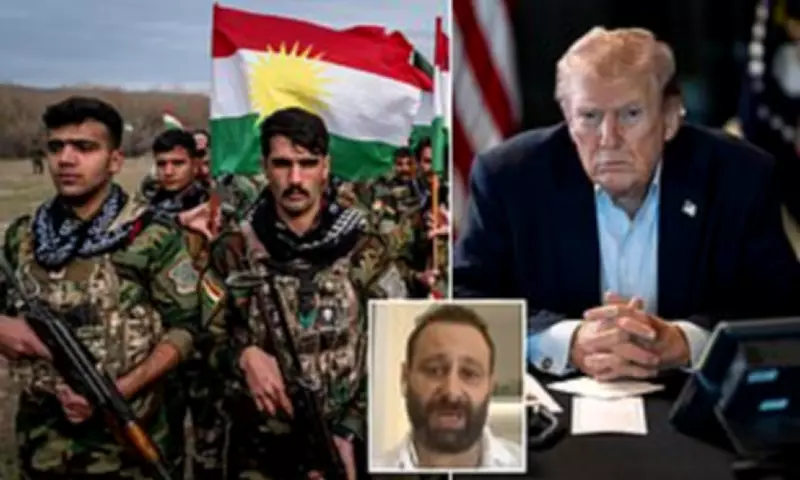
Arming Kurdish rebels as a substitute for American troops on the ground in Iran could ignite a 'catastrophic' civil war, potentially destabilising the nation for years to come, according to a stark warning from analyst David Patrikarakos. Speaking on the Daily Mail's Deep Dive podcast, Patrikarakos emphasised the extreme dangers of such a strategy, which is reportedly under consideration by the Trump administration.
Joint Military Operation Enters Fifth Day
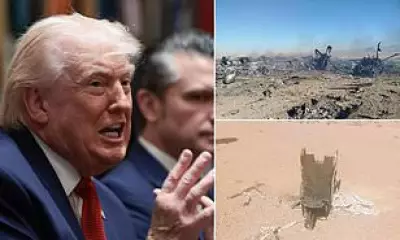
The warning comes as a joint United States and Israel military operation enters its fifth day. The campaign began with opening strikes on February 28 that resulted in the death of Supreme Leader Ayatollah Ali Khamenei. The conflict has already claimed more than 1,000 lives inside Iran, sunk an Iranian naval frigate, and triggered retaliatory strikes across the Gulf region, including an explosion at the US Consulate in Dubai.
Kurdish Forces as 'Armed Volunteers'
Patrikarakos was joined on the podcast by senior political correspondent Melina Shirazi, who analysed the potential next steps. Shirazi, whose Iranian parents fled during the 1979 revolution, revealed insights into the reported plan. 'I have been told the Kurds would be used as a group of armed volunteers - soldiers, to assist the Iranian people in freeing themselves', she stated. Shirazi outlined a scenario where Kurdish fighters could seize local government buildings, police stations, and IRGC bases, creating liberation zones to pressure Iran's military forces.

'If they fight the Iranians along the border, they could divert the military from the capital, which would be significant', she added, noting that the IRGC has already launched preemptive strikes on Kurdish bases in Iraq this week. Shirazi also indicated that recent phone calls between President Trump and Kurdish leaders suggest a debate over 'boots on the ground, just not our boots on the ground'.
Risk of Ethnic Fracturing and Protracted Conflict
Patrikarakos issued a grave caution against this approach, highlighting the risk of splitting Iran along ethnic lines. 'Iran fracturing along ethnic lines is the last thing anybody wants', he declared, describing such an outcome as a 'total disaster'. He warned that this path could lead to a civil war that 'might grind on and on', causing prolonged instability.
The United States has a long history of collaborating with Kurdish forces in Iraq and Syria, including during Trump's first term. However, Patrikarakos suggested that any arming of Kurdish groups in Iran would likely come with stringent conditions. 'If Trump is going to arm them, my guess would be that it would come with some pretty stiff guarantees. Such as, you can fight the regime but it would have to be for a united Iran', he explained, adding that the Kurds probably lack the strength to refuse such terms.
Geopolitical Implications and Potential Outcomes
Despite the risks, Patrikarakos acknowledged a potential upside. He stated that if the military operation succeeds in permanently removing the Iranian regime, it would represent a 'huge win' for the United States, undoubtedly strengthening its global position.
Nevertheless, he cautioned that Washington's main adversaries, Russia and China, are likely viewing the situation with a degree of satisfaction. 'If I were Xi Jinping or Putin, I would be looking at this situation ambiguously', Patrikarakos observed. 'On the one hand, America has proved that it will take out people that it deems to be a threat to its security. On the other, they are probably pleased to see the US getting bogged down in Iran'.
He pointed out that the conflict draws American attention and resources away from other global hotspots, such as Ukraine. 'It draws attention away from Putin… fewer Patriot missiles are going to Ukraine right now, I can assure everyone of that', he noted.
The full analysis from David Patrikarakos and Melina Shirazi on the Iran special episode of Deep Dive is available on major podcast platforms, providing an in-depth exploration of the escalating crisis and its far-reaching consequences.