Anne Hathaway and FKA Twigs Unveil the Creative Process Behind Mother Mary's Soundtrack
In the psychodrama Mother Mary, directed by David Lowery, the thunderous soundtrack has garnered acclaim, with stars Anne Hathaway and FKA twigs revealing the secrets behind its creation. The film explores a haunted love story between pop diva Mother Mary, played by Hathaway, and her former best friend and designer Sam Anselm, portrayed by Michaela Coel, set against a backdrop of music that shifts from pop to emotional depths.
From Pop Inspiration to Emotional Depth
David Lowery spent extensive time studying the last 25 years of music while writing the fictional pop star Mother Mary. He drew inspiration from artists like Taylor Swift, whose Reputation concert film influenced the on-stage performances, Lorde, and FKA twigs, who appears in the film as a medium named Imogene. However, as the narrative evolved, Lowery's listening habits transformed.
"The pop music fell away and other music started to enter that sphere," Lowery explained during an interview in A24's New York offices, seated beside twigs and Hathaway after the film's premiere. "James Blake and Aldous Harding really captured the emotion that I was trying to type out between Sam and Mother Mary. They began to help me channel the feeling of the movie itself."

Contrasting Modes and Character Development
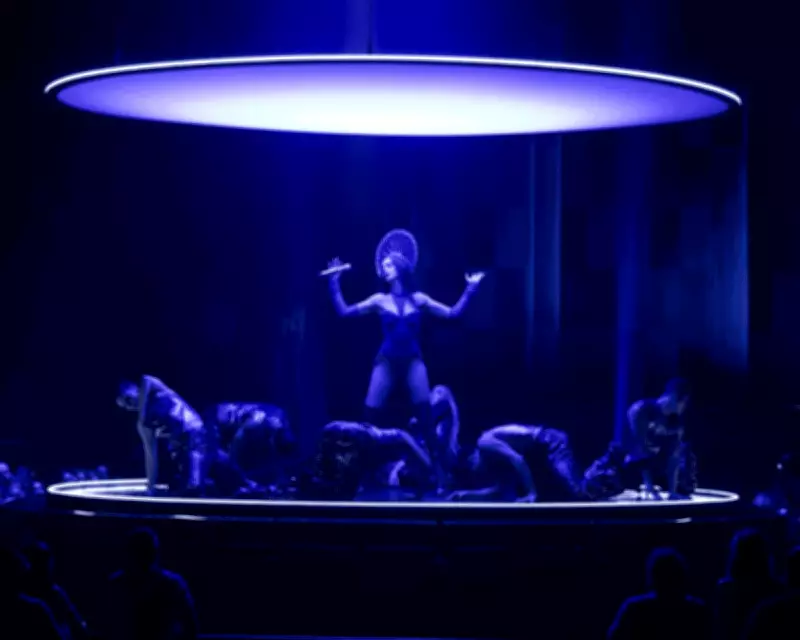
The film is structured into two distinct modes: intimate scenes between Hathaway and Coel in Sam's atelier, where a vulnerable Mary seeks a dress for her pop rebirth, and grand performances showcasing Mary's god-like diva persona. Hathaway focused initially on unlocking Mary's broken humanity, entering the project with limited knowledge of the songs, relying on early demos like Burial and Holy Spirit by Charli xcx and Jack Antonoff.
"There were almost department heads for different aspects of the character," Hathaway noted. "I felt like her sound was pretty low on the totem pole, especially when we began."
Collaborative Soundtrack Creation
While early reviews of the film have been divisive, the music and performance footage have received praise. Jack Antonoff and Charli xcx wrote most of the soundtrack, with FKA twigs contributing My Mouth Is Lonely for You, a shimmeringly erotic track originally from her Eusexua sessions that was cut from the film but repurposed.
"I really love the lyrics, but I knew it wasn't for me," twigs shared. She sent two songs to Lowery when he requested more music; the other, an ethereal piece, features in a scene with Mary's dress. "As soon as David said he needed a song, I knew I wrote [My Mouth Is Lonely for You] for a reason."
Portraying a 21st-Century Pop Star
The soundtrack collectively paints a uniform portrait of a fictional pop star with mass appeal and avant-garde sensibilities, reflecting experiences similar to twigs and xcx, both Grammy winners and arena headliners. Twigs described Mother Mary as embodying a stardom she has observed from afar.
"Mother Mary for me is the type of style that's almost on the other side of the glass to what I am," twigs said. "Even in my own industry, there's a type of stardom I've watched through a window that she really embodies. Everything's so together and so neat and so perfect and so huge and overwhelming."
Hathaway's Recording Journey
Despite her theatrical background and Oscar win for Les Misérables, Hathaway found the recording process for Mother Mary: Greatest Hits, the soundtrack's title, to be a novel experience. Working with Antonoff, she explored her vocal range and production techniques, even tweaking lyrics to align with her character's voice. She drew inspiration from Tori Amos's Little Earthquakes for sound layering.
"One of the things I realized is that lyrics are very important, but the feeling of the lyrics is the most important," Hathaway explained. She cited Earth, Wind & Fire's September as an example, where the performance transcended literal meaning. "The way you perform the sound of a word is just as, if not more, important than the word itself."

Implied Fandom and Emotional Resonance
The film subtly hints at Mother Mary's vast fandom through visual cues and her physical state, avoiding explicit explanations. Hathaway reflected on the original script's detailed backstory, which was abstracted into looks, headlines, and songs. She likened Mary to a "neon plasma" contained within glass, struggling not to shatter and harm her admirers.
"Her fans are people who could feel safe around her. They could come to her for a feeling of ecstasy as whoever they were. Everybody was welcome," Hathaway elaborated. "She loved them so much. They were people that she saw as vulnerable, people who needed a mother. She was twisting herself into this terrible state to avoid hurting them."
Mother Mary: Greatest Hits is released on 17 April, with the film premiering in US cinemas from 17 April, in the UK on 24 April, and in Australia on 14 May.