
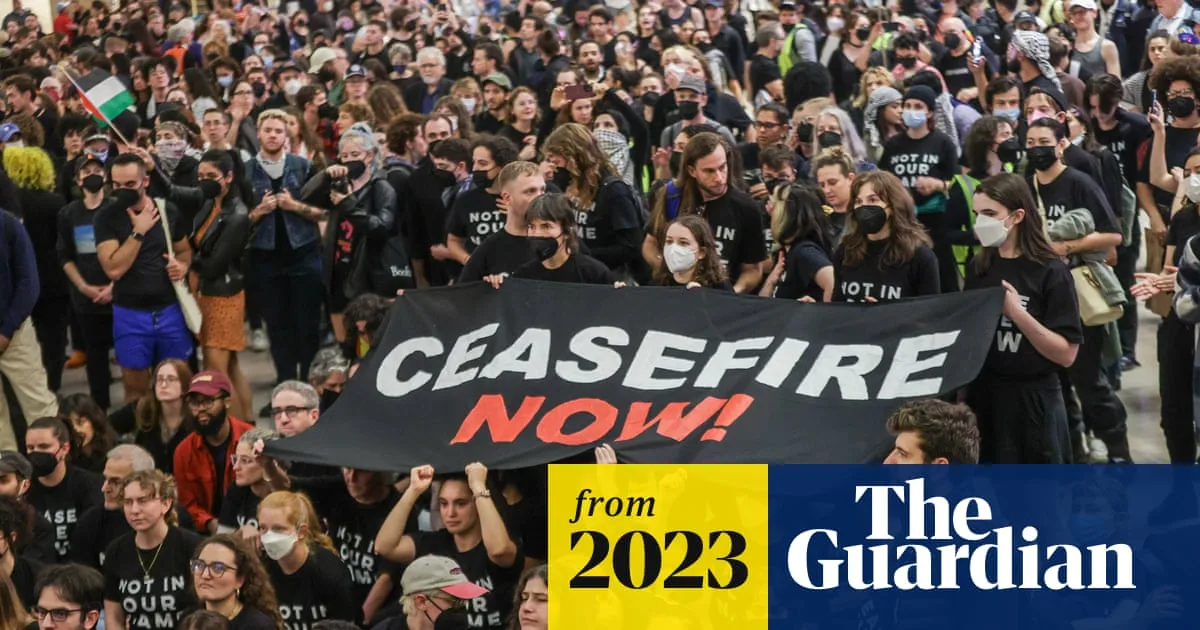
Fissures within Jewish communities across the United States are deepening as the war in Gaza escalates, reflecting broader divisions over the conflict. Within families, congregations, campuses, protests, and online, American Jews are grappling with complex emotions and differing perspectives on Israel's military campaign.
Jackie Goldman, a Providence, Rhode Island resident, joined a synagogue last August but left after feeling the congregation lacked empathy for Palestinian casualties. Goldman, who uses they/them pronouns, was stunned by members' characterisation of pro-Palestinian protests as violently antisemitic and widespread support for fundraising for the Israeli Defense Force. 'What now? What am I going to do for Jewish holidays in the future?' they lamented.
Even before Hamas's attacks on 7 October, support for Israel among American Jews was shifting. Polls indicate that while most Jews see caring about Israel as important to their identity, more than half disapprove of its rightwing government. A quarter agree Israel is an 'apartheid state', and one-fifth of those under 40 do not believe the Jewish state has a right to exist.
Jewish organising on the left has surged, with groups like IfNotNow and Jewish Voice for Peace calling for a ceasefire and an end to US support of Israel's war. Since the war began, Jewish activists have shut down New York's Grand Central station and been arrested for actions including occupying Congress and rallying outside Senate Majority Leader Chuck Schumer's home.
Rabbi Anna Levin Rosen, who oversees the University of Chicago's Hillel Center, says such actions isolate Jewish students grieving violence against Israeli civilians. She pointed to an incident where a rally supporting massacred Israelis was drowned out by a pro-Palestinian protest. 'It feels even more lonely when even Jews don't see the right for Israelis to live in peace in our homeland,' she said.
Institutional splits have also emerged, including at the Association for Jewish Studies. An initial statement expressing 'deep sorrow for the loss of life' in Israel was criticised as vague, leading to a revised version that also drew accusations of 'political squeamishness'. Some scholars, like UCLA doctoral student Jessie Stoolman, are dismayed by what they see as a failure to sufficiently condemn violence against Palestinians.




