A Grandson's Quest to Reclaim His Welsh Heritage Through Language
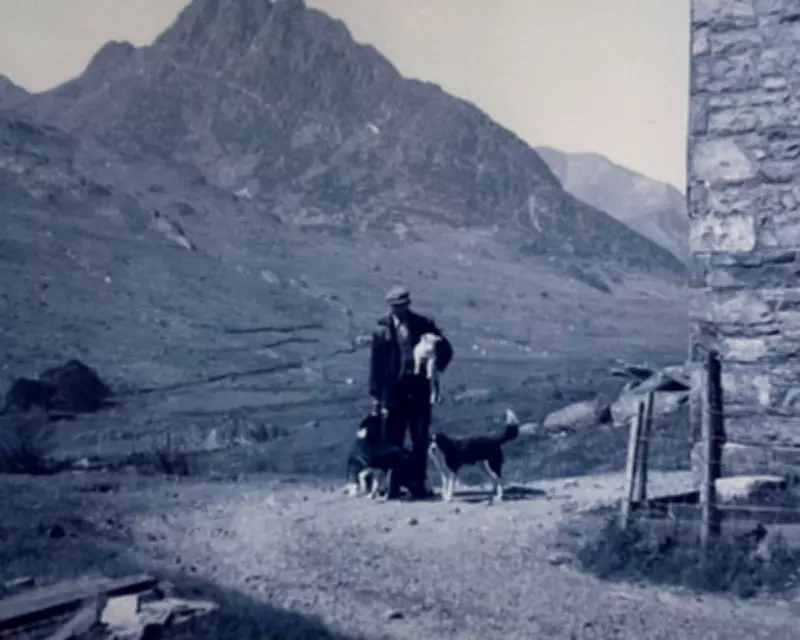
Dan Fox's grandfather, outside Tal-y-Braich Uchaf in Snowdonia around 1965, stands as a poignant reminder of a fading world. Once fiercely defended from extinction, the Welsh language remains a vibrant part of daily life for many. By learning his family's native tongue, Fox hoped to bridge a generational divide and join their intimate conversations.
A Funeral That Sparked a Lifelong Mission
Two decades ago, Fox attended his maternal grandmother's funeral in a small Methodist chapel in the lush Conwy valley of north Wales. The service was conducted entirely in Welsh, her first language and that of his mother. Fox, unable to understand a word, felt isolated in his grief, surrounded by the music of sniffly noses and creaky pews. Yet, during the hymn Cwm Rhondda, a tune familiar from Welsh rugby matches, a profound realisation struck him as he looked at her coffin: "I am part of her language. I must not let it go."
He called her Nain, pronounced like "nine," the Welsh word for grandma. These early terms, along with Taid for grandad, were his first and only Welsh words for years. Growing up in southern England, where Welsh was rarely heard, he didn't need more; his grandparents spoke English, and his family's daily communication was in English. His mother, born in Llanrwst in the late 1930s, had left Wales in the 1960s, settling in Oxford after a stint in Canada. There, she met his father, from an Irish Catholic background, and they raised Fox in a village where Welsh was absent.

The Historical Struggle of the Welsh Language
Welsh, or Cymraeg, belongs to the Celtic language family, alongside Cornish and Breton. Its decline began during the Industrial Revolution, as English-speaking workers flooded Welsh coalmines and families migrated for better opportunities. In 1847, a government report blamed Welsh for societal ills, leading to aggressive English promotion in schools. Children like Fox's Nain faced the "Welsh Not," a wooden paddle worn by those caught speaking Welsh, with beatings for the last tagged each week. By 1911, only 43% of Wales spoke Welsh, dropping to nearly 30% by the 1930s and a quarter by the 1960s.
Fox's grandparents lived in a cottage called Siambr Wen in the Conwy valley, where Welsh was the language of daily life—at the dinner table, in the fields, and at chapel. After Taid's early death, Nain moved to the coast, keeping Welsh alive through radio stations. Fox absorbed fragments like diolch (thank you) and cariad (love), hearing the language as micro-melodies without understanding its structure.
Awakening to a Cultural Legacy
As Fox grew older, his visits to Wales dwindled, and he pursued a career in art criticism in New York. Surrounded by multilingual immigrants, he felt the lack of his heritage language acutely. The memory of Nain's funeral resurfaced, tugging at his conscience. During the pandemic, stranded far from his aging parents, he downloaded Duolingo and began learning Welsh. The familiar sounds crystallised into words, revealing a portable inheritance that held his family's essence.
He discovered the Welsh saying: "Cenedl heb iaith, cenedl heb gallon" (A nation without language, a nation without heart). This resonated with the activism of the 1960s, when figures like Saunders Lewis warned of Welsh's extinction and protests erupted over issues like the Tryweryn valley flooding. Groups like Cymdeithas yr Iaith Gymraeg fought for bilingual recognition, with some turning to violence. Despite grim decades of deindustrialisation, the language's decline stalled by the 1990s, aided by legislation and cultural shifts like Welsh-language media.
The Challenges and Joys of Learning Welsh
Welsh is often mocked for its consonant-heavy appearance, but Fox learned it has more vowels than English and unique letters like ch and ll. Grammar posed hurdles, such as mutations and the lack of a single word for "yes." After initial struggles with apps, he found SaySomethingin, a method focusing on conversational sentences that mirrored family gossip. This approach felt authentic, connecting him to his roots.

Music, like Gruff Rhys's songs, helped immerse him in the language. Yet, fluency remained elusive; he oscillated between diligent practice and neglect. In family gatherings, he often retreated into English, hesitant to join Welsh conversations. Despite this, he shared moments with his mother, correcting pronunciations and laughing over phrases, deepening their bond.
Preserving Heritage for Future Generations
Today, Fox's mother is a Nain herself, with grandchildren who speak Welsh. On visits to north Wales, they explore landscapes like Eryri (Snowdonia), where Tal-y-Braich now serves as a vacation rental. The word hiraeth—a longing for a place that may no longer exist—captures his sentiment. Welsh has become a talisman, carrying family memories across distances.
In a recent airport goodbye, Fox and his mother exchanged words in Welsh, imperfect but meaningful. This journey isn't about mastery but connection, ensuring the language endures as a living thread to his heritage. As Wales aims to reach 1 million Welsh speakers by 2050, Fox's personal quest highlights the enduring power of language to bridge past and present.