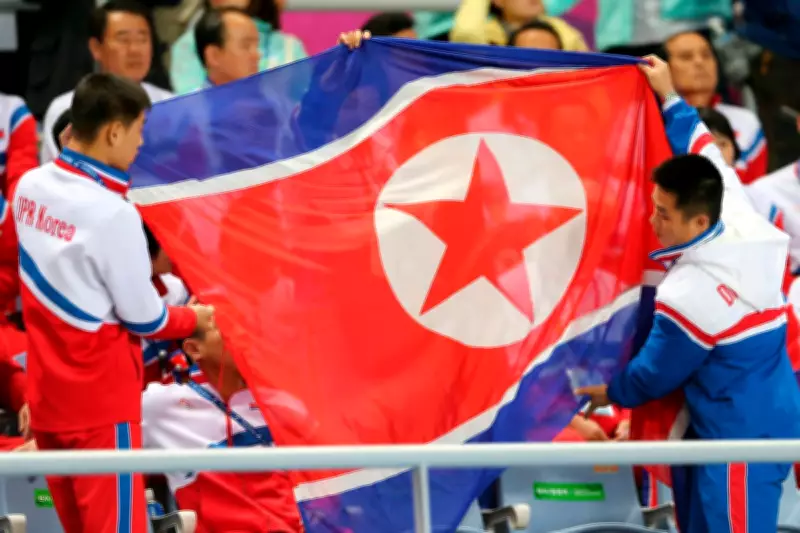
A North Korean women's soccer team is scheduled to compete in a regional tournament in South Korea later this month, representing a rare sports exchange between the war-divided neighbors. The South's Unification Ministry, which oversees inter-Korean affairs, announced on Monday that Pyongyang-based Naegohyang Women's FC is expected to face Suwon FC Women on May 20 in the semifinals of the Asian Football Confederation Women's Champions League. The match will take place in Suwon, a city south of Seoul.
Background of the Tournament
The Korea Football Association, South Korea's soccer governing body, confirmed that the AFC notified it of the North Korean team's submission of a roster of players and staff for the trip to Suwon. The KFA further stated that North Korea would face a fine from the AFC if the team failed to participate in the semifinals. North Korea's state media has not yet reported on the planned visit.
This marks the first time North Korean athletes have traveled to South Korea since December 2018, when they attended a table tennis event. That period of diplomatic engagement was highlighted by North Korea's participation in the 2018 Winter Olympics in the South, where a high-level delegation accompanied the athletes. The last appearance of North Korean female soccer players in South Korea was at the 2014 Asian Games in Incheon. North Korea's women's teams have achieved recent success in international youth competitions, currently holding the Under-17 and Under-20 World Cup titles.

Recent Performance
In the continental club tournament, Naegohyang Women's FC previously defeated Suwon FC Women 3-0 during the group stage in Myanmar last November. They later advanced by beating a Vietnamese club in the quarterfinals in March. The winner of the May 20 semifinal will face the victor of the other semifinal between Melbourne City FC and Tokyo Verdy Beleza, with the final scheduled three days later in Suwon.
While athletes from North and South Korea have historically competed on unified teams and marched together during Olympic ceremonies in periods of warmer relations, sports exchanges have dwindled as bilateral ties soured. There have been no inter-Korean sports activities for several years. North Korea has avoided dialogue with South Korea and the United States since leader Kim Jong Un's nuclear diplomacy with former U.S. President Donald Trump collapsed in 2019 over disagreements regarding U.S.-led sanctions. Tensions have escalated as Kim intensifies his nuclear and missile programs, targeting Asian U.S. allies and the U.S. mainland, while adopting a harder stance toward South Korea. Kim has labeled South Korea as his most hostile adversary and has actively sought to block the influence of South Korean culture and language among his population.