

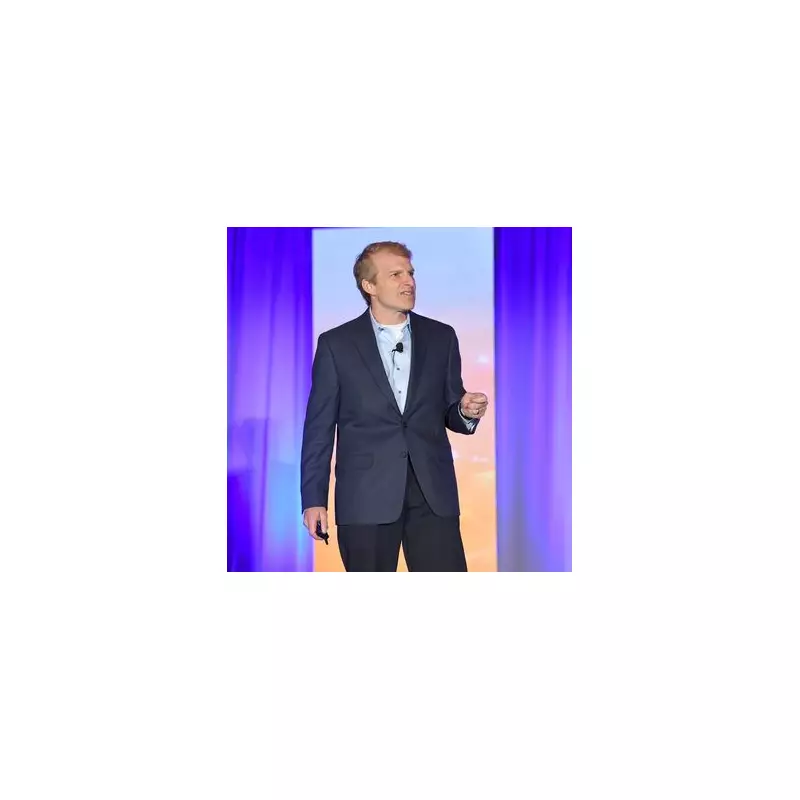
A leading public speaking expert from Stanford University has revealed a remarkably simple breathing technique designed to make anyone sound more confident and polished by dramatically reducing hesitant filler words like 'um' and 'like'.
The 'Landing Phrases' Method Explained
Matt Abrahams, a lecturer at the Stanford Graduate School of Business and host of the 'Think Fast, Talk Smart' podcast, shared the method on the popular Huberman Lab podcast. He credits the technique, known as 'Landing Phrases', to veteran communications coach Jerry Weissman.
Abrahams explained that the core principle is physiological: speech requires exhaled air. "When we speak, we need to be pushing air out. If I am inhaling, I can’t speak," he stated. He challenged listeners to try saying "um" while inhaling, noting it's impossible. The technique involves training yourself to be completely out of breath at the end of each sentence or key phrase.

How to Practice the Confidence-Boosting Hack
"So if I train myself at the end of my sentences and phrases to 'land the phrase' - to be out of breath - I have to inhale," Abrahams said. "Not only can I not say 'um,' I can't say anything: I build in a pause." This intentional pause, created by the need to inhale, naturally eliminates the space where filler words creep in.
He compares it to a gymnast sticking a landing after a series of complex moves. To build the habit, he recommends a daily practice exercise: read your daily schedule aloud. After each entry, such as "Going to lunch with Andrew" or "Working out at the gym," consciously land the phrase by speaking until you are out of breath, then inhale. This muscle-memory training embeds the pattern into your natural speech.
Transforming Everyday Communication
While filler words like "you know," "basically," and "I mean" are common in casual chat, they can undermine authority and clarity in professional or formal settings. Abrahams, who uses the method himself, insists that with practice, "you can reduce significantly the filler words."
The technique offers a practical solution for anyone wanting to sound more deliberate and assured, from important presentations to everyday meetings. By focusing on breath control, speakers can replace unconscious hesitation with purposeful pauses, projecting greater confidence and competence.






