
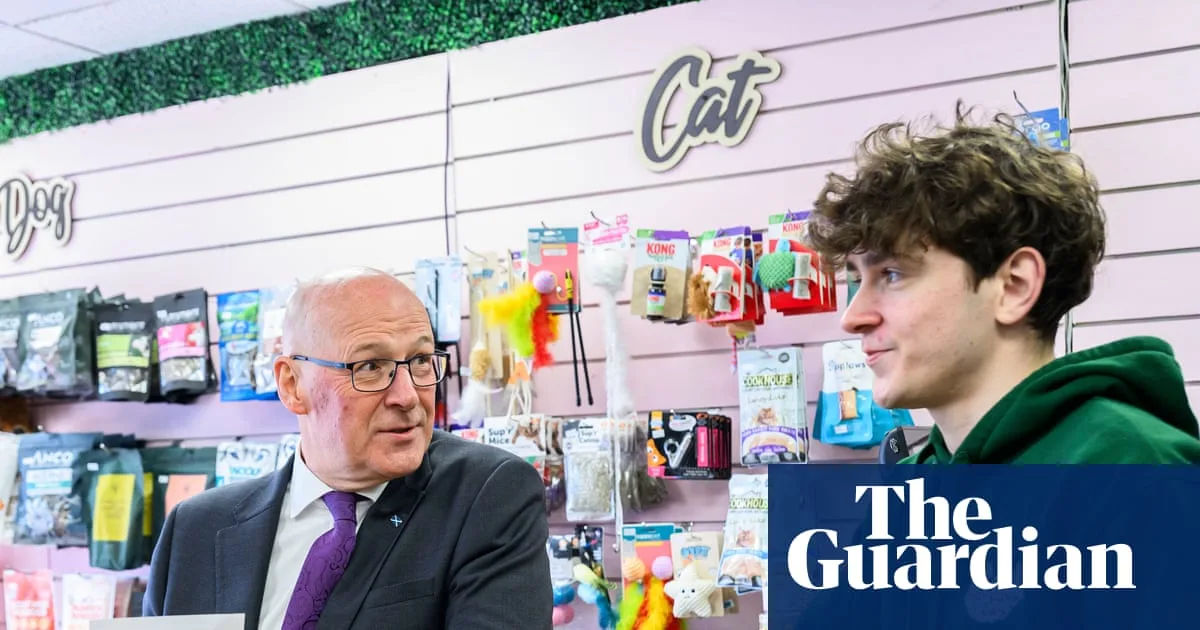
The Scottish National party is facing an unpredictable Holyrood election, with disaffected voters potentially denying it a majority. During a campaign walkabout in Hamilton, leader John Swinney was confronted by angry constituents, including a pro-independence voter who said she was losing faith due to the council's failure to address dampness in her flat, which had caused her sons' asthma. Another voter, a Glasgow bar owner, refused to vote SNP after a 438% increase in business rates.
Polling by the Diffley Partnership projects the SNP winning 56 seats, short of the 65 needed for a majority. Labour is predicted to win 18 seats, its worst Holyrood performance, while Reform UK would take 19, the Greens 16, Conservatives 11, and Liberal Democrats 9. The campaign has been described as uninspiring, with a high number of undecided voters.
Scottish Labour leader Anas Sarwar held a rally in Glasgow, urging voters to reject Reform and beat the SNP. Despite private admissions that Labour will not beat the SNP, senior figures claim they could win up to 23 constituency seats. Labour has invested £200,000 in a social media advertising blitz to attract wavering voters.
The SNP has doubled down on its core strategy by pledging a vote on independence powers on day one of the new parliament. It has also enlisted celebrity supporters, including actor Alan Cumming, who urged followers to vote SNP in every constituency. The Scottish Greens, hoping for a record number of seats, are not standing in every seat, which some see as a tactical error.
Reform UK's campaign has been chaotic, but the party is projected to win 19 seats, potentially surpassing Labour. Overall, turnout and tactical voting could upend expectations in an election that remains highly uncertain.




