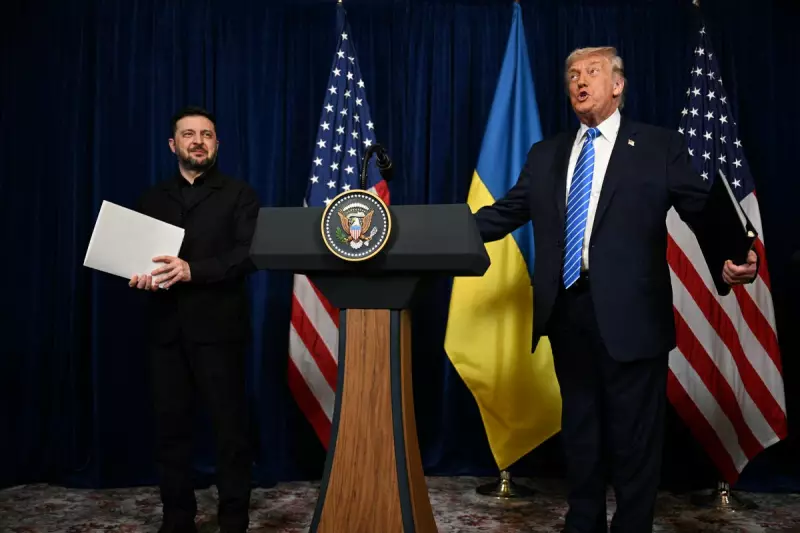
Ukrainian President Volodymyr Zelensky has revealed that Kyiv is actively discussing the potential deployment of US troops to Ukraine as part of ongoing peace negotiations with American leader Donald Trump. The move, described by Zelensky as a major security boost, signals a significant potential shift in Western military support.
Security Guarances and Troop Deployment Talks
In a digital briefing with reporters via WhatsApp on Wednesday, President Zelensky confirmed the discussions. "Of course, we are discussing this with President Trump and with representatives of the Western coalition supporting Kyiv," he stated. "We want this. We would like this. This would be a strong position of the security guarantees."
The White House, however, declined to comment on the possibility of dispatching American forces under any future peace settlement with Russia. This development comes amidst a fragile diplomatic process, with Zelensky reiterating his commitment to talks and expressing readiness to meet Russian President Vladimir Putin "in any format."

Russian Escalation and Drone Strike Allegations
As peace talks continue, Moscow has taken a starkly escalatory step. Russia's defence ministry announced the official activation of its nuclear-capable Oreshnik missile system, deploying it within the territory of its ally, Belarus. This location shares borders with NATO members Poland, Lithuania, and Latvia.
The ministry did not disclose the number of missiles deployed or their precise locations. Russian President Vladimir Putin had previously warned that the Oreshnik, whose name translates to "hazelnut tree," would be combat-ready by the end of December. He has boasted that its Mach 10 warheads are impossible to intercept and cautioned the West it could be used against Ukraine's NATO allies.
Simultaneously, tensions were further inflamed by unverified Russian claims of a Ukrainian drone attack on President Putin's personal residence in Valdai. Ukrainian Foreign Minister Andrii Sybiha dismissed the accusation, stating Moscow failed to provide "plausible evidence." The US Ambassador to NATO, Matthew Whitaker, also expressed scepticism, noting the timing seemed "indelicate" with peace talks underway.
Ukraine's Drone Strikes and European Backing
In a confirmed strike, Ukrainian drones damaged port infrastructure and a gas pipeline in the Russian Black Sea port of Tuapse early on Wednesday. Regional authorities reported no injuries, but emergency crews were dispatched for repairs. Imagery circulated on Telegram channels appeared to show a large fire at the site.
European nations rallied behind Kyiv regarding the unsubstantiated attack on Putin's residence. A source close to French President Emmanuel Macron stated there was no evidence to support Russia's claims, adding that "Ukraine and its partners are committed to a path of peace." The German government echoed concerns that the allegations could be used to justify further escalation.
An Uncertain Path to Peace
Analysts remain cautious about the prospects for a swift resolution. Natia Seskuria of the Royal United Services Institute (RUSI) told The Independent that talk of progress was "premature" while the critical issue of territorial settlement, particularly the future of the Donbas region, remains unresolved. She noted a lack of clarity on whether President Trump is pressuring Russia for substantive concessions.
The concurrent events—talks of US boots on the ground, the deployment of advanced Russian nuclear missiles, and a flurry of drone strikes and allegations—paint a picture of a conflict where diplomatic manoeuvres and military posturing are intensifying in tandem. The path to a durable peace agreement appears fraught with significant and unresolved challenges.