
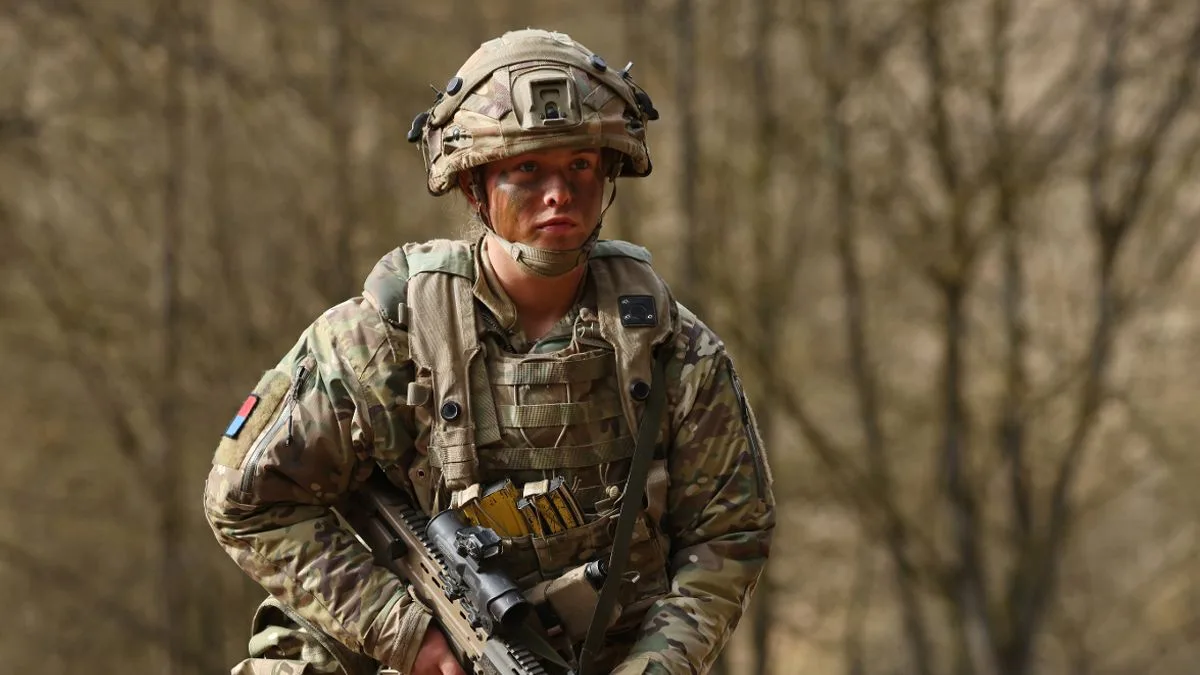
As warnings grow that Vladimir Putin is preparing for a larger conflict in Europe, experts have urged Britons to prepare for a war on the scale of their grandparents' generation. While Prime Minister Keir Starmer insisted last year that "nobody is talking about conscription," some fear current army numbers are insufficient. Professor Anthony Glees, an expert on European affairs from the University of Buckingham, said: "One of the most important and cheapest ways we have of countering and addressing these myriad real threats to our way of life, increasing the size of our armed forces through some form of conscription, is totally ignored."
A YouGov poll earlier this year found that 72 percent of the public supported women being conscripted alongside men if the measure were reintroduced. During World War II, all men aged 18 to 41 had to register for National Service, and a 1941 act called up single women and widows aged 20 to 30 without children. By mid-1943, almost 90 percent of single women and 80 percent of married women were doing essential war work, according to the BBC.
Women today can apply for all roles in the armed forces, including combat and the Royal Marines, after restrictions were lifted in 2018. However, the UK has never called up women for direct combat. If conscription were reintroduced, certain job roles would likely be exempt, but most would be expected to contribute. The National Service system continued until May 1963, when the last serviceman was discharged.
In modern Britain, the government is reportedly developing a new scheme to incentivise young people to train as soldiers. Open for recruitment in March 2026, the 'gap year' military programme for under-25s is modelled on an Australian initiative. It will start with a cohort of 150, with hopes to reach over 1,000 per year. Professor Glees called the absence of conscription in the National Security Strategy report "revealing and depressing."




