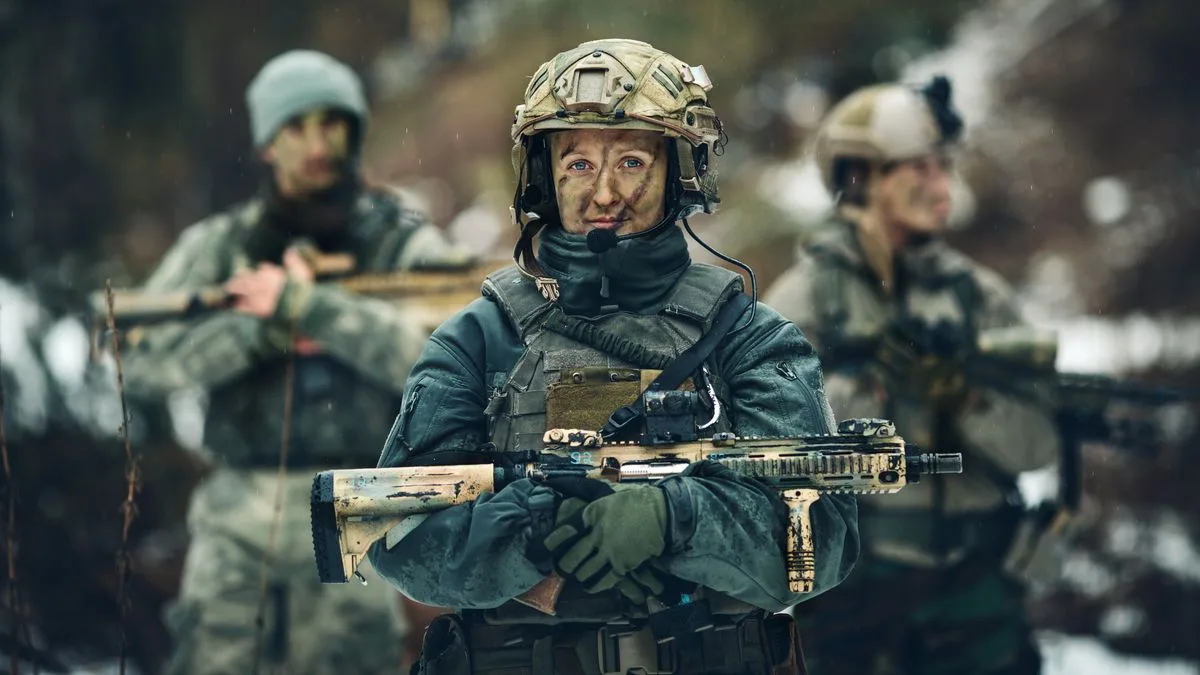
Women Could Face Conscription in UK if WW3 Erupts, Experts Warn
Women could be conscripted if UK goes to war

Amid escalating global tensions and stark warnings from security experts, the United Kingdom is being forced to confront a sobering question: would its armed forces be large enough in the event of a major war? The debate has reignited discussions about the potential return of conscription, including the historically unprecedented step of drafting women.

The Growing Call for a Larger Defence Force

With Vladimir Putin's regime issuing repeated threats towards European capitals, including Berlin, Paris, and Vienna, the security landscape is shifting rapidly. In December, leading Kremlin propagandist Vladimir Solovyov declared on his nightly show that "a nuclear strike on Britain is inevitable", chillingly underscoring the heightened state of alert.

Prime Minister Keir Starmer has pledged to spend five per cent of GDP on national security within a decade, aiming to unify civilian and military efforts in a manner not seen since 1945. However, despite his previous insistence that "nobody is talking about conscription", defence analysts are sounding the alarm. Professor Anthony Glees, a European affairs expert from the University of Buckingham, argues that increasing armed forces numbers through some form of conscription is a vital, cost-effective measure being ignored.

Public Support for Female Conscription in a Crisis

The UK has never compelled women to serve in direct combat roles through conscription. However, public opinion appears to be evolving. A YouGov poll from earlier this year revealed that 72% of respondents supported conscripting women alongside men if national service were ever reintroduced.

This marks a significant shift from the nation's last experience with mass conscription during the Second World War. In 1939, all men aged 18 to 41 were called up. It wasn't until 1941, with the second National Service Act, that single women and widows aged 20 to 30 without children were drafted for essential war work. By mid-1943, nearly 90% of single women and 80% of married women were contributing to the war effort.

Modern Context and Future Preparations

Today, all roles in the British armed forces, including ground combat and the Royal Marines, have been open to women since 2018. The government is also exploring new recruitment avenues, such as a reported "gap year" military programme set to launch in March 2026. Modelled on an Australian initiative, it aims to attract under-25s to build life skills and boost army numbers against the backdrop of Russian aggression.

Yet, for some experts, voluntary schemes are insufficient. Professor Glees contends that a well-trained, expanded land army is a crucial deterrent, stating it "will deter Putin where nukes fear to tread". The recently published National Security Strategy report describes a period of "radical uncertainty", noting that the nuclear threat is now more complex than during the Cold War, but it made no mention of conscription—an omission Glees finds "revealing and depressing".

As Britain navigates this era of heightened peril, the spectre of compulsory service, and the role women would play within it, has moved from a historical footnote to a pressing contemporary debate.




