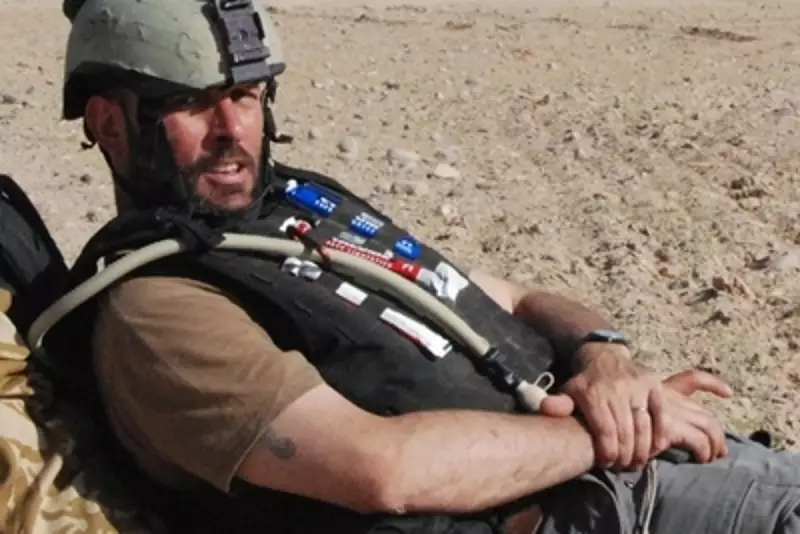
World affairs editor Sam Kiley has directly challenged Donald Trump's recent claims about NATO troop deployments in Afghanistan, drawing from his six-month embedded experience with 16 Air Assault Brigade in Helmand province. Kiley witnessed British and American forces risking their lives daily in frontline operations, contradicting Trump's assertion that alliance troops "stayed a little back, a little off the front lines."
Frontline Sacrifices in Helmand Province
During his assignment in 2008, Kiley observed NATO forces operating in some of Afghanistan's most dangerous regions. He describes US Marines racing across notoriously perilous roads and choke points, riddled with hidden explosive devices, to assist British troops in Musa Kala. This was unequivocally frontline NATO combat, with soldiers from multiple alliance nations working together under constant threat.
The Human Cost of Conflict
Kiley recounts specific individuals who paid the ultimate price during these operations. Sergeant Major Gaz O'Donnell, a George Medal recipient for bomb disposal work in Iraq, worked tirelessly in Helmand to detect and disarm improvised explosive devices. Using a household brush to expose trip wires in the sand, O'Donnell operated with precision until his tragic death during a mission. His colleague Mike Webb had to crawl under Taliban observation to recover O'Donnell's remains from a dusty river valley near Musa Qala.

The article highlights other casualties including Jay Bateman and Jeff Doherty, killed in a Taliban ambush in the Helmand Valley in June 2008. Their platoon fought desperately to recover their bodies, eventually transporting them in wheelbarrows and a stolen station wagon back to Forward Operating Base Gibraltar. For C Bruneval Company of the 2nd Parachute Regiment stationed there, the six-month deployment saw approximately one-third of personnel killed or injured.
Trump's Historical Comments on Military Sacrifice
Kiley contextualizes Trump's recent remarks within a pattern of comments about military personnel. In 2018, Trump reportedly referred to American war dead buried near Paris as "losers" and cancelled a visit to their cemetery due to rain. He allegedly called 1,800 US Marines killed at Belleau Wood during World War I "suckers" and questioned why the United States intervened on the Allied side.
The article notes Trump's avoidance of Vietnam War service through a medical deferment for bone spurs, contrasting this with Senator John McCain's military record. McCain was shot down over Vietnam in 1967, endured years as a prisoner of war, and received multiple decorations including the Silver Star and Purple Hearts. Trump commented in 2015: "He's not a war hero. I like people who weren't captured."
The NATO Mission in Afghanistan
Kiley reflects on the evolving nature of the NATO mission in Afghanistan by 2008. Originally launched to dismantle terrorist safe havens following the 9/11 attacks, the operation had transformed into a complex nation-building effort with multiple objectives. These included protecting the Afghan government, promoting girls' education, and combating opium production. While the immediate threat to NATO nations had diminished, alliance members continued to fight alongside American forces.
The article also references NATO participation in the 2003 Iraq invasion, which British intelligence and military officials reportedly opposed based on concerns about its likely outcome. Despite these reservations, British forces followed their American allies into what Kiley describes as an "ill-fated and stupid mission."
International Cooperation Under Fire
Kiley emphasizes the multinational nature of NATO operations in Helmand. British troops worked alongside Danish artillery experts and forces from across the alliance. One senior British officer praised an Estonian platoon's ferocity in combat, remarking that "once they were unleashed I thought we might never be able to call them back."
Between combat operations, soldiers found moments of levity, engaging in playful activities like constructing catapults from jock-straps and surgical tubing to launch flour-soaked water bombs at officers. These moments of camaraderie provided brief respite from the constant danger of their deployment.

Legacy and Respect for Service
Kiley concludes by suggesting Trump's comments demonstrate a fundamental misunderstanding of military sacrifice. He notes that British troops have long been regarded as among NATO's most effective combat forces, despite reductions in military capacity. The article ends with a pointed observation that, given Trump's expressed contempt for their efforts, the former president might wish to avoid British garrison towns where soldiers "are good with catapults" and he "would be lucky if they're loaded with only flour."
The firsthand account provides a stark counter-narrative to political rhetoric about NATO's role in Afghanistan, emphasizing the daily risks undertaken by international forces in one of the world's most dangerous conflict zones.