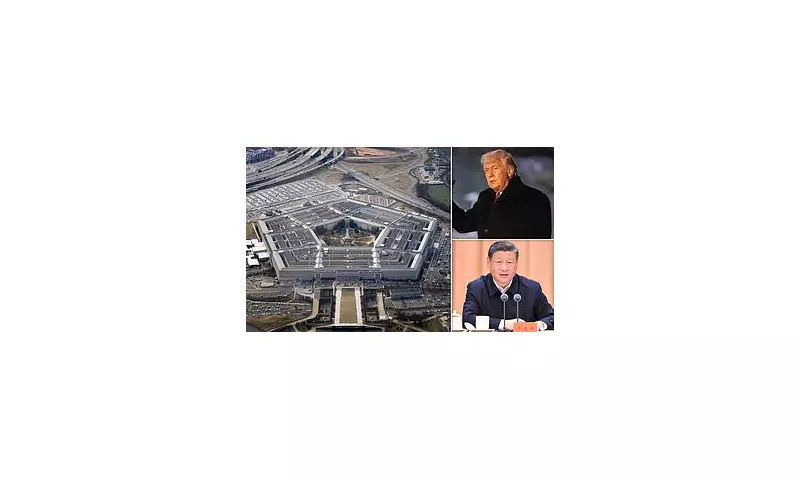
The United States administration has issued a direct call to its allies, including the United Kingdom, to assume greater responsibility for their own security frameworks. This pivotal directive forms a core component of the newly unveiled National Defence Strategy, a comprehensive 34-page document that marks the first such policy update since 2022.
A Sharp Shift in American Defence Posture
The strategy document delivers a frank critique of long-standing partners across Europe and Asia, accusing them of excessive dependence on previous US administrations to subsidise their national defence capabilities. It explicitly calls for "a sharp shift - in approach, focus, and tone", translating into a blunt assessment that allies must now bear a larger portion of the burden in countering adversarial nations ranging from Russia to North Korea.
"For too long, the US government neglected - even rejected - putting Americans and their concrete interests first," states the opening sentence of the strategy, setting a clear tone for the new policy direction.

Reasserting 'America First' in Global Strategy
The move by the Pentagon decisively reasserts the Trump administration's philosophical focus on securing dominance within the Western Hemisphere. This priority is elevated above the long-term strategic goal of countering China's influence, a shift that signals a significant recalibration of US foreign policy objectives.
The document outlines that the Department of Defence, under Secretary Pete Hegseth, will work to provide "credible options to guarantee US military and commercial access to key terrain", with particular emphasis on strategic locations such as Greenland and the Panama Canal. This follows recent diplomatic manoeuvres, including a framework agreement on Arctic security with NATO regarding Greenland and public musings from President Trump about potentially reclaiming control of the Panama Canal.
Specific Directives for Key Allies and Regions
The strategy provides detailed guidance for different allied nations and regions:
- For Europe: The document asserts that while "Russia will remain a persistent but manageable threat to NATO's eastern members for the foreseeable future", the alliance's European members are collectively powerful enough to "take primary responsibility for Europe's conventional defence". It notes a planned calibration of US force posture in the European theatre to refocus on priorities closer to the American homeland.
- For the Indo-Pacific: China is characterised as a settled force in the region that requires deterrence from dominating the US or its allies, rather than confrontation. "The goal is not to dominate China; nor is it to strangle or humiliate them," the strategy clarifies, adding that this approach "does not require regime change or some other existential struggle." Notably, the document makes no specific mention or guarantee of support for Taiwan, a departure from the 2022 strategy under President Biden.
- For Northeast Asia: A clear example of burden-shifting is presented regarding the Korean Peninsula. The strategy states that "South Korea is capable of taking primary responsibility for deterring North Korea with critical but more limited US support."
Diplomatic Tensions and Strategic Warnings
This new strategic posture arrives amidst heightened diplomatic friction. President Trump recently criticised the UK over the Chagos Islands, labelling the move as "an act of great stupidity". Furthermore, a public exchange with Canadian Prime Minister Mark Carney at the World Economic Forum underscored tensions, with Carney repudiating Trump's assertion that "Canada lives because of the United States."
The defence strategy echoes this firm stance towards neighbours, stating: "We will engage in good faith with our neighbours... but we will ensure that they respect and do their part to defend our shared interests. And where they do not, we will stand ready to take focused, decisive action that concretely advances US interests."

Contrast with Previous Administration and Broader Implications
This 2024 strategy presents a stark contrast to the last National Defence Strategy published in 2022 under President Joe Biden, which identified China as America's primary "pacing challenge" and committed to supporting Taiwan's self-defence. The new blueprint instead reinforces the "America First" philosophy, favouring strategic non-intervention overseas, questioning decades-old alliance structures, and unapologetically prioritising concrete US interests.
The document also references recent actions, such as the operation that ousted Venezuelan President Nicolas Maduro, as a signal to "all narco-terrorists", while expressing a desire for "stable peace, fair trade, and respectful relations with China" following trade war tensions.
For the United Kingdom and other European allies, this strategy necessitates a profound reassessment of defence spending, capability development, and strategic autonomy in an era where the US commitment to underwriting regional security is being explicitly scaled back.