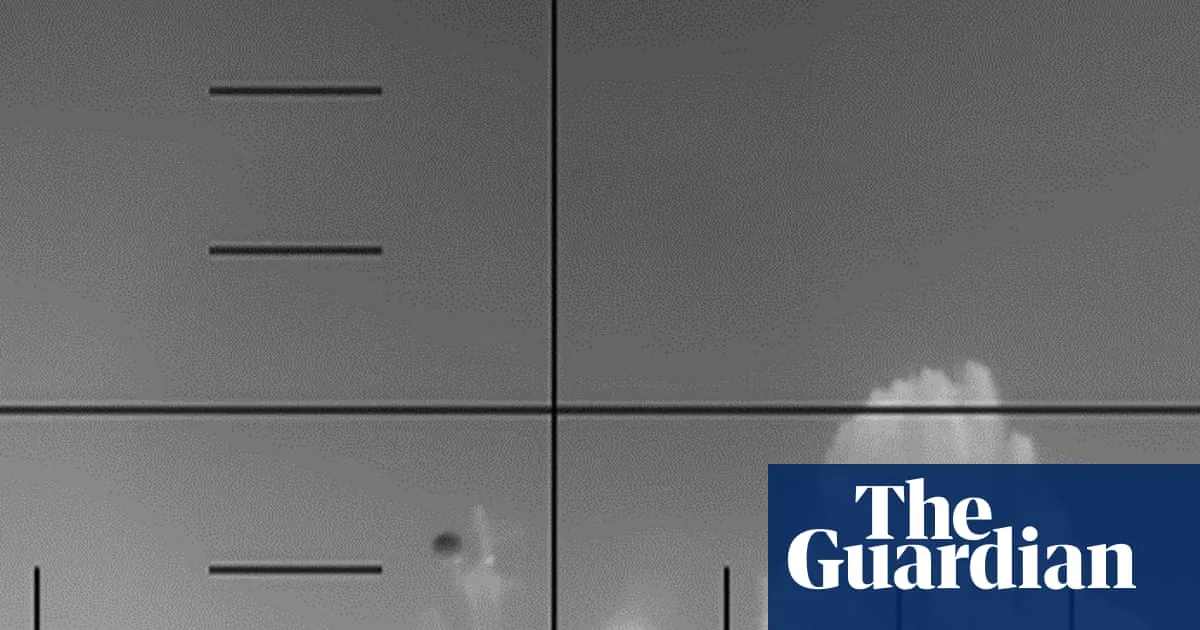
US Submarine Torpedoes Iranian Frigate in Historic Naval Engagement
A United States submarine has executed a significant naval strike, sinking the Iranian frigate IRIS Dena off the southern coast of Sri Lanka. The incident, confirmed by US Defense Secretary Pete Hegseth, resulted in the tragic loss of 87 lives. Secretary Hegseth described the attack as resulting in a "quiet death," underscoring the stealthy nature of the operation.
This event is historically notable as it marks the first instance since the Second World War where a US submarine has launched a torpedo in combat, successfully engaging and destroying an enemy vessel. The use of this classic naval weapon in a contemporary conflict raises important questions about modern maritime warfare tactics and technology.
The Enduring Power of the Torpedo
Torpedoes represent a weapon system that has maintained remarkable consistency in its fundamental concept and operational principles over decades. Essentially, a torpedo functions as a small, unmanned submersible—a hybrid between a miniature submarine and a missile, engineered to target both surface ships and submarines.
Modern torpedoes have undergone significant technological upgrades. Today, they are predominantly "dual purpose," designed to effectively engage and destroy both submarines and surface vessels. While less common, single-purpose torpedoes exist and often possess greater lethality due to their specialized design.
Operationally, torpedoes are initially connected to the launching submarine via a wire or fibre-optic cable that transmits critical targeting data. These guidance wires are engineered to be severed as the torpedo approaches its target. Upon wire cut-off, the torpedo activates its own active sonar system to navigate the final distance to impact.
The exact operational range of modern torpedoes remains highly classified military information, though estimates suggest capabilities extending tens of kilometres. Propulsion systems vary between electric motors, which offer instant acceleration and higher speeds but potentially shorter range, and fuel-powered engines that may provide greater distance.
Why Torpedoes Remain a Primary Naval Weapon
Despite being a relatively old technology, torpedoes continue to serve as the principal armament for attack submarines worldwide. These submarines, as their designation implies, are specifically designed to hunt and eliminate other submarines, surface warships, and when necessary, commercial vessels.
Other submarine classes, including ballistic missile submarines (designed for nuclear retaliation) and guided missile submarines, typically also carry torpedoes for self-defence purposes. The fundamental advantage of torpedoes lies in their compatibility with the submarine's stealth characteristics.
Submarines are engineered for covert operations, capable of approaching targets undetected while remaining submerged. Launching an air missile would require a submarine to surface, dramatically increasing its vulnerability to detection. Torpedoes, which can be fired while fully submerged, therefore remain the ideal offensive weapon for submarine warfare.
Torpedoes can also be deployed by aircraft, primarily for anti-submarine missions where airborne missiles are ineffective. However, aircraft generally prefer missiles for attacking surface ships, as delivering torpedoes requires a risky close approach to the target.
Detection and Defence Against Torpedo Attacks
Underwater combat presents unique challenges. Visibility is extremely limited, and radar radio waves do not travel effectively through water. Consequently, sonar (Sound Navigation and Ranging) becomes the primary tool for detecting submerged objects, leveraging sound waves that travel faster and farther in water than in air.
Naval forces employ two main sonar types: passive and active. Passive sonar systems listen quietly for engine noises or transient sounds like torpedo tube openings. Active sonar generates loud "pings" and analyzes the returning echoes to create an acoustic picture through echolocation.
The use of active sonar is generally minimized unless absolutely necessary, as it reveals the user's position and can be detected at greater distances than it can effectively identify targets. Submarine warfare thus evolves as a complex game of stealth and detection.
Submarines attempt to approach targets covertly using passive sonar, attacking at close range where evasion becomes difficult. Conversely, warships continuously monitor with passive sonar to prevent surprise attacks, switching to active sonar only when submarine contact is suspected to enable preemptive action.
Active Defensive Measures Against Torpedoes
When a torpedo attack is detected, surface ships and submarines have several defensive options. The initial response often involves immediate acceleration and radical directional changes. This manoeuvring aims to strain or break the torpedo's guidance wires or disrupt its sonar tracking.
If guidance wires are prematurely severed, the torpedo's active sonar may fail to accurately locate the target. In some scenarios, the torpedo might even inadvertently target the launching submarine if it crosses the weapon's path during evasive actions.
Additional defences include decoy noise makers, either towed or deployed as standalone units. These devices generate bubbles and acoustic signatures designed to divert torpedoes away from the actual vessel. As a final protective measure, modern warships are compartmentalized, allowing damaged sections to be sealed off to maintain buoyancy even after significant hull breaches.
The Unmatched Threat of Stealthy Torpedo Attacks
Given the inherent stealth capabilities of modern submarines, detection before attack remains unlikely. Torpedoes themselves are typically not detected until their final approach phase when they activate active sonar. Consequently, targeted vessels often first become aware of an attack only upon torpedo detonation.
While torpedo technology may be considered classic, effective active defences against them remain limited. This contrasts sharply with aerial warfare, where missile interceptors can often destroy incoming threats mid-flight. For the foreseeable future, torpedoes will continue to dominate as the primary weapon in both submarine and anti-submarine warfare, proving that some traditional technologies remain devastatingly effective in modern combat scenarios.




