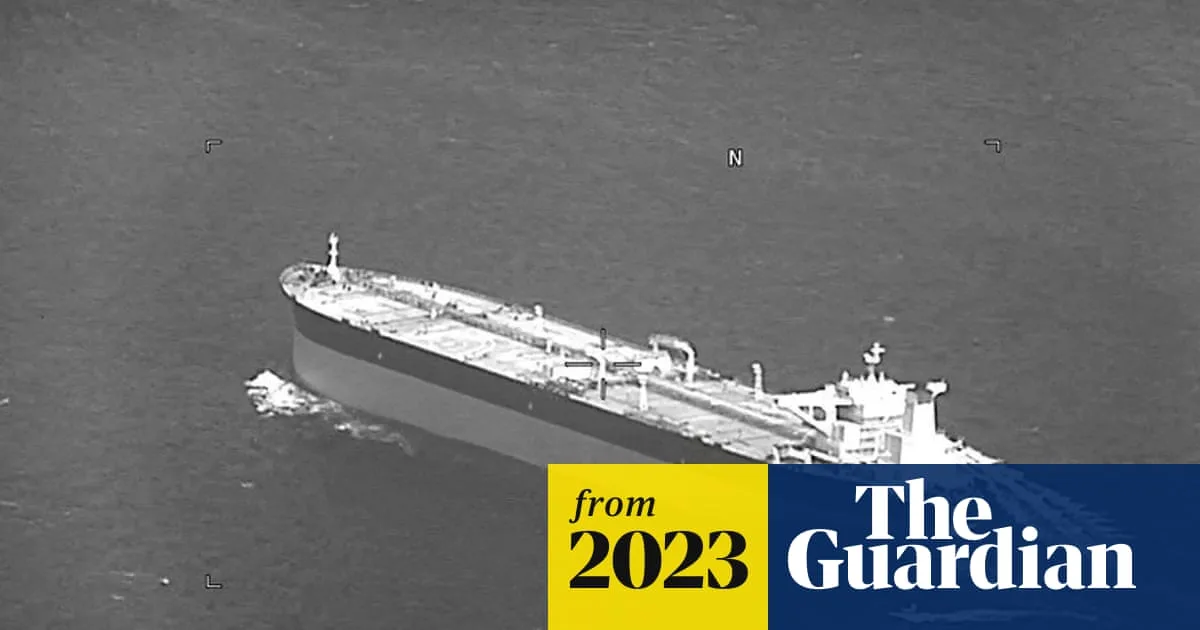
The United States has significantly escalated its military posture in the Persian Gulf, deploying additional naval and aerial assets to an already formidable armada positioned near Iran. This move comes amid heightened tensions and a war of words between Washington and Tehran.
Enhanced Naval Presence with New Destroyer
The guided missile destroyer USS Delbert D Black has been dispatched to the region, joining a powerful task force that includes the aircraft carrier USS Abraham Lincoln. This deployment brings the total number of US destroyers operating off the coast of Iran to four, substantially increasing the fleet's firepower and defensive capabilities.
Iranian forces have reportedly been monitoring these preparations closely, sending spy drones to observe the US fleet's activities. The presence of these drones underscores the precarious nature of the military standoff, with both sides engaged in intense surveillance operations.
Electronic Warfare Capabilities Bolstered
In a parallel development, the United States has deployed six EA-18G "Growler" electronic warfare aircraft to the Middle East, accompanied by four Pegasus air refuelling tankers. These specialised aircraft play a crucial role in modern warfare, capable of jamming enemy radar systems and disrupting communications networks.
Should hostilities break out, these Growlers would be instrumental in blinding Iranian radar detection systems, allowing US fighter jets from the USS Abraham Lincoln – including F35C and Super Hornet aircraft – to conduct operations with reduced risk of detection and interception.
Diplomatic and Military Tensions Escalate
The military buildup coincides with increasingly bellicose rhetoric from both sides. US President Donald Trump has warned that Iran is "running out of time," while Tehran's Islamic Revolutionary Guard Corps has declared itself "fully prepared" for potential conflict with America.
Mohammad Ghalibaf, Speaker of the Iranian Parliament, offered a conditional olive branch while simultaneously issuing a stark warning: "We are ready to negotiate with the US if the negotiations are sincere and genuine. Iran will respond if it is attacked and thousands of American military personnel will be at risk. Trump may be able to start a war but he has no control over how it will end."
European Union Imposes Additional Sanctions
The European Union has added to the pressure on Tehran by imposing fresh sanctions on 15 Iranian officials, including senior commanders of the Islamic Revolutionary Guard Corps. These measures target individuals involved in Tehran's crackdown on protests, with EU officials drawing comparisons between the sanctioned individuals and members of terrorist organisations like al-Qaeda and Islamic State.
Kaja Kallas, the EU's top diplomat, stated unequivocally: "This will put them on the same footing with al-Qaeda, Hamas, Daesh. If you act as a terrorist, you should also be treated as a terrorist." The sanctions package also targets six Iranian organisations, including online monitoring bodies.
Regional Security Implications
The escalating tensions have put neighbouring countries on high alert. Israeli forces are reportedly prepared to activate air defence systems should Iran launch a pre-emptive strike. The situation represents a delicate balancing act, with the potential for conflict to spread rapidly across the region.
A UK security source commented on the strategic calculus: "America knows Iran has never been so vulnerable to attack in years, after its proxies Hezbollah and others have been so dismantled by Israel over the Gaza war. Everyone knows how difficult regime change would be in Tehran so it may be that the US will seize this moment."
The international community watches anxiously as the United States weighs its options, with President Trump facing pressure to respond to Iran's internal crackdown while calculating the risks of military escalation. The additional sanctions from Europe further strain Iran's already struggling economy, adding another layer of complexity to an increasingly volatile situation.




