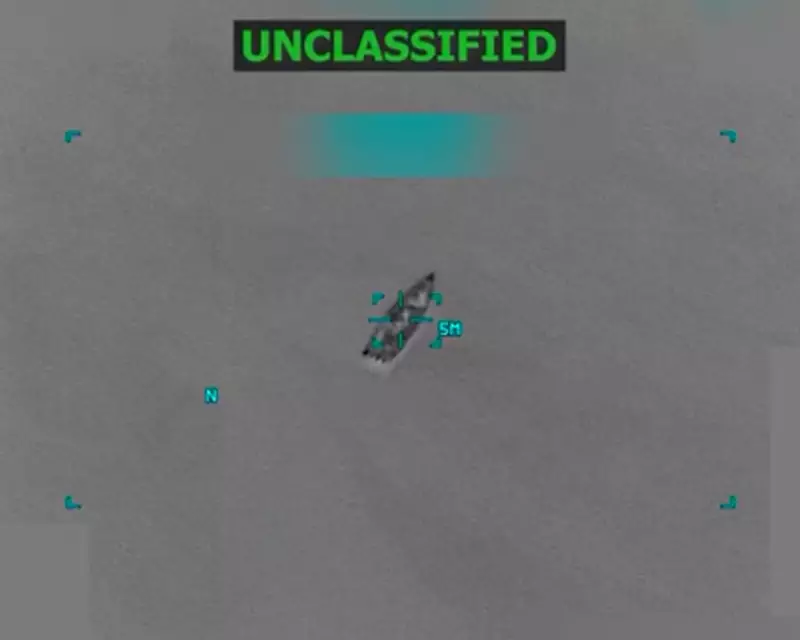
A controversial US military operation in the Caribbean, involving a second strike that killed survivors of an initial attack on a suspected drug-trafficking vessel, has ignited a fierce legal and ethical debate in Washington.
Controversial 'Second Tap' Revealed
According to a recent Washington Post report, a US strike on a boat off the coast of Venezuela on 2 September was followed by a so-called "second tap." This follow-up action reportedly targeted and killed two survivors who were clinging to the disabled vessel after the first attack. The initial strike was part of a broader campaign launched by the Trump administration in September, which has seen over 20 strikes on vessels suspected of narcotics trafficking, resulting in at least 81 fatalities.
The report suggests the second strike was carried out to comply with an alleged order from Defence Secretary Pete Hegseth to "kill everybody" onboard. This revelation has transformed what was a relatively muted response into a firestorm of controversy, prompting vows of investigation from Republican-led congressional armed services committees.

Legal Foundations Under Scrutiny
The Trump administration has justified the aggressive campaign by asserting the US is in an "armed conflict" with traffickers aligned with Venezuelan President Nicolás Maduro. It argues the strikes are therefore legal under the rules of war. However, this rationale is widely rejected by legal experts, who point out the US is not engaged in a traditional armed conflict with a group attacking its territory or assets abroad.
The focus on the "second tap" has intensified scrutiny on established laws of warfare. Rebecca Ingber, a professor at Cardozo Law School and former State Department adviser, stated, "It is manifestly unlawful to kill someone who’s been shipwrecked. This is such a longstanding textbook principle of the law of armed conflict." This prohibition is explicitly outlined in the Pentagon's own Law of War manual, which protects those who are "wounded, sick, or shipwrecked."
Superior Orders and Accountability
The manual also addresses illegal orders, stating subordinates must refuse commands that are clearly unlawful, such as to "fire upon the shipwrecked." This principle is bolstered by the Nuremberg principles and US military law, which reject obedience to superior orders as a defence for war crimes.
In response to the outcry, the administration has offered mixed explanations. While President Trump has distanced himself from the second strike, Hegseth has denied ordering the killing of survivors. Officials have alternatively suggested that Admiral Frank Bradley, the operation's commander, was targeting the disabled boat and its drug cargo, not the crew.
Legal analyst Geoffrey Corn of Texas Tech University questioned this defence: "If the boat was your alleged military necessity for the second strike, why did you have to do it while they were clinging to the side? Why couldn’t you have intervened to save them?" He and others argue the campaign mistakenly treats a criminal menace as a wartime threat, a framework that does not legally fit.
Brian Finucane of the International Crisis Group warned that fixating on the second strike risks obscuring the larger issue: "The broader campaign is really problematic... the attack itself is likely unlawful regardless of the precise details, because there is no armed conflict." As congressional investigations loom, the fundamental legality of the entire "drug boat" war now faces its toughest questions yet.