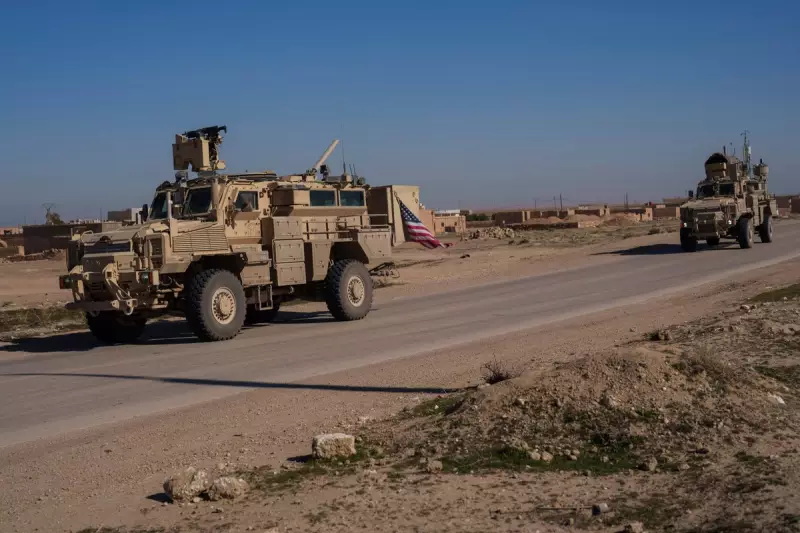
The United States military has executed a significant series of airstrikes against Islamic State (ISIS) positions in central Syria. This decisive action comes as a direct response to a fatal assault on American forces that occurred just days earlier.
Deadly Attack Prompts Military Response
Last weekend, a gunman believed to be a member of the Islamic State militant group opened fire on US personnel near the historic city of Palmyra. The attack resulted in the deaths of two US Army soldiers and a civilian interpreter. Three other American service members were wounded in the incident before security forces neutralised the assailant.
Trump's Pledge and Coalition Action
Following the assault, President Donald Trump vowed a forceful retaliation. The subsequent aerial bombardment, launched on Friday 19 December 2025, represents the fulfilment of that pledge. The operation is part of the broader, ongoing campaign conducted by the US-led coalition against ISIS remnants in the region.

Military officials have described the retaliatory strikes as 'large-scale', targeting ISIS infrastructure and operatives across a wide area of central Syria. The action underscores the continued threat posed by the extremist group, despite the loss of its territorial caliphate years ago.
Ongoing Security Challenges
This event highlights the persistent dangers faced by US and coalition forces stationed in Syria. Their mission, focused on counter-terrorism and stabilisation, continues to encounter resistance from militant factions. The latest casualties bring renewed attention to the human cost of the enduring deployment.
The Pentagon has confirmed the details of both the initial attack and the retaliatory strikes, emphasising its commitment to protecting its personnel and degrading terrorist capabilities. The situation remains fluid, with analysts watching for any potential escalation in the region following this latest show of force.