US Military Abandons Mandatory Flu Vaccine Requirement for Service Members
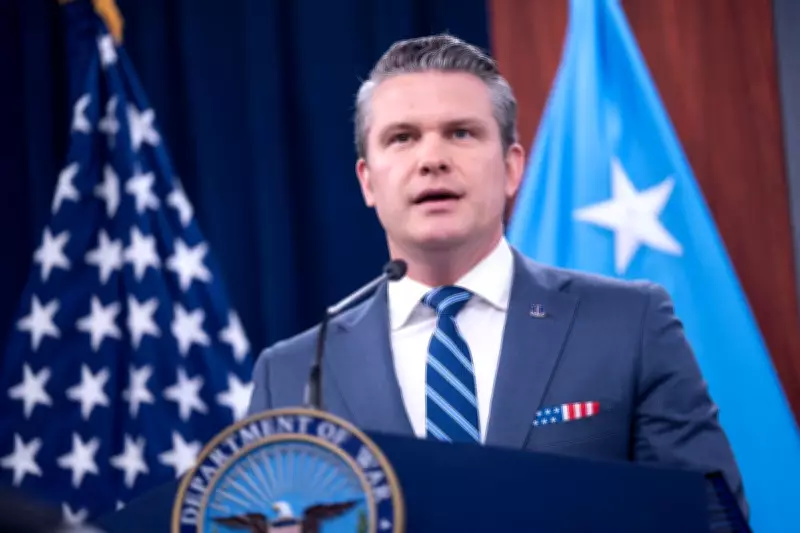
Defense Secretary Pete Hegseth declared on Tuesday that the United States military will cease mandating the influenza vaccine for all American troops. This significant policy shift, enacted through an official memo posted online, underscores a renewed emphasis on personal medical autonomy and religious freedom within the armed forces.
Hegseth Cites Overly Broad and Irrational Mandate
In a video shared on social media, Hegseth articulated the rationale behind the decision. "The notion that a flu vaccine must be mandatory for every service member, everywhere, in every circumstance at all times is just overly broad and not rational," he stated. He further emphasized that while troops remain free to receive the flu vaccine voluntarily, they will no longer be compelled to do so. "Because your body, your faith and your convictions are not negotiable," Hegseth affirmed.
The new directive does, however, permit individual military branches to petition for maintaining the vaccine requirement in specific contexts. According to the policy memo, these services have a 15-day window to submit such requests for consideration.

Historical Context and Pandemic Fallout
Vaccination initiatives in the US military have a storied history, tracing back to General George Washington's smallpox inoculation of the Continental Army in 1777. However, the issue became intensely politicized during the coronavirus pandemic. Over 8,400 service members were discharged for refusing the mandatory COVID-19 vaccine introduced in 2021, with thousands more seeking religious or medical exemptions.
Congress ultimately moved to rescind the COVID-19 mandate, which the Pentagon formally dropped in January 2023. By that time, vaccination rates among active-duty personnel were exceedingly high:
- Approximately 99% in the Navy, Air Force, and Marine Corps.
- Roughly 98% in the Army.
- National Guard and Reserve rates, while lower, generally exceeded 90%.
The subsequent Trump administration developed a policy to allow discharged personnel to reenter service with back pay, though only a tiny fraction have taken advantage of this offer. Hegseth's team has actively highlighted these reinstatements in recent months, with the Pentagon reporting in March that 153 service members separated under the COVID-19 mandate had been reinstated or 're-accessed'.
Public Health Concerns and Broader Policy Shifts
The elimination of the flu vaccine mandate follows a particularly severe influenza season, during which US infections surged significantly. Public health experts universally recommend annual influenza vaccinations for everyone aged six months and older to mitigate spread and severe illness.
This move aligns with a broader trend under the Trump administration to scale back federal vaccine recommendations. Earlier this year, the administration announced it would no longer universally recommend flu shots and certain other vaccines for all children, framing it as a decision best made by parents and patients in consultation with their doctors.
Existing Military Vaccination Framework
A 2021 report by the Congressional Research Service listed eight mandatory vaccines for service members, including those for:
- Influenza
- Polio
- Tetanus
- Measles
- Hepatitis A and B
The report noted that service members could previously request exemptions for religious reasons. Such requests triggered a formal process where unit commanders were required to consult medical and religious advisors, while also counseling the individual on potential deployment impacts. A military physician was also mandated to advise on the benefits and risks of forgoing the vaccination.
This latest policy change marks a pivotal moment in the long-standing debate between military readiness, public health imperatives, and individual liberties within the US armed forces.