In a significant escalation of military force, the United States has launched a major new offensive against Islamic State (ISIS) targets in Syria, dubbed Operation Hawkeye Strike. This campaign marks a sharp reversal in President Donald Trump's previously stated position on US involvement in the war-torn nation.
What Triggered the Latest US Military Action?
The operation was initiated following a lethal ISIS attack on American and Syrian forces near Palmyra on 13 December 2025. The assault claimed the lives of two US soldiers and an interpreter. The victims were identified as Sergeant Edgar Brian Torres Tovar, 25, and Sergeant William Nathaniel Howard, 29, both of the Iowa National Guard. Three other service members were wounded in the incident.
Within a week, the US responded with massive air strikes conducted alongside the Jordanian air force. Defence Secretary Pete Hegseth confirmed the coalition struck fighters, infrastructure, and weapons sites on 19 December, formally naming the campaign 'Hawkeye'.

The Scale and Execution of Operation Hawkeye
According to US Central Command (CENTCOM), the latest wave of strikes on Saturday 10 January 2026 involved a formidable display of air power. An unnamed official stated that over two dozen aircraft launched 90 precision munitions at more than 35 targets across Syria.
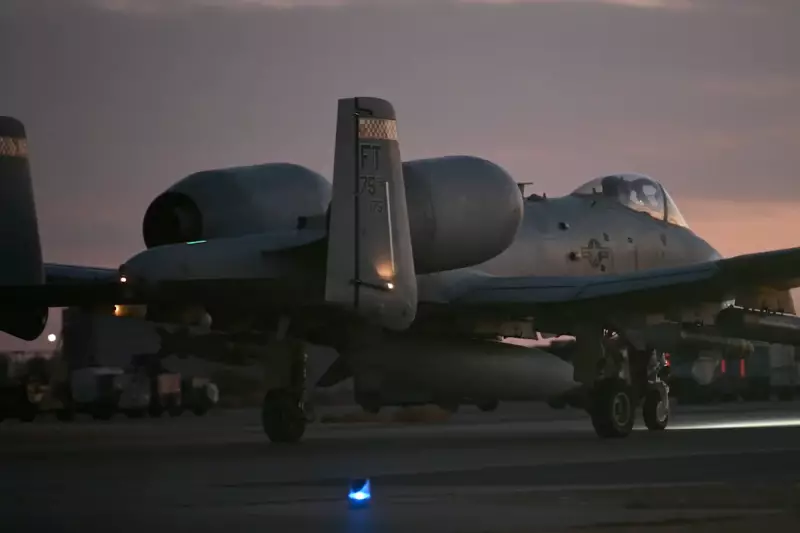
The military utilised a diverse arsenal for the December assault, including F-15 fighter jets, A-10 Warthogs, Apache helicopters, and HIMARS rocket systems. Syrian security sources reported targets were hit in the provinces of Homs, Deir ez-Zor, and Raqqa. With only around 1,000 US troops remaining in the country, no ground operations were conducted.
The Syrian Observatory for Human Rights reported that five ISIS members were killed, including the head of a cell responsible for operating drones in the region. A Syrian official described the bombardment as "intense," lasting approximately five hours.
A Strategic U-Turn and an Unlikely Alliance
Operation Hawkeye represents a stark departure from President Trump's rhetoric of just over a year prior. Following the fall of longtime dictator Bashar al-Assad and the rise of President Ahmed al-Sharaa in November 2024, then President-elect Trump opposed airstrikes in Syria, stating the US "should have nothing to do with" the country.
However, a fragile amnesty with the new Syrian government has paved the way for renewed cooperation. President Trump authorised the strikes with the stated full support of President al-Sharaa, following an agreement reached during a White House visit in November 2025. The US has since lifted sanctions on Syria as part of this shifting dynamic.
In a statement, CENTCOM reinforced its hardline stance: "Our message remains strong: if you harm our warfighters, we will find you and kill you anywhere in the world, no matter how hard you try to evade justice." The effectiveness of the strikes in curbing the resurgence of ISIS, which had moved underground after losing its territorial caliphate, remains to be fully assessed.