
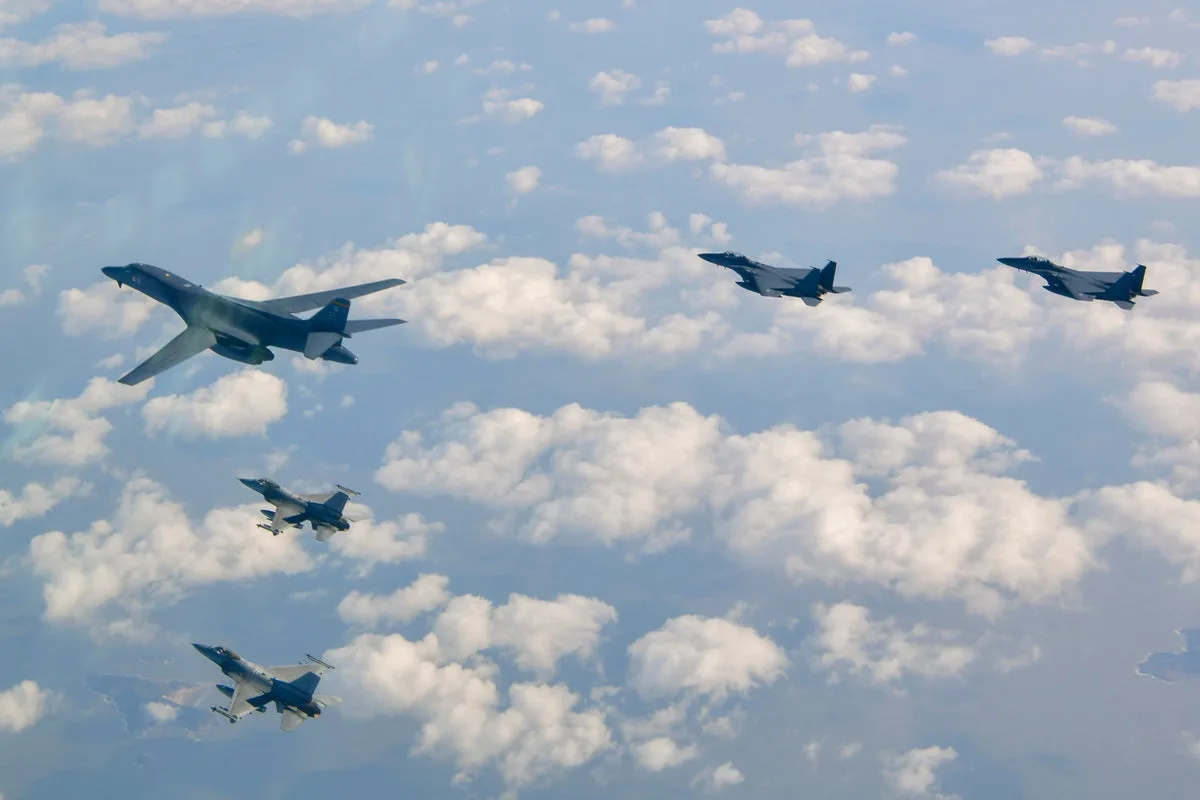
Nine US fighter jets were scrambled to intercept five Russian military aircraft detected off the coast of Alaska, the North American Aerospace Defense Command (NORAD) has confirmed. The Russian planes, spotted on Thursday, included two Tu-95 strategic bombers, two Su-35 fighters, and one A-50 spy plane, all operating within Alaska's Air Defense Identification Zone (ADIZ).
NORAD responded by launching two F-16s, two F-35s, one E-3 early warning aircraft, and four KC-135 tanker planes to identify and escort the Russian aircraft out of the zone. The command stated that the Russian activity, while regular, did not pose a threat and that the planes did not enter US or Canadian airspace.
The ADIZ is a defined stretch of international airspace requiring ready identification of all aircraft for national security. Similar intercepts occurred last September and in previous months, with NORAD noting that such incursions can test US and Nato preparedness. In September 2024, a Russian jet flew within feet of a US aircraft, and earlier that summer, Russian and Chinese planes jointly entered the zone for the first time.
The incident comes as US-Russia relations remain tense, with President Donald Trump seeking a peace deal for Ukraine ahead of the fourth anniversary of Russia's invasion. President Vladimir Putin has signalled openness to talks but insists on territorial concessions, which Ukraine has refused. Ukrainian President Volodymyr Zelensky has dismissed Putin's claims to disputed regions as baseless.




