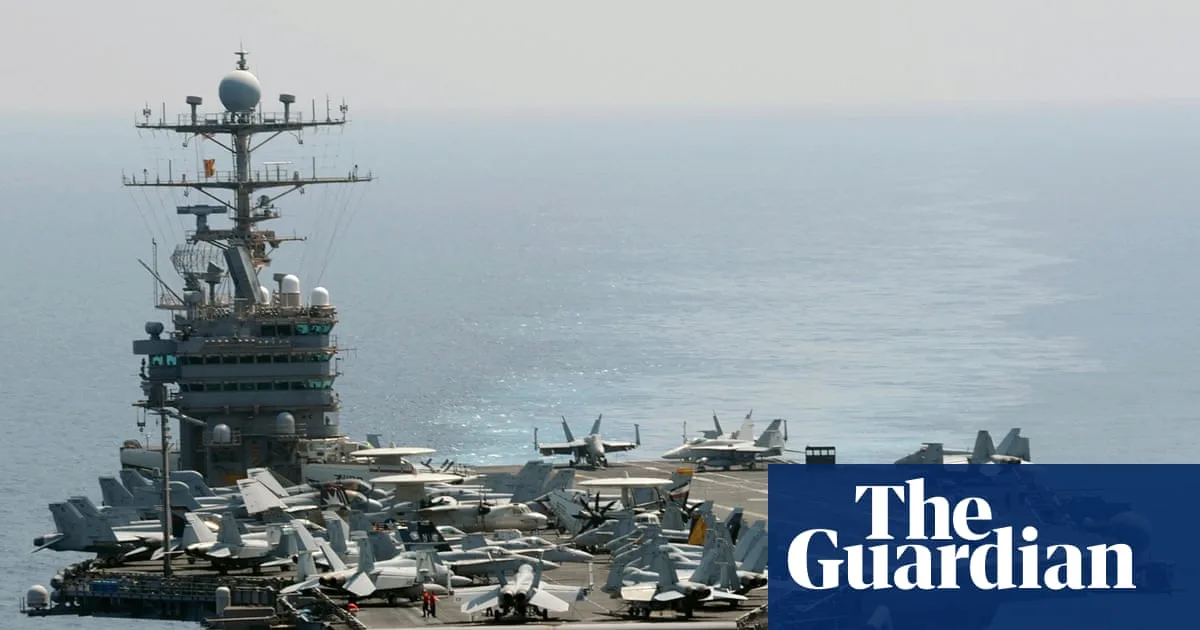
US Armada Deploys to Middle East Amid Rising Iran Tensions
US Armada Heads to Middle East as Iran Death Toll Rises

The United States is reinforcing its naval presence in the Middle East, with President Donald Trump announcing the deployment of a significant "armada" to the region. This move comes as activists report the death toll from Iran's crackdown on protests has exceeded 5,000, marking a critical escalation in tensions.

Trump's Announcement on Naval Deployment

Speaking aboard Air Force One after returning from the World Economic Forum in Davos, Trump revealed that a substantial number of US ships are heading towards the Middle East. He emphasised a cautious approach, stating, "We have a lot of ships going that direction, just in case. I’d rather not see anything happen, but we’re watching them very closely ... we have an armada ... heading in that direction, and maybe we won’t have to use it." This statement underscores the US's vigilant stance amid ongoing unrest in Iran.

Details of the Military Buildup

The deployment includes the aircraft carrier USS Abraham Lincoln, accompanied by several guided-missile destroyers, which are expected to arrive in the Middle East within the coming days. In addition to naval assets, the US is bolstering air defence systems, likely positioned around American and Israeli airbases to enhance regional security. The United Kingdom is also contributing to the military buildup, with RAF Eurofighter Typhoon jets from 12 Squadron being dispatched to Qatar at Doha's request, highlighting international coordination in the area.

Iran's Protest Crisis and Human Toll

According to the US-based Human Rights Activists News Agency (HRANA), the death toll from Iran's suppression of protests has reached 5,002 individuals. This figure comprises 4,716 demonstrators, 203 government-affiliated personnel, 43 children, and 40 civilians not involved in the protests. HRANA, known for its accuracy in previous Iranian unrest, relies on a network of activists to verify these numbers and reports that at least 26,541 people have been arrested during the crackdown.

Origins and Escalation of the Protests

The protests began on 28 December when traders in Tehran took to the streets following a sudden devaluation of the rial. The demonstrations quickly spread, with demands evolving to include calls for an end to the Iranian government, representing the most severe and deadly unrest since the 1979 revolution. Despite a brutal crackdown and an unprecedented internet blackout, sporadic protests continue, often manifesting as chants of "death to the dictator" at funerals.

International and Domestic Responses

The UN Human Rights Council is currently convening in Geneva to address the Iranian government's actions. Meanwhile, Iranian officials have issued warnings, with Ali Abdollahi Aliabadi, head of the Khatam-al Anbiya Central Headquarters, cautioning that any US military strike would make all American bases in the region "legitimate targets." Domestically, reformist voices in Iran face suppression, with newspapers like Ham-Mihan being shut down for covering the protests, and many leaders unable to openly criticise the crackdown.

Economic Factors and US Sanctions

US Treasury Secretary Scott Bessant attributed the protests to economic sanctions, claiming in Davos that maximum pressure "worked because in December, their economy collapsed." He cited issues such as bank failures, currency shortages, and import difficulties as drivers of the unrest. Iranian President Masoud Pezeshkian, however, blamed external conspiracies for turning peaceful protests violent, reflecting ongoing debates over the root causes of Iran's economic and social challenges.

Diplomatic Outlook and Future Actions

While Trump has left open the possibility of military action against Iran, following US support for Israel's recent operations targeting Iranian nuclear programmes, immediate conflict appears to have receded. Both sides are currently emphasising diplomatic efforts, though the deployment of US forces signals a readiness to respond if tensions escalate further. This situation remains fluid, with global attention focused on developments in the Middle East.




