US Plans $264m Nuclear Overhaul at RAF Lakenheath, Confirming Return of Nukes to UK
US $264m plan confirms nuclear weapons return to UK

The full extent of plans to transform a Royal Air Force base in the English countryside into a potential launch site for American nuclear weapons has been laid bare in detailed Pentagon budget proposals. A colossal $264 million overhaul of RAF Lakenheath in Suffolk will see the deployment of over 200 US personnel and major construction works to secure the site, confirming the return of US nuclear arms to British soil for the first time in 17 years.

From Speculation to Concrete Plans

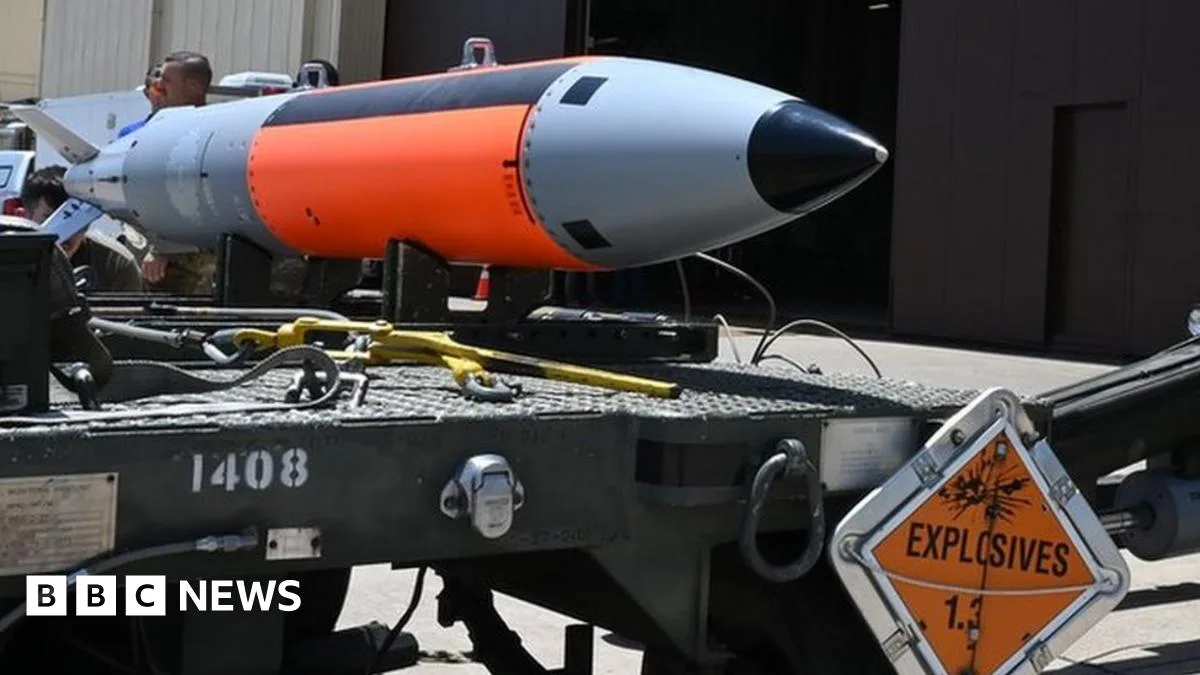
Speculation that American nuclear weapons were already in the UK reached a peak in mid-July, when a massive US Air Force C-17 Globemaster III was tracked flying from Kirtland Air Force Base in New Mexico—a key nuclear storage site—to RAF Lakenheath. Experts suspected it could be carrying B61-12 nuclear gravity bombs, weapons with a yield potentially three times larger than the Hiroshima bomb.

However, newly reviewed Pentagon assessments obtained by the Daily Mail indicate the base is far from ready to host such a mission. The documents, part of military construction budget estimates for the 2026 fiscal year, outline a multi-year, multi-million dollar programme to make the site suitable for a 'Surety' mission—the Pentagon term for the security and safety of nuclear weapons.

The $264 Million Upgrade: Command Posts and Concrete Walls

The ambitious plan is split into several key projects. A $104 million 'Surety command post' is required because the existing building earmarked as the primary command centre is deemed "beyond its useful life." Bizarrely, one specific deficiency noted is that controllers in the 'Emergency Action Cell' would not have direct, restricted access to a toilet during a crisis scenario.

Furthermore, the facility lacks adequate cooling and air filtration to support a SCIF (Sensitive Compartmented Information Facility), a high-security room for discussing top-secret intelligence. The new command post, construction of which is slated to begin in August 2027, would house critical nuclear command and control centres.

A separate $149 million operations compound will involve demolishing at least half a dozen existing structures and building a heavily fortified armory with massively thick concrete walls, possibly for anti-tank weapon storage. This project is explicitly "required to provide enhanced security capabilities supporting the potential stationing of specialized weapons."

Timeline, Personnel, and Strategic Implications

The budget also details the addition of over 200 US security personnel to the base. The building intended to house them is currently in a "deteriorated condition" with problems including asbestos, lead paint, and improper drainage. Construction of the second compound is not expected to start until 2028, with completion projected for 2031.

Planners have highlighted "high cost uncertainties in the UK construction industry" due to Brexit, COVID-19, and the war in Ukraine. Despite this, recent satellite imagery suggests preliminary fencing work has already begun. The entire nuclear mission at Lakenheath, which includes an extra $11 million for electronic security systems, totals $264 million and is funded by the US, not NATO.

This development aligns with Prime Minister Sir Keir Starmer's recent confirmation that the UK will purchase 12 nuclear-capable F-35A fighter jets from the US by the end of the decade. While Britain will own the jets, the US will retain ownership of the B61-12 nuclear weapons they carry, meaning London could not launch a nuclear strike with them without Washington's explicit approval.

The return of US tactical nuclear weapons to RAF Lakenheath, home to the US Air Force's 48th Fighter Wing and its F-35A aircraft, marks a significant shift in the West's defence posture in Europe, underscoring a strategy of "peace through strength" advocated by former President Donald Trump.




