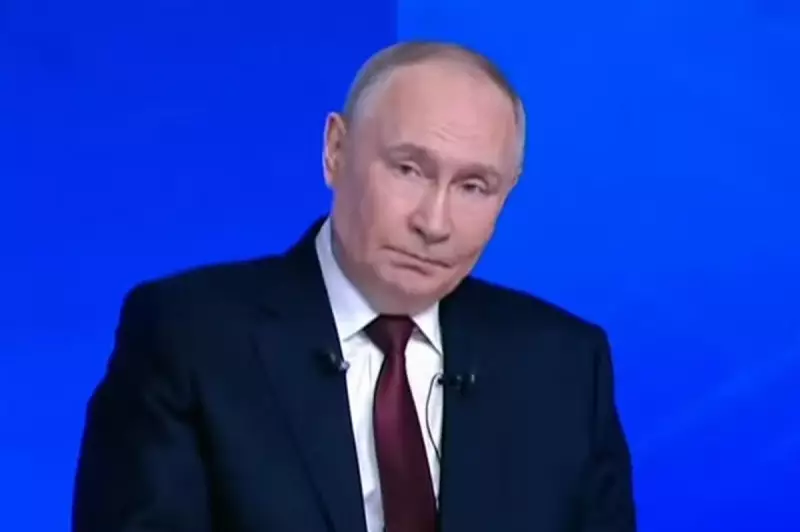
Ukraine has demonstrated formidable fighting spirit with a series of bold long-range strikes, directly responding to what many see as overly cautious support from its European allies. This escalation comes alongside high-stakes peace talks and a rambling press conference from Russian President Vladimir Putin, who labelled the EU 'burglars' over the handling of frozen Russian assets.
Ukraine's Strategic Response to Allied Hesitation
The dynamic shifted significantly after European leaders approved a substantial €90 billion loan package for Kyiv. While critical, analysts deemed this sum merely sufficient to hold Russian forces at bay, not to force a decisive reversal on the battlefield. In a clear signal of its proactive stance, Ukraine subsequently targeted an alleged Russian shadow-fleet oil tanker off the coast of Libya, a remarkable 2,000 kilometres from the front lines.
This audacious move was complemented by further Ukrainian drone operations, which successfully struck a Russian patrol ship and an offshore drilling platform in the Caspian Sea. These actions represent a calculated intensification of a long-distance battle, designed to support the grinding war of attrition being fought on Ukrainian soil. Officials frame these strikes as a fitting answer both to allied hesitation and to the four-hour monologue of obfuscation delivered by President Putin last Friday.

The Parallel Tracks of Diplomacy and Warfare
This military posture forms a deliberate backdrop to ongoing diplomatic efforts. Russian and United States negotiators, supported by representatives from Ukraine and its coalition allies, have been engaged in peace talks in Florida. However, as one editorial notes, "Mr Putin does not pause his assault on kindergartens and apartment blocks while the talks take place, so the Ukrainians should not hold back on their attacks on more legitimate targets."
Despite hopes for a ceasefire breakthrough, scepticism remains deeply entrenched regarding Moscow's true intentions. Mike Quigley, a Democratic member of the US House intelligence committee, summarised the prevailing view: "The intelligence has always been that Putin wants more." This assessment reinforces the belief that the war will only conclude when the Russian economy and public can no longer sustain the conflict's colossal burden.
A British Fighter's Perspective on Exhausting Russia
The human resolve behind Ukraine's resistance is embodied by individuals like Aiden Aslin, a 31-year-old from Nottingham. Having previously fought with the Kurdish peshmerga against ISIS, he volunteered for the Ukrainian army prior to the 2022 full-scale invasion. Captured, tortured, and later released in a prisoner swap, he has since rejoined Ukrainian forces.
In an exclusive interview, Aslin shared his conviction: "I think Russia can be beaten. I think we have got the means to exhaust their economy. Obviously, it is not an overnight thing. At some point, it is going to give." He points to internal Russian pressures, suggesting public support for the war is fracturing: "People in Russia are saying that you should end this. The grasp is weakening."
Signs of domestic strain were perceptible even during President Putin's recent lengthy public appearance. Submitted questions from Russian citizens included pointed inquiries such as "When will you return the 'normal internet'?" and demands to "Stop price increases!"
The imperative for Ukraine's allies, particularly in Europe, is now clear. Aslin draws historical parallels to Afghanistan and Napoleon, noting that defenders often ultimately prevail. To make this a reality, the editorial argument is unequivocal: allies must do more—and that means, realistically, pay more—to financially and militarily force Vladimir Putin to a point where he no longer has any interest in prolonging the devastating conflict.