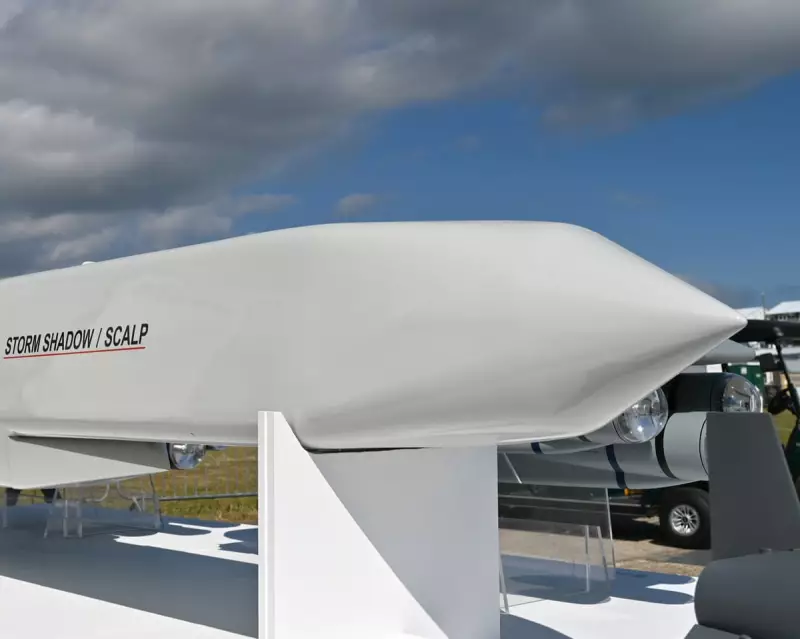
Ukrainian forces have conducted a long-range missile strike against a major oil refinery inside Russia, utilising British-supplied Storm Shadow cruise missiles. The attack marks a continued escalation in Kyiv's efforts to disrupt the logistical and fuel supplies feeding Moscow's war machine.
Precision Strike on Energy Infrastructure
The Ukrainian armed forces' general staff announced the operation on Thursday, stating that the Novoshakhtinsk oil refinery in southern Russia was successfully hit. The military reported 'numerous explosions' at the facility following the missile impact.
In a social media statement, officials emphasised the strategic significance of the target, identifying the Novoshakhtinsk plant as one of the main suppliers of petrol products in southern Russia. Crucially, they stated the refinery is directly involved in supplying fuel to the armed forces of the Russian Federation, making it a legitimate military objective.

This incident is not the first deployment of the UK's Storm Shadow missiles against targets within Russian territory. The long-range, air-launched cruise missiles, known for their precision and ability to evade air defences, have become a key asset in Ukraine's arsenal for striking high-value targets deep behind enemy lines.
Diplomatic Moves and Domestic Crackdowns
On the diplomatic front, Ukrainian President Volodymyr Zelenskyy revealed he held discussions with envoys representing former US President Donald Trump. Zelenskyy described the talks with Steve Witkoff and Jared Kushner as 'very good' in a Telegram post on Thursday.
'It was a really good conversation: many details, good ideas, that we discussed,' the president wrote. He indicated the dialogue produced 'some new ideas on how to bring the real peace closer', covering potential formats for meetings and proposed timelines. This engagement followed Zelenskyy's claim that Ukraine had secured limited concessions in a latest draft of a US-led peace plan, which is currently under review by Moscow.
Meanwhile, within Russia, a court convicted prominent pro-war activist and Vladimir Putin critic Sergei Udaltsov on charges of justifying terrorism, sentencing him to six years in prison. Udaltsov, who leads the Left Front movement, was arrested last year. Independent news site Mediazona reported the charges related to an online article he posted in support of other activists accused of terrorism. Udaltsov denounced the verdict as 'shameful' and declared a hunger strike, maintaining the charges are fabricated.
International Detentions and Symbolic Reconstructions
The Kremlin confirmed it is engaged with French authorities regarding Laurent Vinatier, a French political scholar serving a three-year sentence in Russia for collecting military information. Kremlin spokesperson Dmitry Peskov stated Russia had made 'an offer to the French' and that 'the ball is now in France's court'. The French government stated President Emmanuel Macron is closely monitoring the case and all services are mobilised to secure Vinatier's release.
In occupied Mariupol, Russian authorities are preparing to reopen the city's drama theatre, which was destroyed in a March 2022 airstrike while hundreds of civilians sheltered inside. The reconstruction is touted as a symbol of renewal, but former actors from the theatre have condemned the move as 'dancing on bones'. The theatre is scheduled to reopen by the end of the month with a performance of the Russian fairytale The Scarlet Flower.
This rebuilding effort is a centrepiece of Moscow's narrative of normalisation in occupied Ukrainian territories, a process reportedly accompanied by the arrest or exile of critics and the seizure of properties from thousands of lawful Ukrainian owners.