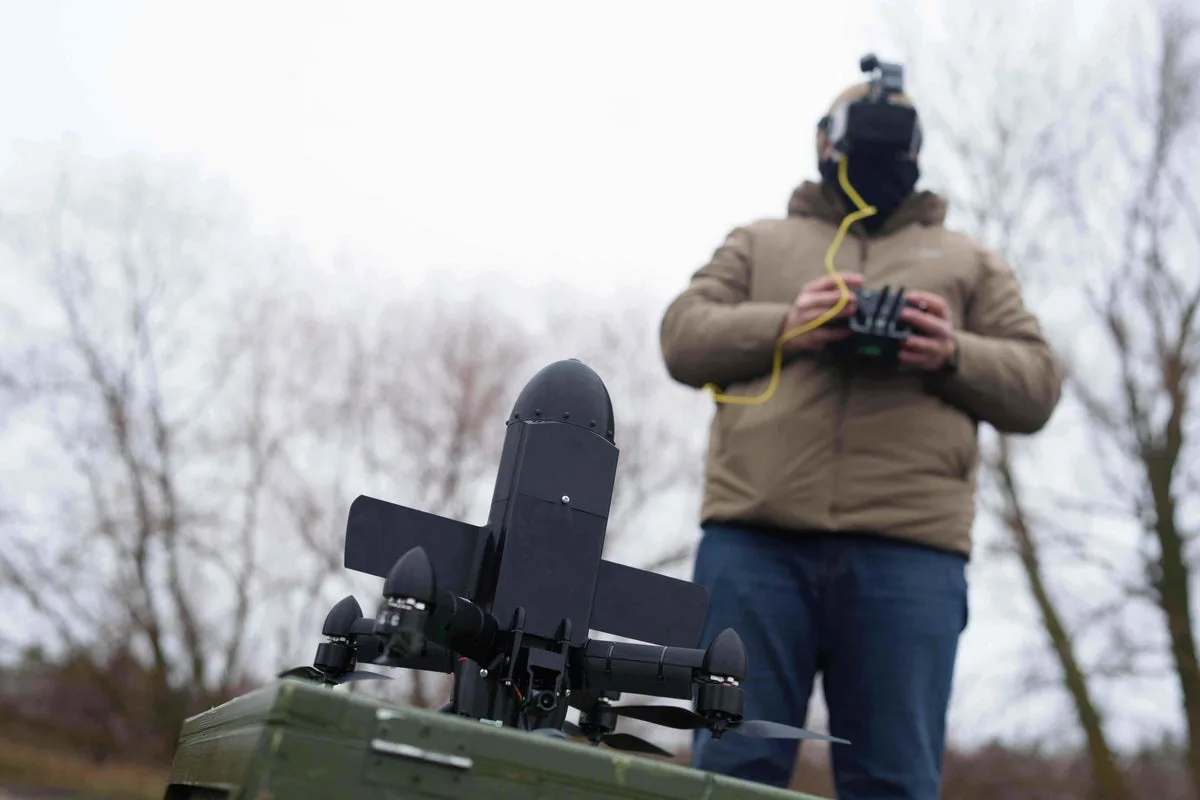
In the face of relentless nightly attacks on its cities and critical power infrastructure, Ukraine has been forced to fundamentally rethink its approach to air defence. The solution has emerged not from multi-million-pound missile systems, but from agile, homegrown technology: low-cost interceptor drones that cost as little as $1,000.
The Rise of the Cheap Interceptor
On the icy ground, elite Ukrainian drone-hunting teams work through the night. Their game-changing weapon? Interceptor drones like the Sting, shaped like a flying thermos, and the newly developed Bullet. These devices went from prototype to mass production in just a few months during 2025, representing a seismic shift in defensive tactics.
"Every destroyed target is something that did not hit our homes, our families, our power plants," explained a unit commander known by the call sign "Loi." The enemy's evolving arsenal, particularly variants of the Iranian-designed Shahed suicide drone, now fly faster and higher, demanding rapid adaptation.
Developed by volunteer-driven startups like Wild Hornets and General Cherry, these interceptors are flown by pilots using monitors or first-person-view goggles. They can surge in speed before crashing into and destroying enemy drones worth anywhere from $10,000 to an astonishing $300,000. "We are inflicting serious economic damage," said Andrii Lavrenovych of General Cherry's strategic council.
A Cornerstone of Modern Defence
Defence analysts now see these systems as indispensable. Federico Borsari of the Center for European Policy Analysis in Washington stated that cheap interceptor drones have become a cornerstone of modern counter-unmanned aerial systems. "They realign the cost and scale equation of air defence," he noted.
Their mobility and low cost allow for the protection of a wider array of targets. However, Borsari cautioned against viewing them as a silver bullet. Their success hinges on a network of sensors, swift command and control, and highly skilled operators. They form one layer in a broader defensive menu that ranges from expensive missiles down to traditional anti-aircraft guns and nets.
The Future: Automation and a European 'Drone Wall'
The hyper-scaling of drone production on both sides of the conflict is expected to continue into 2026. This urgency is driving European plans to establish a layered air-defence network known as the "drone wall" along its eastern borders. This system, to be rolled out over two years, is designed to detect, track, and intercept drones, with Ukrainian-style interceptors potentially playing a central role.
Further integration is on the horizon. Ukrainian drone makers are set to expand co-production with U.S. and European firms in the coming year, merging battle-tested designs with Western scale and funding. This will boost output and embed Ukraine into NATO-member supply chains.
Lavrenovych also points to an inevitable trend: increased automation. He argues that to protect soldiers, drones must evolve into fully autonomous robots with artificial intelligence. "Our mobile groups shouldn't have to approach the front line, where they become targets," he said.
As the conflict's innovation race accelerates, Ukraine's cheap but powerful drone killers are proving that effective defence in modern warfare depends on mass production, rapid adaptation, and smart, layered solutions.




