Europe's latest financial package for Ukraine, while substantial, amounts to little more than "starvation rations" that will fail to secure victory and could lead to a historic humiliation for the West. This is the stark warning emerging as the conflict, now in its fourth year, grinds on with no end in sight.
Putin's Maximalist Strategy and Europe's Timid Response
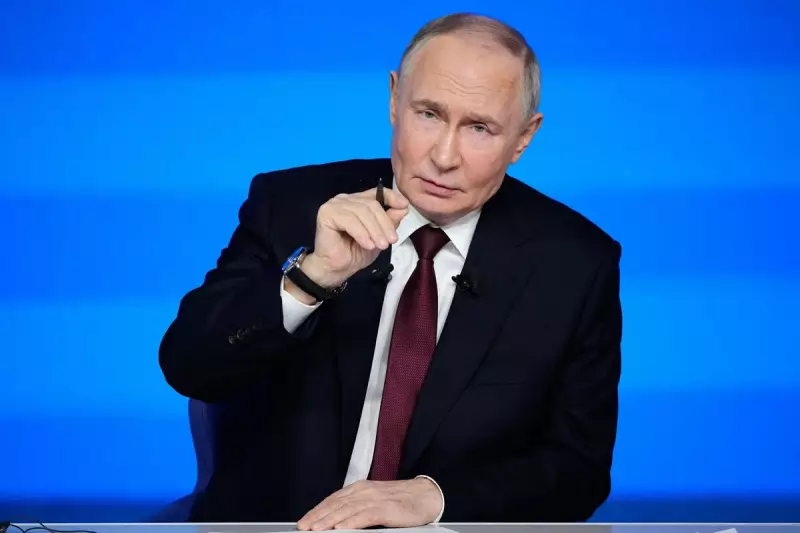
At his annual marathon press conference, Vladimir Putin once again demonstrated his unwavering commitment to a maximalist strategy in Ukraine. The Russian leader, employing a mix of military pressure, diplomatic division, and hybrid warfare, shows no sign of compromise. He derided European leaders as "burglars" for their plan to use frozen Russian assets, a plan which has since been dropped in favour of a less confrontational approach.
In contrast, the European Union's response has been characterised by division and timidity. After much squabbling, leaders agreed to a €90 billion interest-free loan intended to keep the Kyiv government functioning for perhaps two years. The unspoken hope is that by 2027, Russia will be exhausted and forced to negotiate. However, this calculation dangerously underestimates Putin's willingness to absorb immense human cost—over one million Russian casualties—and economic strain to achieve his imperial goals.

The High Cost of 'Just Enough' Support
Europe has consistently provided Ukraine with just enough support to avoid collapse, but not enough to achieve decisive victory. This approach is now reaching its limits. Ukraine faces critical pressures, including a shortage of soldiers, while Russia continues to receive support from allies like China, India, and Iran.
Furthermore, European allies remain twitchy about Ukrainian use of long-range weaponry against targets deep inside Russia, such as the successful strikes on the Russian "shadow fleet" of oil tankers. This undue nervousness persists despite Russia's nuclear threats remaining largely rhetorical. Simultaneously, some European nations continue to purchase Russian gas, undermining the collective sanctions regime.
The result is a grim stalemate. The battle lines are likely to remain largely static for another year, with the cruelties of attrition continuing. This dismal trajectory mirrors the war's early days when some nations, like Germany, initially offered only symbolic aid like helmets.
A Fork in the Road for European Security
The continent now faces a binary choice. It must decide whether it genuinely seeks to defeat a revanchist Russia, with a victorious Ukraine as a key ally, or accept a future of perpetual menace. The current path of minimal sustenance for Kyiv is unsustainable. If Europe, including Britain, fails to escalate its support—providing the weapons, funding, and political backing needed for victory—everything sacrificed thus far will have been in vain.
The consequences of failure are severe: Ukraine will cease to exist as an independent state. A humiliated Europe would then be left at Putin's mercy, anxiously wondering where his expansionist ambitions would turn next—towards Estonia, Moldova, Finland, or Poland. An enlarged and emboldened Russia would threaten the continent for decades, and this time, American rescue cannot be assumed.
The opportunity to secure a safer future remains, but it requires courage, unity, and a decisive break from the failed policy of providing just enough to survive, but not enough to win. The time for Europe to choose is now.