Britain and Norway have announced a major new defence alliance, forming a joint fleet of warships specifically designed to counter the threat from Russian submarines in the North Atlantic. The pact, aimed at safeguarding vital undersea infrastructure, comes amid a significant surge in Russian naval activity near UK waters.
A Direct Response to Escalating Russian Activity
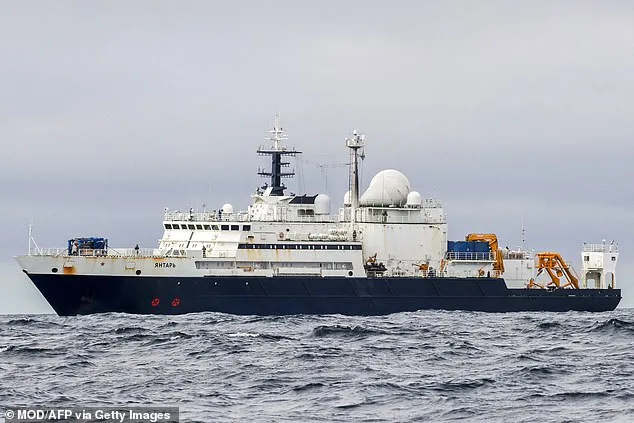
The new agreement, named the Lunna House agreement after a Second World War Norwegian resistance base in Shetland, is a direct response to heightened threats. It follows incidents like the journey of the Russian military spy ship Yantar in November 2024, which travelled from Russia's Kola Peninsula past Norway, through the English Channel and into the Irish Sea. There, it was observed operating drones near subsea energy and internet cables.
More recently, the same vessel attacked a Royal Air Force aircraft with lasers and has been spotted skulking around the Scottish coast. The UK Ministry of Defence has reported a 30 per cent increase in sightings of Russian vessels in UK waters over the past two years, underscoring the urgency of the new alliance.
The £10 Billion Warship Deal: Strength in Numbers
The strategic partnership is underpinned by a substantial £10 billion UK-Norway warship deal signed in September. Central to this are the advanced Type 26 frigates to be built at the BAE Systems yard in Glasgow. This programme will enable a combined fleet of at least 13 anti-submarine warfare ships from both nations, with a minimum of five being Norwegian, to operate together in northern European waters.
This joint force will patrol the crucial waters between Greenland, Iceland, and the UK – a key area for Russian naval movements. Their primary mission will be to defend the seabed cables and pipelines that are critical to British communications, electricity, and gas networks, which experts warn could face 'catastrophic disruption' if attacked.
Deepening Defence and Technological Ties
The pact, to be formally signed by UK Defence Secretary John Healey and his Norwegian counterpart Tore Sandvik in Downing Street, extends far beyond shipbuilding. It represents a comprehensive deepening of military cooperation between the two NATO allies on Europe's northern flank.
Key elements of the expanded collaboration include:
- The UK joining Norway's programme to develop motherships for uncrewed mine hunting and undersea warfare systems.
- Royal Marines receiving training in Norway to fight in extreme sub-zero Arctic conditions.
- Joint work on using UK-built Sting Ray torpedoes and conducting combined wargaming exercises.
- Leading NATO's adoption of autonomous systems in the High North region.
- The Royal Navy adopting advanced Norwegian Naval Strike Missiles, capable of hitting enemy ships at ranges exceeding 100 miles.
Leadership Commitment to Collective Security
Prime Minister Sir Keir Starmer, who hosted Norwegian Prime Minister Jonas Gahr Store at RAF Lossiemouth in northern Scotland, emphasised the necessity of the alliance. "At this time of profound global instability, as more Russian ships are being detected in our waters, we must work with international partners to protect our national security," Sir Keir stated.
He added that the agreement strengthens border protection, supports thousands of UK jobs in shipbuilding, and showcases British expertise on the global stage.
Defence Secretary John Healey echoed this sentiment, warning that "in this new era of threat" the UK's strength derives from "hard power and strong alliances." He affirmed, "When our critical infrastructure and waters are threatened, we step up." The agreement, he said, ensures both nations will "patrol the North Atlantic as one" and is a core part of the government's 'NATO-first' security plan.
The move follows stark warnings from the National Security Strategy Committee in September about the severe risk Moscow poses to underwater infrastructure, a concern that has grown exponentially since the full-scale invasion of Ukraine.




