
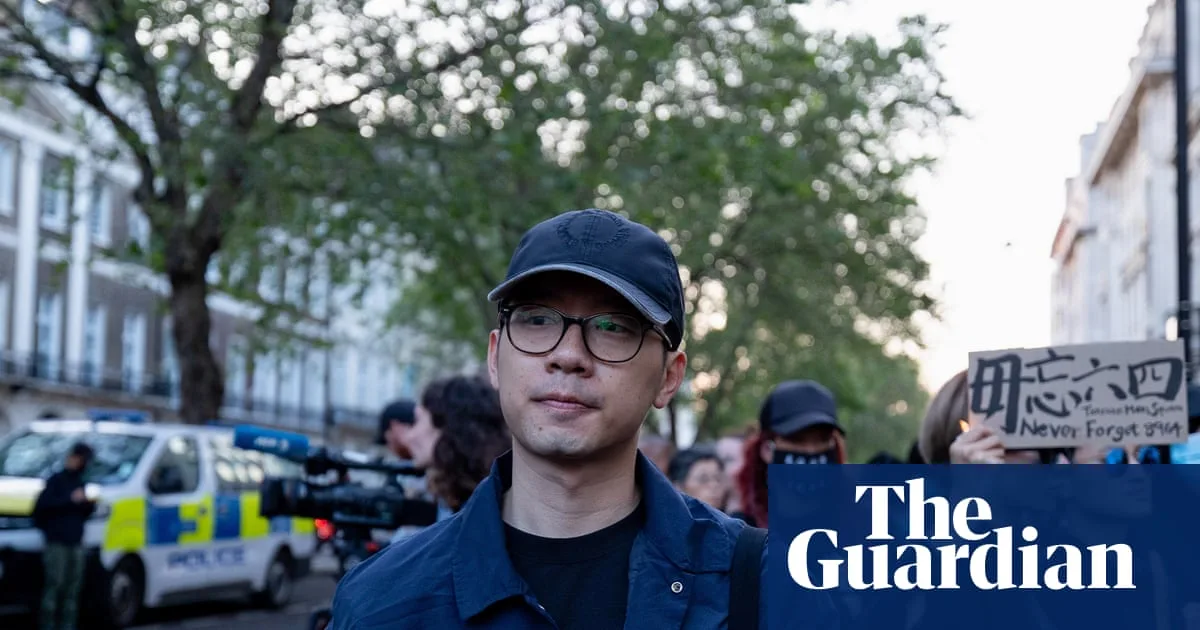
The conviction of two men for spying on Hong Kong dissidents in Britain has raised serious concerns about the security of government databases, according to exiled activist Nathan Law. Law, who lives under a £100,000 bounty from Chinese authorities, said he was not surprised by the espionage ring but was alarmed that one of the spies had access to sensitive personal information through his role as a UK Border Force official and volunteer special constable.
Chi Leung “Peter” Wai, 38, and Chung Biu “Bill” Yuen, 65, were found guilty at the Old Bailey of assisting a foreign intelligence service. It is the first time Chinese spies have been convicted in British criminal history. Yuen, the older man, was a senior manager at the Hong Kong Economic and Trade Office (HKETO) in central London, an official body that Law says has been used to ‘punish people who disagree with the government’. Wai, a dual British-Chinese national, boasted in messages about tallying up ‘cockroaches’ entering the UK.
Law, 32, had been photographed by the ring ahead of a debate at the Oxford Union in November 2023. He said he always takes precautions, but noted that Wai’s access to Border Force systems could have exposed his address and other data. ‘I can only do so much to protect myself,’ Law told the Guardian. ‘But I can’t not give details to the government, and if their databases are so accessible … then that is a worry.’
The case has shone a light on the vulnerability of Hong Kong dissidents in the UK. An NGO, Hong Kong Aid (HKA), reported that addresses of Hongkongers in Britain were exposed online in 2024, with anonymous users urging anti-immigration protesters to ‘visit’ them. HKA also said its helpline has received suspicious calls from a number linked to Hong Kong police since 2022. In January, the UK government approved plans to enhance protections for Hong Kong residents.
Law highlighted a previous incident in 2022 when a pro-democracy protester was dragged into the Chinese consulate in Manchester and beaten. ‘We’re not surprised’ by the espionage, Law said, but the trial ‘raises serious concerns about how they accessed sensitive information’.




