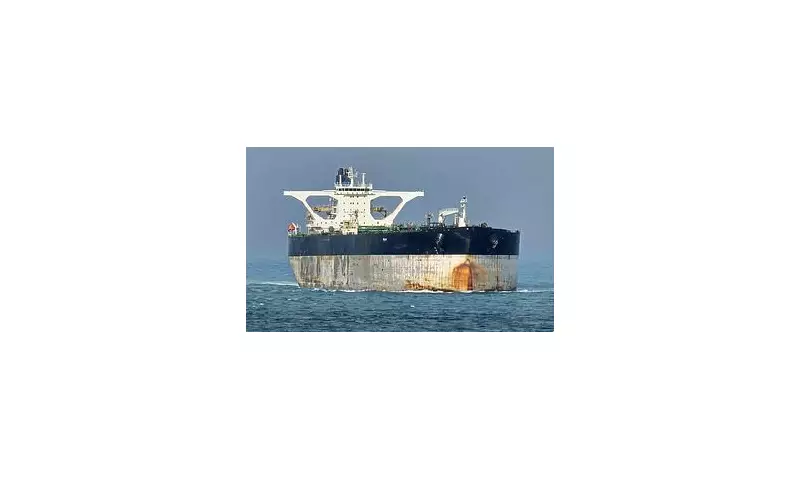
British military assets played a crucial supporting role in a dramatic US-led high-seas operation to intercept a rogue oil tanker bound for Russia. The raid, which unfolded in the stormy North Atlantic, marks a significant escalation in efforts to enforce sanctions against Moscow and its allies.
A Dangerous Chase Across the Atlantic
The target of the operation was the Marinera, an ageing supertanker previously known as the Bella 1. According to the White House, it is part of a 'Venezuelan shadow fleet' used to circumvent international sanctions. The vessel had been playing a two-week game of cat and mouse with US authorities after fleeing a blockade in the Caribbean.
The pursuit culminated in the icy waters between Iceland and northern Scotland. US aircraft launched from British bases, including RAF Mildenhall in Suffolk and from Wick in northern Scotland. RAF Poseidon MRA1 maritime patrol aircraft also provided surveillance support.

In perilous conditions described by UK Defence Secretary John Healey as 'dangerous and deteriorating', US forces approached the 1,092-foot-long tanker using Little Bird and Blackhawk helicopters. Heavily armed US Coast Guard personnel then fast-roped onto the ship's hull in a commando-style raid, sprinting to the bridge to take control.
The Tanker's Shadowy History and a Second Seizure
The Marinera's capture was not an isolated incident. In a coordinated move, the US Coast Guard also seized a second tanker, the Sophia, in the Caribbean. That vessel was reportedly carrying two million barrels of Venezuelan crude oil, valued at over £100 million.
The Marinera itself has a history of evading sanctions. It had changed its flag five times in as many years and was, at the time of interception, falsely flying a Russian flag. Mr Healey confirmed the ship was subject to US counter-Iran sanctions and had previously moved 7.3 million barrels of Iranian crude oil, with proceeds allegedly financing global terrorism and instability.
'A stateless vessel may be lawfully intercepted and boarded,' Healey stated, emphasising the legal grounds for the operation. The Russian crew was arrested and now faces criminal charges in the United States.
International Fallout and UK Sanctions Push
The Kremlin reacted with fury, labelling the seizure 'outright piracy' and demanding the swift return of its citizens. Russia's foreign ministry claimed the actions by the US and UK breached international law, a claim firmly rejected by Western officials.
In response, US Defence Secretary Pete Hegseth issued a stark warning: 'Our military is prepared to continue this... We are an administration of action to advance our interests.'
Back in London, Defence Secretary Healey used the event to announce new UK sanctions against hundreds of vessels in the Russian shadow fleet. He stated that degrading this fleet is a government priority, crucial for protecting 'our national security, our economy and global stability.'
The complex operation involved a significant logistical build-up, including ten C-17 transport aircraft and AC-130J gunships flying into RAF bases in Gloucestershire and Suffolk. The Royal Fleet Auxiliary ship Tideforce, capable of accommodating Royal Marines, was also deployed in support, underscoring the depth of UK involvement in this bold transatlantic mission.