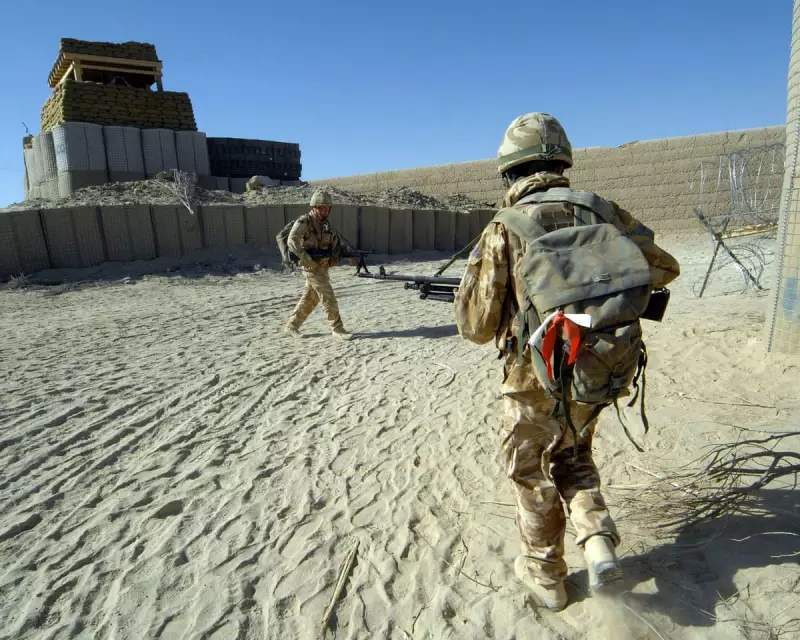
Trump's Afghanistan Frontline Remarks Ignite Fury Among UK MPs and Veterans
Donald Trump has ignited a firestorm of outrage among British parliamentarians and military veterans following his claim that NATO troops deliberately avoided frontline combat during the Afghanistan conflict. The US president made these remarks during an interview with Fox News, where he reiterated his stance that NATO would not support America if called upon.
Condemnation Across the Political Spectrum
The comments have drawn swift and severe condemnation from across the UK's political landscape. Critics were quick to point to the stark human cost of the war, highlighting the 457 British military personnel who lost their lives in Afghanistan. Many also underscored Trump's own history of avoiding military service during the Vietnam War, citing his diagnosis of bone spurs—a claim that has long been met with scepticism.
In total, 3,486 NATO troops perished during the two-decade-long conflict in Afghanistan. The majority of these casualties, 2,461, were American service members. Other allied nations also suffered significant losses, with Canada recording 165 deaths, including civilians, and Denmark, which has recently been at odds with the US over Trump's interest in Greenland, enduring 44 combat deaths—the highest per capita toll among NATO members outside the United States.

Veteran and MP Reactions: A Defence of Sacrifice
The response from those with direct experience of the conflict has been particularly forceful. Calvin Bailey, a Labour MP and former RAF officer who served alongside US special operations units in Afghanistan, stated that Trump's assertion "bears no resemblance to the reality experienced by those of us who served there."
Conservative MP Ben Obese-Jecty, who served as a captain in the Royal Yorkshire Regiment in Afghanistan, expressed his dismay, saying it was "sad to see our nation's sacrifice, and that of our NATO partners, held so cheaply by the president of the United States."
Tan Dhesi, chair of the Commons Defence Committee, labelled the president's comments as "appalling and an insult to our brave British servicemen and women, who risked life and limb to help our allies, with many making the ultimate sacrifice." Similarly, Emily Thornberry, chair of the Foreign Affairs Committee, described the remarks as "so much more than a mistake" and "an insult" to the families of the fallen.
Historical Context and Personal Criticism
Stephen Stewart, a former soldier, author, and journalist, offered a scathing critique, noting the irony in Trump's position. "Trump's comments are as offensive as they are inaccurate," he said. "It's hugely ironic that someone who allegedly dodged the draft for the Vietnam war should make such a disgraceful statement. He has desecrated the memory of hundreds of British soldiers who made the ultimate sacrifice in Afghanistan, people who we called friends and comrades. If he was a man of honour, he would get down on bended knees to ask forgiveness from the families of the fallen."
Liberal Democrat leader Ed Davey took to social media to voice his anger, posting: "Trump avoided military service 5 times. How dare he question their sacrifice. Farage and all the others still fawning over Trump should be ashamed."
A Reflection on Shared Values and Sacrifice
In a poignant rebuttal, Calvin Bailey added a broader perspective, recalling his service alongside American forces. "As I reminded the US forces I served with on the 4th of July in 2008, we were there because of a shared belief, articulated at America's founding, that free people have inalienable rights and should not live under tyranny," he said. "That belief underpinned the response to 9/11, and it is worth reflecting on now."
This sentiment echoes the foundational principle of the NATO alliance. It is noteworthy that the United States remains the only nation to have ever invoked Article 5 of NATO's collective security provision, which was activated following the terrorist attacks on September 11, 2001—a direct catalyst for the allied intervention in Afghanistan.

The controversy underscores deep-seated tensions regarding the interpretation of military sacrifice and alliance solidarity, casting a long shadow over the legacy of the Afghanistan war and the bonds between NATO partners.