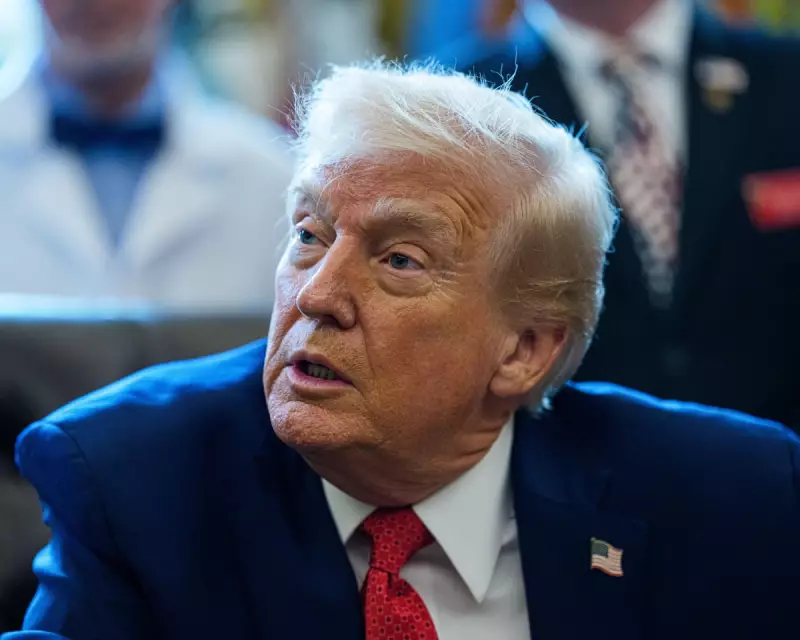
President Donald Trump has enacted a colossal annual defence spending bill into law, authorising a record $901 billion in military expenditure for the 2026 fiscal year. The signing took place at the White House on Thursday without the customary public ceremony, marking a subdued conclusion to a legislative process that saw Congress insert measures at odds with some of the President's stated foreign policy goals.
A Compromise Bill with Record Funding
The National Defense Authorization Act (NDAA) for fiscal year 2026 represents a compromise between Republican-controlled chambers of Congress. It authorises $8 billion more than the sum originally requested by the Trump administration. This sweeping legislation dictates a vast range of military matters, from procurement of ships and aircraft to troop pay raises and strategic responses to global threats.
Despite the lack of fanfare, the White House issued a statement expressing the President's support. It highlighted that the bill codifies aspects of several of his executive orders, including funding for the "Golden Dome" missile defence system and the elimination of diversity, equity, and inclusion (DEI) programmes within the Pentagon.

Provisions on Europe and Ukraine Challenge Trump's Stance
The legislation contains several provisions that appear to counter President Trump's publicly sceptical stance towards US involvement in European defence. His recently published national security strategy has been viewed as favourable towards Russia and critical of the European Union, advocating for allies to shoulder more of their own defence costs.
Nevertheless, the new NDAA commits $800 million for Ukraine over the next two years under the Ukraine Security Assistance Initiative, which funds contracts with US arms manufacturers to supply Kyiv's military. This funding comes as Trump's administration continues protracted negotiations aimed at halting Russia's ongoing invasion.
Furthermore, the act authorises the Baltic security initiative, providing $175 million to bolster the defences of Latvia, Lithuania, and Estonia. Crucially, it sets a floor of 76,000 for US troops stationed in Europe, restricting the Department of Defense's ability to make significant reductions. It also bars the US European commander from relinquishing the title of NATO Supreme Allied Commander.
Historical Context and a Previous Veto Override
The passage of the NDAA is an annual congressional tradition, maintained for 65 consecutive years. However, that streak was nearly broken during Trump's first term. In December 2020, he vetoed that year's defence bill, objecting to provisions requiring the renaming of military bases honouring Confederate figures and disagreeing with its approach to tech company liability shields.
That veto was overridden by Congress in January 2021, just before he left office, marking the sole veto override of his first presidency. The smooth signing of the current bill, despite policy disagreements, suggests a different dynamic at play during his second term.
The quiet enactment of this $901 billion defence authorisation underscores the complex interplay between a president's policy instincts and the legislative will of Congress, even when both branches are under nominal Republican control. The bill ensures continued military support for Ukraine and a sustained US footprint in Europe, even as the administration pursues a diplomatic resolution to the conflict.