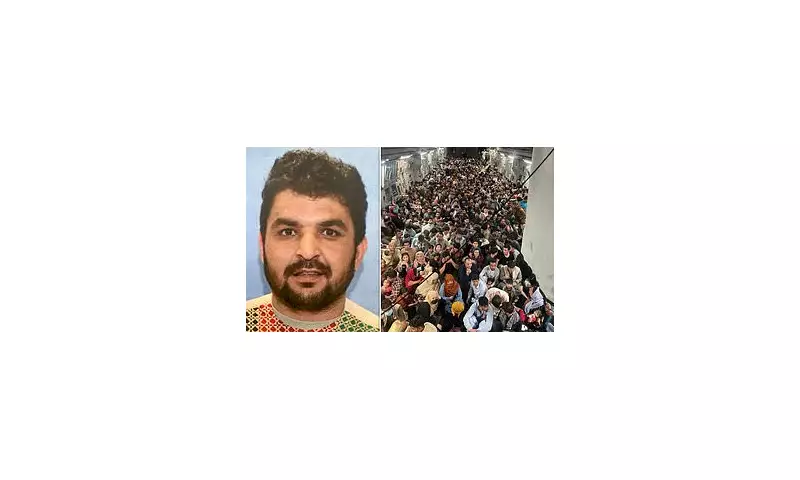
Thousands of Afghan nationals who entered the United States following the 2021 military withdrawal were identified as potential national security risks, according to disturbing new figures released by the Department of Homeland Security.
Security Flags in Afghan Resettlement Programme
The federal data, provided to Republican Senator Chuck Grassley who chairs the Senate Judiciary Committee, reveals that DHS identified 'potential derogatory information' on 6,868 Afghan evacuees who arrived under Operation Allies Welcome. This massive evacuation brought more than 70,000 individuals to American soil following the Taliban takeover.
Of those flagged during screening processes, the breakdown shows 5,005 were linked to national security concerns, while another 956 raised public safety issues and 876 involved potential fraud cases. Although many cases were subsequently resolved, records from September indicate that 885 individuals remained listed with unresolved national security flags.

Tragedy Sparks Renewed Scrutiny
The security concerns gained urgent relevance following a deadly shooting near the White House that claimed the life of 20-year-old National Guard member Sarah Beckstrom and critically wounded her colleague Andrew Wolfe, aged 24. The suspected attacker, 29-year-old Rahmanullah Lakanwal, entered the United States during the post-withdrawal evacuation operation.
In response to the attack, President Donald Trump ordered an immediate review of vetting procedures for migrants from high-risk countries. The administration moved to halt asylum decisions and pause visa issuance for Afghan passport holders while federal authorities reassess screening standards.
Senator Grassley, who had spent years highlighting what he called 'glaring red flags' in the Afghan resettlement process, received the updated risk assessments from Homeland Security Secretary Kristi Noem in a September 9 letter. This communication came shortly after the department's own Inspector General confirmed that DHS 'encountered obstacles to screen, vet and inspect all evacuees' during the chaotic withdrawal period.
Systemic Failures in Vetting Process
The alarming figures have thrust the Afghan resettlement programme back into the centre of a heated national security debate that has intensified dramatically following the Washington attack. Additional reports from oversight bodies paint a concerning picture of systemic failures in the evacuation process.
Another DHS Inspector General report found the department maintained a 'fragmented process' for handling potential security threats within the programme. Even more alarming, a Justice Department Inspector General report from June revealed that 55 individuals on a terror watch list successfully reached US ports of entry as of May 2023, with some being added to the list while the evacuation was actively underway.
According to the FBI assessment cited in the report, 'the need to immediately evacuate Afghans overtook the normal processes required to determine whether individuals attempting to enter the United States pose a threat to national security, which increased the risk that bad actors could try to exploit the expedited evacuation.'
The security concerns were further validated when federal prosecutors charged two Afghan nationals, Nasir Ahmad Tawhedi and Abdullah Haji Zada, with plotting an ISIS-inspired attack to disrupt the 2024 election in Oklahoma City. Tawhedi, who entered the US in 2021 on a Special Immigrant Visa, later acquired two AK-47 rifles and 500 rounds of ammunition before pleading guilty to providing material support to ISIS.
Following the killing of National Guard member Beckstrom, President Trump ordered 500 additional National Guard members into the capital, bringing the total deployment to nearly 2,200 troops assigned to the joint task force operating in Washington.