Thailand's Military Draft Lottery Evokes Hunger Games Drama
Young men across Thailand experienced moments of intense relief and profound dismay this month during the nation's annual military conscription lottery, a process increasingly compared to the dramatic reaping ritual from The Hunger Games films. The theatrical event, captured extensively on social media, reveals deeper currents of rising nationalism and economic pressures shaping Thailand's military recruitment landscape.
The Lottery Process and Dramatic Reactions
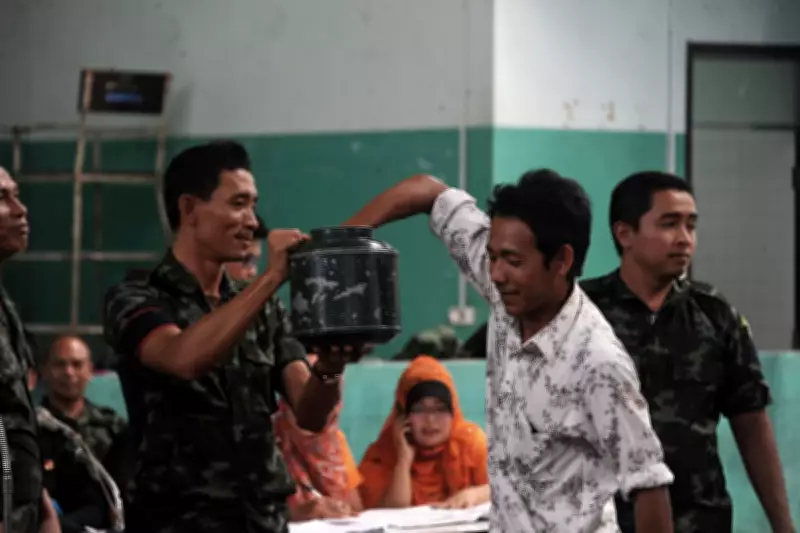
Thailand mandates military service for all men above 21 years of age. Those who do not volunteer must participate in the April lottery held ahead of the Songkran New Year festival. The process involves men stepping forward to select a card from a jar: a black card grants exemption, while a red card confirms conscription for two years of service.
Videos circulating on TikTok and Instagram documented the emotional rollercoaster. Some men jumped for joy upon drawing black, while others collapsed into the arms of military personnel or shouted in frustration upon receiving red. One participant was even seen twerking in celebration at avoiding service. The entire ceremony, complete with officials announcing results through microphones, has drawn comparisons to reality television for its heightened drama and public spectacle.

Rising Nationalism and Economic Drivers
Conscription has gained significant popularity since last year's border clashes with Cambodia, which left dozens of soldiers and civilians dead on both sides. Although a ceasefire has held since December, tensions continue along the disputed 800-kilometer frontier, fostering a growing sense of nationalism.
Economic factors are equally influential. According to Thai PBS World, 27,698 men volunteered for active military service this year, representing 44 percent of those called up—an increase of 1,508 from the previous year. With Thailand facing limited job prospects, the military offers a monthly salary of 11,000 baht (approximately £253), slightly above the national minimum wage, plus housing, meals, and healthcare.
"There's no real certainty of being sent to war," explained 22-year-old Chawanakorn Manyum to Bloomberg News. "But there's a guarantee of income." This sentiment is echoed by families like that of Chakrit Kaewkum, a 21-year-old part-time supermarket worker who drew a red card. His mother, Sawang Jaithum, stated, "For a man in Thailand, I think it's honourable." Chakrit himself expressed resignation: "I leave it to fate. It's not that difficult as it's only two years."
Exemptions and Controversial Practices
Eligible men must report to conscription centers or face up to three years in prison. Before the lottery, they undergo physical examinations with a minimum height requirement of 160cm. In recent years, reports have emerged of young men deliberately gaining weight to exceed the body mass index threshold for exemption.
A viral TikTok video from April 3 showed one man turned away after confessing to drinking two cups of bubble tea daily for three months, adding 30kg to his weight and pushing his BMI above 35. Exemptions are also extended to transgender women, though those still listed as male on official records must obtain special letters at conscription centers to be excused.
Human Rights Concerns and Political Opposition
The opposition People's Party has called for abolishing the draft, arguing that two years of service can derail early careers. More gravely, human rights groups have documented cases of abuse within the military. Amnesty International's 2020 report detailed rampant sexual harassment, beatings, and abuse, particularly targeting gay conscripts.
The report alleged that gay service members were singled out and coerced into entertaining and massaging commanders, with incidents escalating to rape. These allegations highlight ongoing concerns about brutal hazing rituals and sexual assault, adding a dark undercurrent to the lottery's public spectacle.
As Thailand navigates this complex mix of nationalism, economic necessity, and human rights issues, the annual draft lottery continues to serve as a poignant snapshot of the challenges facing its youth—a dramatic ritual where fate is decided by the draw of a card.