Swinney Condemns 'Glaring Weaknesses' in Scotland's Maritime Defences
Scotland's First Minister, John Swinney, has launched a strong critique against the UK Government, pointing to what he describes as "glaring weaknesses" in the nation's maritime defences. The SNP leader emphasised the urgent need for a robust naval presence in Scottish waters to address growing security concerns.
Absence of Key Naval Assets in Scotland
Mr Swinney revealed that Whitehall ministers have "chosen not to base a single offshore patrol vessel, frigate or destroyer in Scotland". This decision, he argued, has created significant operational challenges, particularly when responding to threats in northern waters.
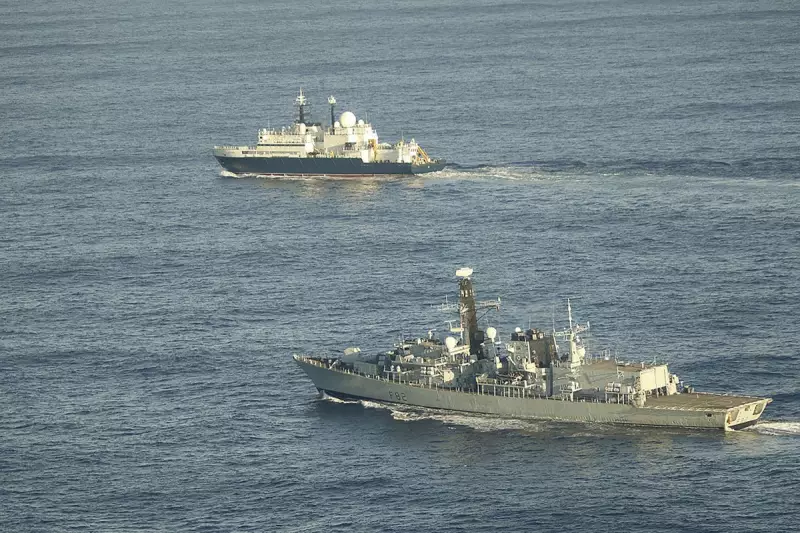
The First Minister highlighted a recent incident involving the Russian spy ship Yantar, which was detected operating near Scotland. Due to the lack of stationed vessels, naval resources had to be deployed from the south coast of England, underscoring the strategic gap.

Call for Enhanced Surveillance and Protection
Speaking to journalists in Edinburgh, Mr Swinney stressed the importance of bolstering Scotland's defence capabilities. "We have got to ensure that we have in place the capacity and capability to protect our coastline," he stated, noting that current arrangements leave "glaring weaknesses in our physical defence", especially regarding surveillance vessels.
He further explained that the geopolitical landscape demands greater vigilance. "That's the environment we're now in, where we have to be more and more conscious of what is going on in the waters round about us," Mr Swinney added, while acknowledging that vessel positioning remains an operational matter for the UK Government.
Criticism of UK Defence Priorities
The First Minister's comments followed a speech at Edinburgh University's McEwan Hall, where he questioned the UK's defence strategy. He argued that the United Kingdom is not a superpower but an "intermediate power", and criticised the government for "increasing investment in nuclear bombs" while dismantling its maritime patrol fleet.
Mr Swinney pointed out that this prioritisation leaves Scotland vulnerable to "actual day to day threats", such as protecting offshore energy assets and defending against drone attacks on airports, incidents which have occurred across northern Europe.
Advocating for a Multi-Layered Naval Approach
Reflecting on current global uncertainties, including geopolitical tensions and climate-related events like flash floods and storms, Mr Swinney called for an "adequate, multi-layered naval capability in Scottish waters". He referenced new MI6 head Blaise Metreweli's observation that the world is operating in a space between peace and war, reinforcing the need for enhanced defences.
The First Minister asserted that an independent Scotland would not tolerate such security gaps, prioritising the defence of waters and shores over nuclear capabilities. "Politicians in Westminster may desire the power to destroy the planet, but for a Scottish Government, the priority would be the adequate defence of our waters and our shores," he concluded.
The UK Government has been approached for a response to these allegations.