
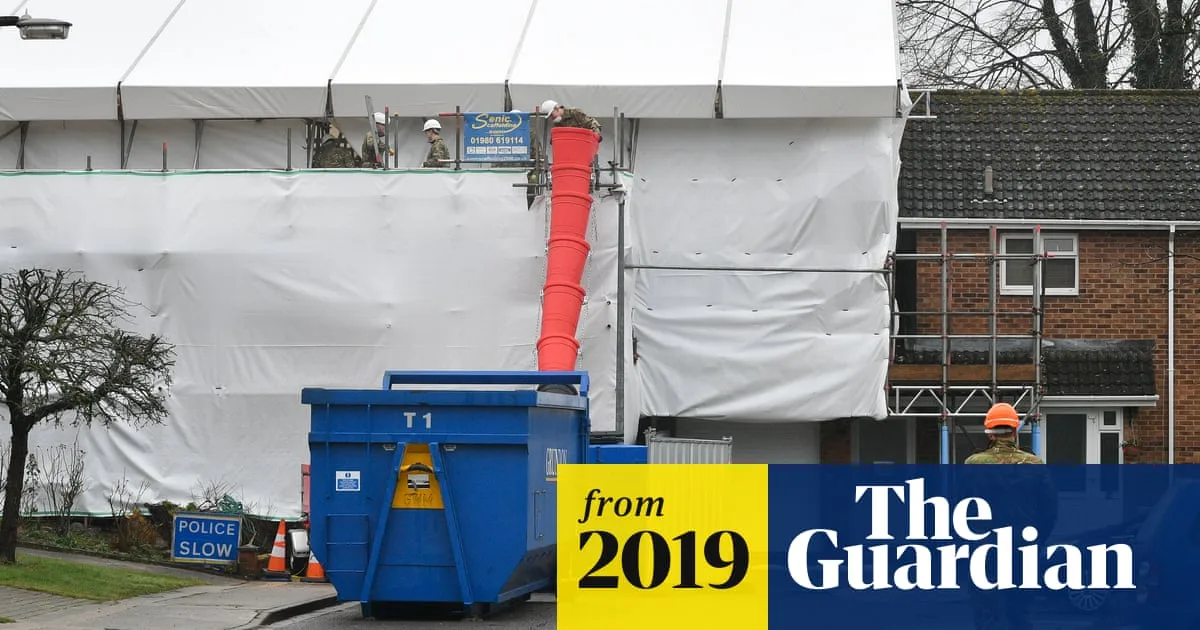
Police investigating the Salisbury nerve agent poisonings have made a fresh appeal for information, as the government announced the decontamination of 12 sites cordoned off after the attack has been completed almost a year on.
Detectives are keen to hear from anyone who saw a perfume bottle that contained the nerve agent novichok, and said that someone may have a key piece of information about it that could help bring those responsible to justice.
The former Russian spy Sergei Skripal and his daughter, Yulia, collapsed after coming into contact with novichok at his home in Salisbury on 4 March last year. They recovered but in July Dawn Sturgess, a mother of three, died when she was exposed to novichok contained in a fake perfume bottle.
On Friday, counter-terrorism officers said they were still trying to find out where the perfume bottle was between the attack in March and the end of June when Sturgess’s partner, Charlie Rowley, found it. Deputy assistant commissioner Dean Haydon, the senior national coordinator for counter-terrorism policing, said: “A year on from the attacks, there are parts of the picture that we are continuing to piece together, and I am urging anyone who has information that they have not yet passed to police to do so.”
Government officials said on Friday that the last of the 12 sites that have been undergoing an intense and hazardous clean-up – Skripal’s house – has been judged safe. The house, where the novichok attack is believed to have taken place, has been returned to Wiltshire council and residents are understood to want it restored and used again by a family.
Over the past 11 months, hundreds of military personnel from the RAF and army, supported by specialist contractors, have undertaken decontamination work on the 12 sites in Salisbury and nearby Amesbury where Sturgess fell ill. An estimated 600-800 specially trained military personnel were involved in the clean-up, named Operation Morlop.




