
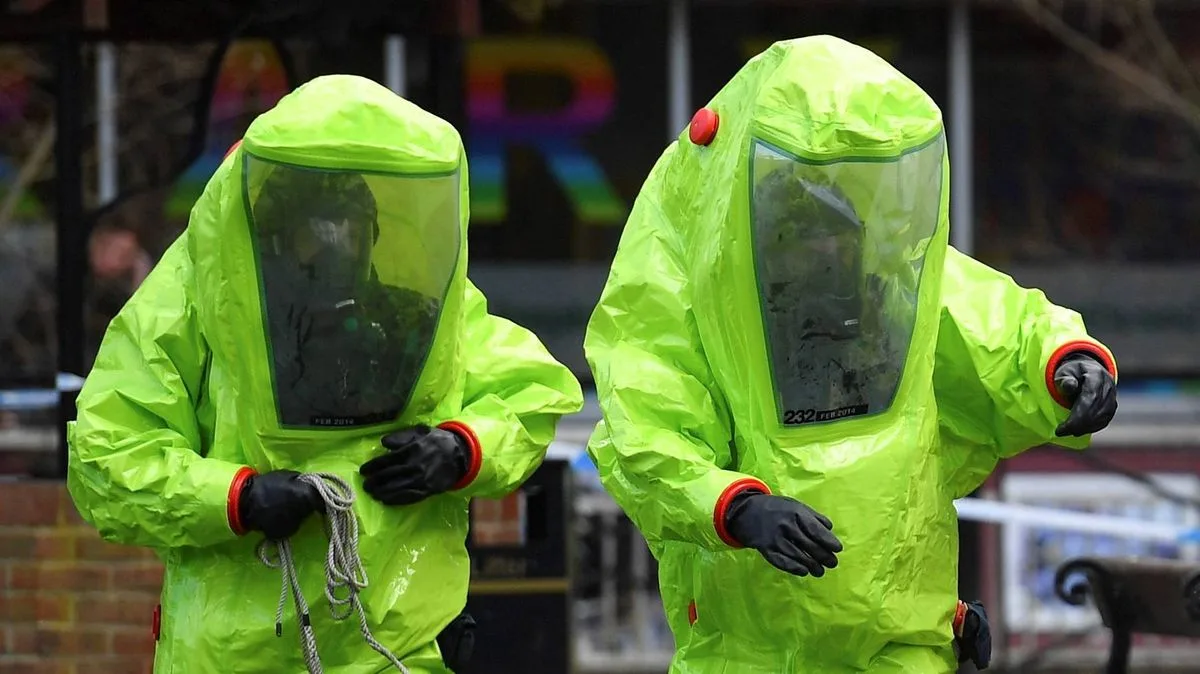
Former Russian spy Sergei Skripal and his daughter Yulia have described the terrifying effects of the Novichok poisoning, revealing that Mr Skripal 'fell asleep at the moment of death' and woke up three weeks later. The pair gave written statements to the official inquiry into the 2018 Salisbury attack, which concluded that Russian President Vladimir Putin bears moral responsibility for the incident.
The Skripals were poisoned on 4 March 2018 when the nerve agent was smeared on the doorknob of Sergei's home. Their symptoms began while dining at a Zizzi restaurant in Salisbury, where they initially found it 'amusing' when their eyes started to twitch. However, the effects rapidly worsened, with Yulia describing severe breathlessness, hallucinations, and vomiting. She recalled that 'everything in the street was swinging around' and that she had to hold hands with her father.
After leaving the restaurant, the pair sat on a bench, where Yulia said colours changed and vision blurred, likening it to being 'on LSD or amphetamines'. She lost consciousness within moments and feared she might have choked on her own vomit if not for passers-by who called 999. Mr Skripal, 74, said he hallucinated 'Arabic men and women' and tried to punch one, despite knowing it was a hallucination. CCTV showed Yulia slumped on her father's shoulder, making circular motions with her left hand.
The father and daughter were in comas for three weeks. Mr Skripal recalled that when he regained consciousness, he thought only one day had passed. Both spoke of a challenging recovery and have kept a low profile since. The two suspects, using the aliases Alexander Petrov and Ruslan Boshirov, are believed to have delivered the poison. They claimed their visit was merely to see Salisbury Cathedral's spire. The British Government accused them of hacking Yulia's emails since 2013 and they are on the FBI's most wanted list for alleged interference in the 2016 US presidential elections.
The Dawn Sturgess inquiry, named after the 44-year-old mother who died after spraying herself with Novichok from a discarded perfume bottle, concluded that the attack was 'astonishingly reckless'. Justice Lord Hughes stated that Dawn Sturgess died an 'innocent victim' of an assassination attempt by officers of a Russian State organisation, and that President Putin bears moral responsibility for her death.




