A public inquiry will today publish its long-awaited findings into the death of Dawn Sturgess, an innocent woman poisoned by a Russian military-grade nerve agent in a quiet corner of Wiltshire. The 2018 Novichok attacks in Salisbury unexpectedly entangled a former spy, a police officer, and a Russian hit squad, propelling a group of strangers into a devastating international incident.
The Unlikely Victim: Dawn Sturgess
Dawn Sturgess, a 44-year-old mother of three, died in July 2018 after being exposed to the Novichok chemical weapon. She was remembered by her family as a compassionate, loving, and kind person who cared for others despite facing significant challenges in her own life. Ms Sturgess lived in supported accommodation in Salisbury and had struggled with alcohol dependency.
In the months before her death, however, loved ones said she was "settled and happy" and making plans to regain her independence. Her life was tragically cut short after her partner, Charlie Rowley, found a discarded perfume bottle in Amesbury, Wiltshire, which contained the lethal nerve agent. He unwittingly gave it to her as a gift.

Her mother, Caroline Sturgess, told the inquiry her daughter was an "intelligent, funny, extremely selfless and very kind person". Her partner, Charlie Rowley, described her as "a very caring, lovely lady - a wonderful woman" and a devoted mother.
A Trail of Poison: The Key Figures
The chain of events began with an attempt to assassinate Sergei Skripal, a 74-year-old former Russian military intelligence (GRU) officer who had been convicted of spying for Britain. He was pardoned and came to the UK in a 2010 prisoner exchange, settling in Salisbury. President Vladimir Putin had personally labelled him "a traitor".
On 4 March 2018, Mr Skripal and his daughter, Yulia, who was visiting from Moscow, were found critically ill on a park bench. The nerve agent had been smeared on the door handle of his home. Yulia Skripal, 41, told the inquiry she could not imagine why the Russian government would target her father, a man with "no connection to Russia any more".
The first responder to enter the contaminated home was Detective Sergeant Nick Bailey of Wiltshire Police. He fell seriously ill within hours and spent two weeks in intensive care, with his family fearing for his life. The ordeal forced him to leave the police force in October 2020 after 18 years of service, following three failed attempts to return to work.
Charlie Rowley, 52, survived but suffered lifelong health issues from the Novichok poisoning, including nerve damage to his right eye and muscle problems in his legs that affect his balance. He spent over two months in hospital. Mr Rowley told the inquiry his memory of the events was poor due to his substance use at the time, but he now no longer takes drugs.
The Russian Hit Squad and Lasting Consequences
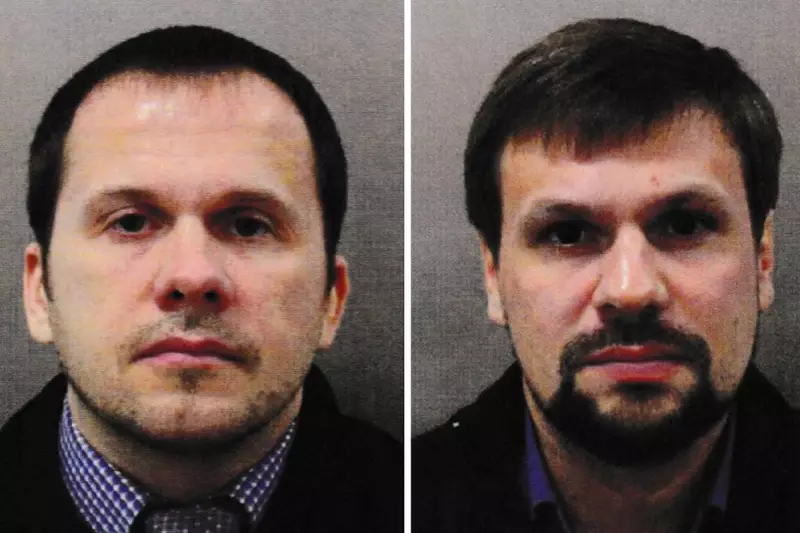
British counter-terrorism police believe the attack on the Skripals was carried out by members of GRU Unit 29155. The operatives used the aliases Alexander Petrov and Ruslan Boshirov to travel to Salisbury. A third agent, using the alias Sergey Fedotov, is believed to have aided them. Petrov's real identity is thought to be GRU doctor Alexander Mishkin, while Boshirov's is believed to be Anatoliy Chepiga.
The public inquiry into Dawn Sturgess's death aims to establish the full circumstances of how she came into contact with the weapon intended for others. Its findings, published today, will detail the catastrophic consequences of an act of state-sponsored violence on British soil, which left one woman dead, several lives shattered, and a community forever changed.