
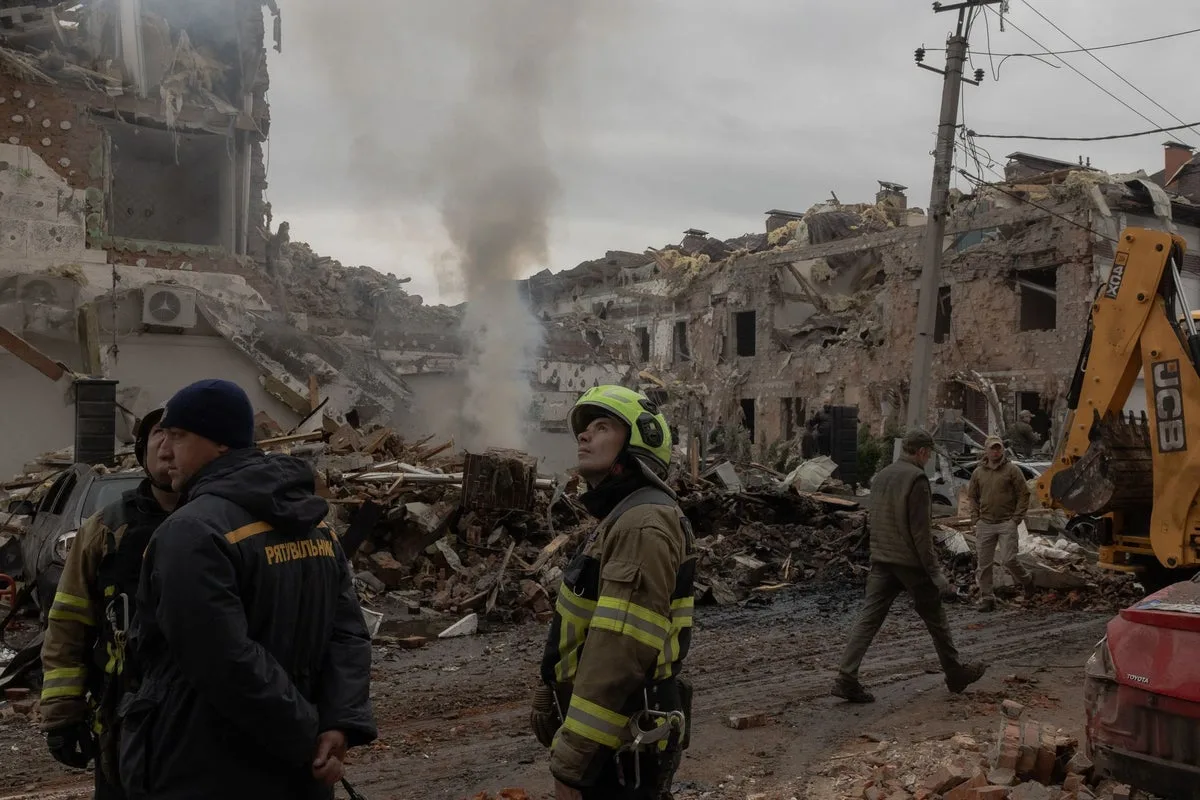
A 12-year-old girl was among four people killed and at least 70 injured after a 12-hour Russian drone and missile attack on Ukraine, with the capital Kyiv suffering the heaviest assault. The air assault, which took place overnight and into Sunday, was the first major bombardment since a similar attack killed at least 21 people last month.
Ukraine’s president Volodymyr Zelensky condemned the “vile” bombardment that lasted more than 12 hours and involved nearly 600 drones and several dozen missiles. Zaporizhzhia, Khmelnytskyi, Sumy, Mykolaiv, Chernihiv and Odesa regions were also hit in the renewed Russian attacks.
Zaporizhzhia’s governor Ivan Fedorov said three children – two boys, aged 11 and 12, and a nine-year-old girl – were among the 34 people injured in the region. In Kyiv, Ilona Kovalenko, a 38-year-old resident of a five-storey building in the Solomianskyi district that was struck, described being woken up by an explosion which shattered windows. She said the 12-year-old girl who died, named Oleksandra, was her neighbour’s daughter.
“A neighbour kept knocking on our door. She was completely covered in blood and shouting, 'help, save my daughter',” said Ms Kovalenko, adding: “Sadly, she died on the spot. We are in shock, to be honest.”
Russia’s defence ministry said on Sunday that it had carried out a “massive” attack on Ukraine using long-range air and sea-based weapons and drones to hit military infrastructure, including airfields. The assault also triggered military responses in neighbouring Poland, where fighter jets were deployed early on Sunday as Russia struck targets in western Ukraine.
Separately, Denmark’s defence ministry said it had observed drones at several of its armed forces’ locations overnight for a second consecutive day. Nato has said it will upgrade its mission in the Baltic Sea following reports of drone incursions into Denmark. Germany also said it would provide military support for the upcoming EU summit in Copenhagen.




