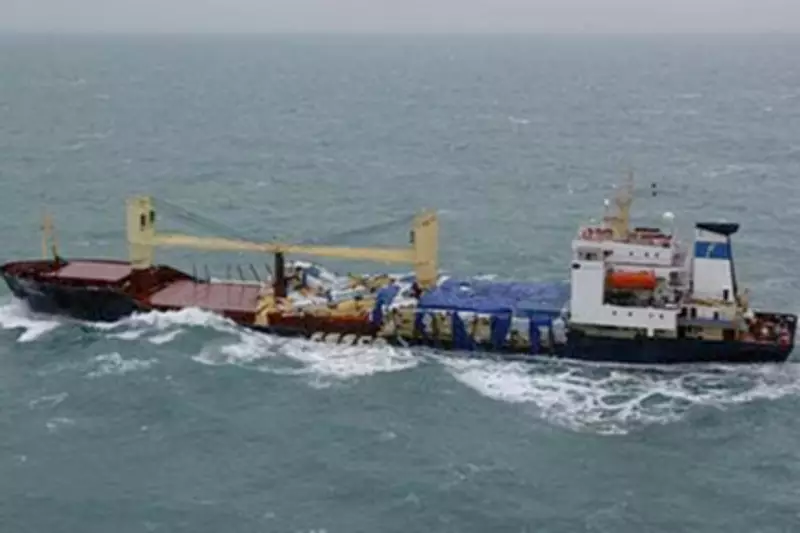
Russian Cargo Ship Anchors Near Vital UK Data Cables in Bristol Channel
The Sinegorsk, a Russian-flagged cargo vessel, has sparked significant security concerns after anchoring for 14 hours in the Bristol Channel near critical undersea data cables. The incident occurred off the coast of Minehead in Somerset, where the ship remained stationary from late Tuesday night until early Wednesday afternoon.
Surveillance and Monitoring Operations
According to tracking data from MarineTraffic, the Sinegorsk entered the Bristol Channel on Tuesday night and anchored approximately two nautical miles from Minehead around 11pm. The vessel maintained this position until 2pm on Wednesday, during which time it came within less than a mile of several vital undersea telecom cables.
HM Coastguard and the Royal Navy responded swiftly to the potential threat. A coastguard surveillance aircraft, registered G-HMGC, was scrambled from Newquay and spent thirty minutes circling the ship on Wednesday morning, as reported by FlightRadar. Additionally, The Telegraph confirmed that the Royal Navy deployed a Wildcat helicopter to survey the vessel. Following this intense monitoring, the Sinegorsk has since moved south and was last observed off the coast of the Isles of Scilly.

Critical Infrastructure at Risk
The area where the Sinegorsk anchored is home to multiple essential undersea data cables that connect Britain to international networks. These include the TGN Atlantic cable system, which links the UK to New Jersey, and a pair of cables from the TGN Western Europe system that connect to Spain and Portugal. Another crucial cable, EXA Express, provides a direct link from the UK to Nova Scotia in Canada.
Shipping data reveals that the Sinegorsk's last recorded port call was three weeks ago at Arkhangelsk, Russia—a major trading port that also serves as a naval base for Russia's Northern Fleet. This connection has raised further alarms about the vessel's intentions and activities in British waters.
Growing Concerns Over Russian Shadow Fleet
This incident is the latest in a series of concerning incursions by Russian vessels into British waters since Vladimir Putin launched the full-scale invasion of Ukraine nearly four years ago. The term shadow fleet refers to Russia's practice of using older ships, often tankers flying under false flags, to smuggle sanctioned goods such as oil.
The Ministry of Defence has imposed sanctions on over 500 Russia-related shadow fleet oil tankers and 16 LNG tankers to date, successfully forcing 200 ships off the seas—believed to represent almost half of Russia's capacity. A Ministry of Defence spokesperson emphasised: "Deterring, disrupting and degrading the Russian shadow fleet is a priority for this government—alongside our allies, we are stepping up our response to shadow vessels."
Official Warnings and Strategic Threats
First Sea Lord General Sir Gwyn Jenkins issued a stark warning in December, noting a 30 per cent increase in Russian incursions in UK waters over the past two years. While the presence of Russian spy ships like the Yantar near UK waters is visibly concerning, Sir Gwyn highlighted that "it's what's going on under the waves that most concerns me."
He further cautioned: "I can also tell you today that the advantage that we have enjoyed in the Atlantic since the end of the Second World War is at risk. We are holding on, but not by much. There is no room for complacency. Our would-be opponents are investing billions. We have to step up, or we will lose that advantage."
The Ministry of Defence spokesperson added: "We are acutely aware of the threat posed by Russia, which includes attempts to map undersea cables, networks, and pipelines belonging to both the UK and our allies, and we are tackling these threats head-on. The Royal Navy constantly monitors our seas, including safeguarding critical infrastructure such as underwater cables and offshore structures."
The Independent has reached out to HM Coastguard for additional comment on this developing situation.