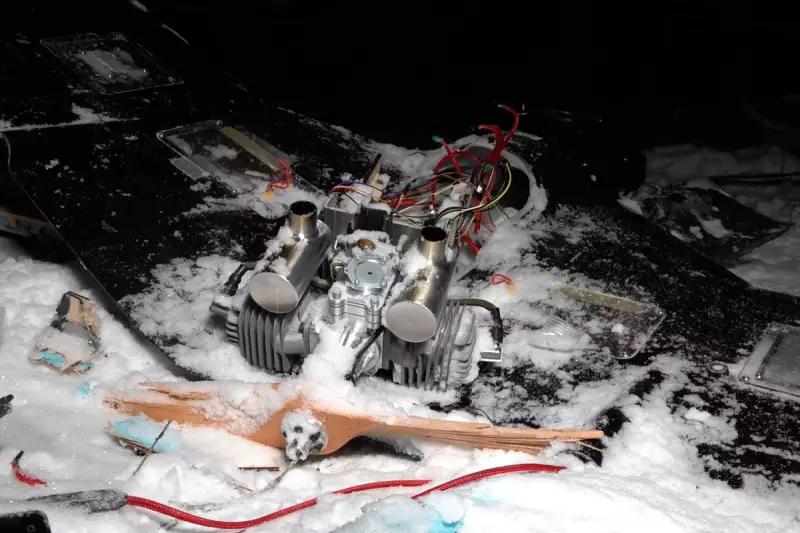
The Kremlin has released video footage it says shows one of the drones used in a major alleged attack on a residence of President Vladimir Putin. Moscow claims the incident involved a total of 91 Ukrainian drones on 28 December, an accusation Kyiv has firmly denied.
Kremlin's Video Evidence and Claims
In the video published by Russian authorities, an unidentified official is seen inspecting a downed unmanned aerial vehicle (UAV). The official describes the device, fitted with a 6kg high-explosive warhead, as a "rare, unique case." Russia asserts this was part of a coordinated swarm attack targeting one of Putin's homes.
Ukrainian President Volodymyr Zelensky has dismissed the claims outright, labelling them as "typical Russian lies." His government maintains it was not involved in any such incident on the stated date.

International Scrutiny and Diplomatic Fallout
The release of the video comes amid heightened tensions and ongoing, fragile peace negotiations. Russian Foreign Minister Sergei Lavrov stated that the alleged drone assault would compel Russia to reassess its position in these diplomatic talks.
However, independent analysts have cast doubt on Moscow's narrative. The Institute for the Study of War (ISW) reported that it could find no open-source evidence, such as geolocated videos or records of visible air defence activity, to support the Kremlin's assertions about the scale or nature of the alleged attack.
Analysis and Implications
This incident highlights the continued use of disinformation and psychological operations within the broader conflict. The public release of the drone video appears to be a strategic move aimed at shaping international perception and justifying potential escalations or hardened diplomatic stances.
With Ukraine denying any role and independent monitors lacking corroborating evidence, the veracity of Russia's account remains deeply contested. The situation underscores the critical challenge of verifying battlefield claims in an era of sophisticated propaganda.