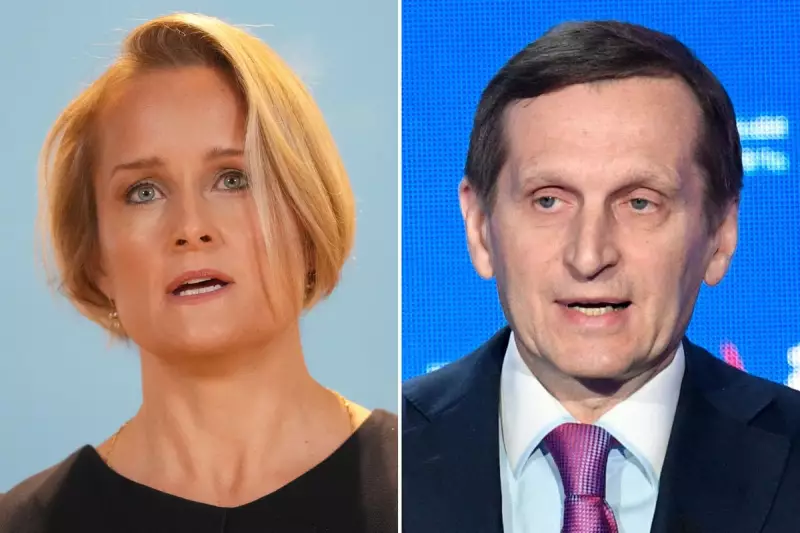
Russia has publicly stated that its foreign intelligence chief held a substantial telephone conversation with the United Kingdom's newly appointed head of MI6, just weeks after she assumed the role.
A Surprising Claim from Moscow
According to reports from the Russian state news agency Tass, Sergei Naryshkin, the director of the SVR foreign intelligence service, declared he recently had a "rather lengthy" discussion with Blaise Metreweli. Ms Metreweli made history in October by becoming the first woman to lead the Secret Intelligence Service (SIS), commonly known as MI6.
Mr Naryshkin, who has led the SVR since 2016, offered no specific details about the content of the alleged exchange. He did, however, note that Russian intelligence officers work officially in London, just as their British counterparts from SIS operate in Moscow.

Context of Tensions and Warnings
The Russian claim emerges against a backdrop of severe diplomatic strain. It follows a major public speech delivered by Ms Metreweli earlier this week, where she issued a stark warning about the threat from Russia.
In her address, the new MI6 chief described Russia as "aggressive, expansionist and revisionist" and stated the UK is navigating a "space between peace and war." She accused Moscow of testing Western resolve in the "grey zone" while the conflict in Ukraine continues, emphatically adding, "Putin should be in no doubt, our support is enduring."
Military analyst Michael Clarke told Sky News that Moscow's disclosure is a strategic move, likely "trying to imply that the Brits are somehow appealing to them." He suggested the timing relates to ongoing negotiations concerning Ukraine, potentially in Washington.
Sensitivity and Political Agenda
Mr Clarke emphasised the extreme sensitivity of such high-level intelligence contacts, stating that the British side "would never" publicly confirm such a call. "The British head… should never, ever reveal that they’ve done that, and the fact that Naryshkin is doing it shows that he’s got his own agenda," he commented.
The claim surfaced as European leaders convened in Brussels for a critical summit focused on sustaining Ukraine's war effort. While a plan to use frozen Russian assets was not approved, EU leaders did agree on a substantial €90 billion support package to cover approximately two-thirds of Ukraine's funding needs for the next two years.
In a separate development, Russian President Vladimir Putin, during an end-of-year conference, criticised European leaders and claimed Europe had "failed to rob, due to grave consequences for the robbers," in an apparent reference to the discussions over frozen assets. The Foreign Office has been contacted for comment regarding the alleged intelligence call.