

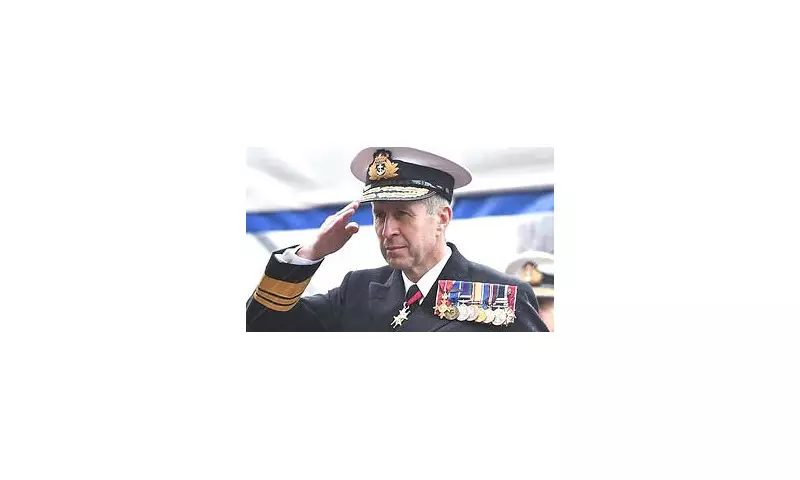
The Royal Navy finds itself in what experts are describing as a 'dire' situation following the departure of its last remaining full admiral. This unprecedented development marks the first time in the service's near 500-year history that it has been left without an officer holding this prestigious four-star rank.
A Historic Departure and Unprecedented Vacancy
Admiral Sir Keith Blount, who served as NATO's deputy military commander in Europe since 2023, stepped down from his position earlier this week. His departure creates a significant void at the highest levels of naval leadership that has never before occurred in the institution's long and storied history.
The tradition of admirals actually predates the formal establishment of the Royal Navy itself, with records tracing the rank back to 1297. During the reign of Henry VIII, who founded the force in 1546, there were eight full admirals serving. This number expanded dramatically to thirty-eight during the Second World War, highlighting the stark contrast with today's situation.

Expert Warnings and Broader Concerns
Former First Sea Lord Admiral Lord West has been particularly vocal about the implications of this development, describing it as a 'dire reflection on the status of the Navy.' In comments to The Sun, he emphasised the seriousness of the situation, stating: 'If they keep cutting the Navy then perhaps it doesn't deserve an admiral.'
Lord West continued with a stark assessment: 'The Navy is in a parlous state and the Government has got to get serious and spend money on defence. We need to beef up.' These concerns are amplified by ongoing reductions to Britain's naval fleet, which has now reached its smallest size in history.
Leadership Changes and NATO Implications
Sir Keith's successor in the NATO role has been announced as Air Chief Marshal Sir John Stringer, who will become the first Royal Air Force officer to hold this position since 1984, and only the third in history. The Ministry of Defence has framed this appointment as reflecting Britain's 'NATO-first' approach during a period of increasing tensions within the alliance.
The Royal Navy is currently led by General Sir Gwyn Jenkins, who assumed the position last year following Admiral Sir Ben Key. This transition itself represented a significant change in leadership structure for the naval service.
Differing Perspectives on Rank and Capability
Not all former naval officers share the same level of concern about the loss of the full admiral rank. Former Rear Admiral Sir Chris Parry offered a contrasting viewpoint, suggesting that 'calibre and competence is more important than rank.' He added pragmatically: 'Better to have a good commander than a bad admiral.'
Nevertheless, the symbolic importance of this development cannot be overstated. Full admirals hold a four-star rank, positioned above three-star vice admirals and two-star rear admirals in the naval hierarchy. The absence of this top tier of leadership represents a significant departure from centuries of tradition.
As Britain navigates complex global security challenges, the state of its naval leadership will undoubtedly remain a subject of intense scrutiny and debate within defence circles and beyond.






