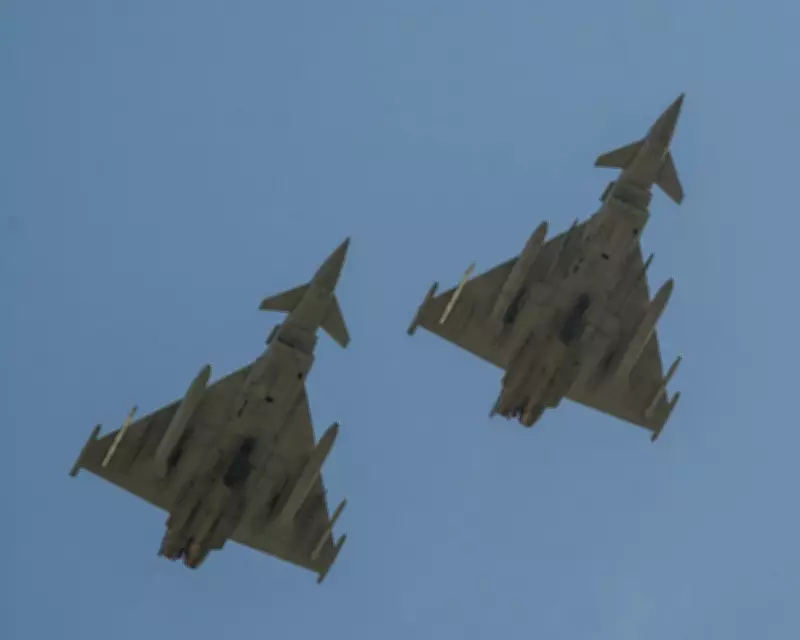
The Royal Air Force's 12 Typhoon squadron has completed a significant redeployment from its home base in Lincolnshire to Qatar, a move that underscores Britain's strategic positioning amid escalating tensions in the Middle East. This deployment, involving a joint unit with the Qatari air force, signals a clear willingness to assist regional allies should Iran attempt to widen any conflict through retaliation.
Britain's Stance on Potential US-Iran Conflict
British government sources have indicated that the United Kingdom is unlikely to participate directly in any potential US-led attack on Iran. Such a first strike would likely conflict with the UK's interpretation of international law. However, the forward deployment of the Typhoon squadron to Qatar demonstrates a preparedness to support Gulf allies in self-defence scenarios.
The squadron's relocation was conducted "at the request of the Qataris" according to British defence sources. Its primary mission would be to help protect Qatar, which hosts the largest US airbase in the region, from potential drone and missile counterattacks should hostilities escalate.

Regional Security Dynamics
This deployment coincides with a substantial US military buildup in the region, including the movement of the USS Abraham Lincoln aircraft carrier strike group to the Middle East. Defence analysts suggest President Trump is seeking to "give himself options" through these deployments, though the exact nature of any potential military action remains uncertain.
Earlier this month, Iran issued explicit warnings that US bases in the region - many of which also host small numbers of British personnel - would be targeted if the United States conducted bombing raids in support of Iranian protesters. This threat has heightened security concerns throughout the Gulf.
Operational Capabilities and Limitations
The RAF Typhoons deployed to Qatar would primarily focus on defending against drones and cruise missiles. Their capabilities have precedent: in April 2024, UK fighters successfully intercepted an unspecified number of Iranian drones during attacks on Israel. However, the RAF's role in similar October 2024 incidents was described as negligible.
It's important to note the operational limitations of fighter aircraft in such scenarios. Ballistic missiles travel at speeds too great for interception by jets alone, requiring specialised air defence systems like the US Patriot or Thaad systems for effective countermeasures.
Strategic Infrastructure in Qatar
The al-Udeid airbase in Qatar represents a critical strategic asset in the region. As the largest US military facility in the Middle East, it serves as the headquarters for US Central Command and hosts approximately 10,000 US troops. Earlier this month, the base also accommodated about 100 UK RAF personnel, though most were evacuated during a previous escalation of tensions.
Parallel US deployments have seen F-15 fighter jets redeployed from Lakenheath in Suffolk to Jordan's Muwaffaq Salti airbase. Military experts suggest these aircraft are positioned not for offensive operations against Iran, but rather to defend Jordan, Israel, and Gulf states against potential retaliatory strikes.
Political Responses and Nuclear Concerns
When questioned about the escalating crisis during a recent trip to China, Labour leader Keir Starmer declined to speculate about potential US military action against Iran. Instead, he emphasised the "central focus" of preventing Iran from obtaining nuclear weapons, stating: "The big challenge here is to ensure that Iran doesn't get a nuclear program and we're all absolutely agreed on that and we're working with allies to that end."
This diplomatic stance reflects broader international concerns about Iran's nuclear ambitions, even as military preparations continue throughout the region. The UK's deployment of Typhoon fighters to Qatar represents a careful balancing act - demonstrating support for allies while avoiding direct commitment to offensive operations that might contravene international law.